
After two decades behind the chair working with every hair type imaginable, I've noticed something troubling: most conversations about "safe" shampoo barely scratch the surface. We obsess over ingredient lists, hunt down sulfate-free and paraben-free labels, and congratulate ourselves for making "clean" choices-all while missing the factors that actually determine whether a shampoo is safe for your hair and scalp.
Today, I'm taking you beyond the marketing buzzwords into the fascinating (and sometimes uncomfortable) science of what makes shampoo truly safe. Fair warning: some of what I'm about to share might challenge everything you thought you knew about hair care.
The Safety Paradox: When "Clean" Isn't Actually Clean
Here's the truth that clean beauty brands don't want you to know: an ingredient can be perfectly safe in isolation but become problematic based on concentration, pH interaction, and your unique scalp environment.
Let me give you a real-world example. I had a client who switched to an all-natural, organic shampoo after reading that her previous product contained "chemicals." Within three weeks, she developed severe scalp irritation, flaking, and her hair became impossibly tangled. The culprit? Her new "clean" shampoo had a pH of 8.5-extremely alkaline-which was systematically destroying her scalp's protective acid mantle despite being made from "natural" ingredients.
This brings us to the first major factor that almost everyone ignores...
The pH Blind Spot That's Damaging Your Hair
Your scalp's natural pH sits between 4.5-5.5, slightly acidic. This acidic environment isn't random-it's your first line of defense against bacterial overgrowth, moisture loss, and scalp conditions.
When you use a shampoo that's too alkaline (pH 8.0 or higher), you're temporarily disrupting this protective barrier. Even worse, an alkaline pH physically opens your hair cuticle. Imagine your hair shaft as a pinecone: acidic conditions keep it smooth and closed, while alkaline conditions make it open up and become rough.
While temporary cuticle opening allows for deep cleaning, it also makes your hair vulnerable to:
- Protein degradation and damage
- Rapid color fading (if you color your hair)
- Moisture loss and brittleness
- Increased tangling
Products formulated between 3.5-6.5 are generally considered safe for maintaining scalp health, but here's where it gets interesting. The industry loves to label products as "pH balanced" without specifying what they're balanced to. Balanced to water (pH 7.0)? Skin (pH 5.5)? Hair's isoelectric point (pH 3.67)?
NOT SURE WHICH PRODUCT IS RIGHT FOR YOU?
TAKE THE QUIZTakes 30 seconds · 134,000+ customers matched
This vagueness isn't accidental-it's strategic. Because the difference between pH 6.5 and pH 8.0 represents a tenfold increase in alkalinity. That's not a minor variation; it's chemistry fundamentally different enough to produce completely different results on your hair.
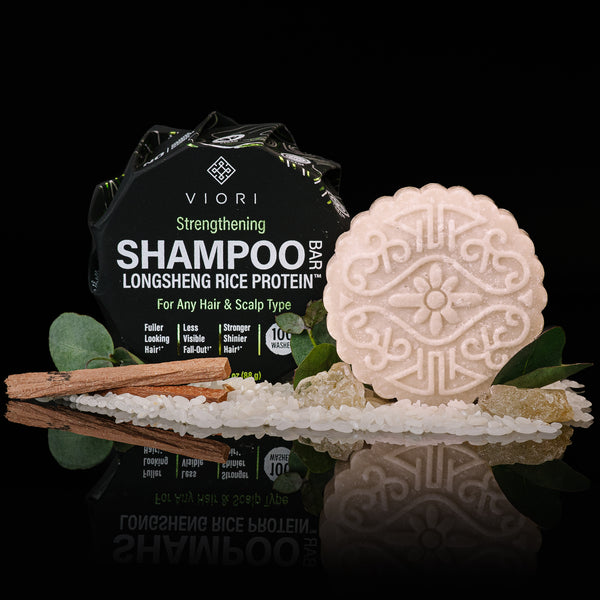
Viori's shampoo bars are specifically formulated within the optimal 4.5-5.5 range, which is why they can thoroughly cleanse without the stripping effect many people associate with deep cleaning. But proper pH is just one piece of the safety puzzle.
The Concentration Deception No One Talks About
Here's something that will completely change how you read ingredient lists: the same ingredient at different concentrations behaves completely differently.
Think of it like alcohol. A splash of wine in your pasta sauce? Delicious and harmless. A bottle of pure grain alcohol? Dangerous. Same base ingredient, radically different effects based on concentration.
This is why you can't simply Google "is X ingredient safe" and get a meaningful answer. Safe at what concentration? Combined with what other ingredients? At what pH?
Let me share a specific example that causes massive confusion: behentrimonium methosulfate (BTMS), which appears in Viori products. I cannot tell you how many times clients have panicked seeing "sulfate" in the name, assuming it's the same as the harsh sulfates they've been told to avoid.
Here's the reality: despite the name, BTMS is actually a conditioning agent derived from rapeseed oil. The "methosulfate" component is attached to a long-chain cationic (positively charged) molecule, which fundamentally changes its behavior. Unlike harsh sulfate detergents like sodium lauryl sulfate, BTMS actually helps close the hair cuticle, reduce static, and improve manageability.
At the low concentrations typically used (2-5%), it's extraordinarily gentle and protective. But-and this is crucial-even gentle ingredients can cause issues at high concentrations or when combined with incompatible compounds.
This is why the full formulation matters infinitely more than any single ingredient ever could.
The Water Chemistry Variable That Changes Everything
This might be the most overlooked factor in shampoo safety, yet it's absolutely critical: your water supply changes everything.
I learned this the hard way early in my career. I had a client who loved a particular shampoo at the salon but said it made her hair feel terrible at home. Same product, same application technique, completely different results. The culprit? She had extremely hard water at home.
Hard water (high in calcium and magnesium) reacts with even the gentlest surfactants to create mineral buildup-not just on your shower walls, but on your hair and scalp. This creates a cascade of problems:
- Blocked moisture absorption: Minerals coat your hair shaft, preventing hydration from penetrating
- Dull, rough texture: The mineral layer makes hair feel and look lifeless
- Scalp irritation: Buildup on the scalp gets misattributed to the shampoo ingredients
- Chemical interactions: Minerals bond with proteins in your shampoo to form insoluble salts
I've seen countless clients convinced they were allergic to a product when the real culprit was their home water chemistry creating reactions that wouldn't occur in soft water.
A shampoo that's perfectly safe in soft water can become problematic in hard water-not because the formula changed, but because the chemistry did.
The solution? If you have hard water, you need either chelating agents (like citric acid, which naturally binds to minerals) or a formula that doesn't react with minerals to create buildup. Bar shampoos often perform better in hard water than liquid formulas for exactly this reason-they're less likely to create soap scum reactions.
But water chemistry is just one environmental factor affecting safety. Let's talk about something even more personal...
Your Scalp's Invisible Ecosystem: The Microbiome Factor
Ready for something that might make you slightly uncomfortable? Your scalp hosts approximately one million microorganisms per square centimeter. This includes bacteria, fungi, and yes, microscopic mites called Demodex folliculorum (everyone has them-they're completely normal and even beneficial in appropriate numbers).
This ecosystem is as unique as your fingerprint and responds differently to different formulations.
Every time you wash your hair, you're not just removing oil and dirt-you're temporarily disrupting this microbial community. Here's what typically happens:
- Immediate disruption: Surfactants reduce the population of surface microbes
- pH shift: If your shampoo is too alkaline, it creates a temporary environment favoring pathogenic bacteria over beneficial ones
- Recolonization period: It takes 8-12 hours for your microbiome to restabilize
- Adaptation: With repeated use of the same product, your entire scalp ecosystem gradually adapts
This is why some people experience an "adjustment period" when switching products. It's not just your hair adapting-it's your entire scalp ecosystem recalibrating to a new chemical environment.
Here's the rarely discussed implication: A shampoo might be "safe" for 80% of users but problematic for the 20% whose scalp microbiome is dominated by different bacterial strains. Someone with higher levels of Staphylococcus epidermidis might react differently to certain preservatives than someone whose scalp is dominated by Cutibacterium acnes (the bacteria associated with acne, which also lives on healthy scalps).
This explains the frustrating phenomenon where your best friend swears by a product that makes you break out in itchy irritation-despite identical ingredient lists. You're not crazy; you literally have different scalp chemistry.
The Protein Sensitivity That Everyone Ignores
Most "safe shampoo" guides enthusiastically recommend protein-rich formulas, and for good reason. Proteins like hydrolyzed rice protein (found in Viori products) can strengthen hair, increase shine, improve elasticity, and repair minor damage.
But here's what almost nobody mentions: some hair types experience protein overload, leading to brittleness, stiffness, and even increased breakage.
I see this constantly with clients who've read that protein is good for hair, so they load up on protein-rich products-shampoo, conditioner, masks, leave-ins-and then wonder why their hair feels like straw and starts snapping off.
Protein overload typically happens with:
- Fine, low-porosity hair that can't absorb excess protein, so it just coats the outside
- Hair that's already protein-treated (keratin treatments, regular protein masks)
- Over-processed hair with damaged cuticles that grab onto protein too aggressively and become rigid
Here's the safety issue that should be front and center but isn't: protein overload can actually cause more damage than many of the "harmful" ingredients people try to avoid. Your hair becomes rigid instead of flexible, and rigid hair snaps under stress instead of bouncing back.
The solution involves understanding your hair's porosity (how easily it absorbs moisture and nutrients) and alternating between protein-rich and moisture-rich products. But this requires hair literacy that goes far beyond scanning ingredient lists for red flags.
How to test your hair porosity: Take a strand of clean hair (no products) and place it in a glass of room-temperature water. Low-porosity hair floats, medium-porosity hair suspends in the middle, and high-porosity hair sinks. Low-porosity hair needs less protein and more moisture; high-porosity hair often benefits from more protein.
The Fermentation Factor: Ancient Wisdom Meets Modern Safety
Fermented ingredients are having a major moment in hair care, but most people don't understand what fermentation actually does from a safety and efficacy standpoint.
Viori's use of fermented Longsheng rice water is based on the centuries-old tradition of the Red Yao women in China, who are famous for their extraordinarily long, healthy hair well into old age. But beyond the cultural heritage, there's fascinating science here.
Fermentation produces bioactive compounds including:
- Inositol (Vitamin B8): Research shows it strengthens hair follicles and promotes growth
- Panthenol (Vitamin B5): Deeply moisturizing and improves hair elasticity
- Amino acids: Building blocks for hair protein that are more readily absorbed
- Organic acids: Natural preservatives and pH adjusters that support scalp health
But here's what makes fermentation particularly interesting from a safety perspective: well-controlled fermentation can actually improve safety by:
Pre-digesting complex compounds: Breaking them into smaller, more bioavailable forms that your hair and scalp can actually use (rather than just sitting on the surface)
Producing natural antimicrobials: This reduces or eliminates the need for synthetic preservatives, removing an entire category of potential irritants
Creating postbiotic compounds: These support your scalp's natural microbiome rather than disrupting it
WHAT CUSTOMERS ARE SAYING
Real reviews for Hidden Waterfall Barra de Champú
However-and this is crucial-improper or uncontrolled fermentation can introduce histamines and other compounds that cause sensitivity in some users. This is why traditional fermentation methods that have been refined over centuries (like the Red Yao's rice water preparation) create different results than industrial fermentation shortcuts.
The fermentation process matters as much as the source ingredient.
The Preservative Paradox: When "Natural" Becomes Dangerous
Here's an uncomfortable truth that the clean beauty movement doesn't want to acknowledge: preservatives exist for legitimate safety reasons, and avoiding them entirely can actually be dangerous.
Bar formats (like Viori's shampoo bars) have a natural advantage because they dry between uses, making them self-preserving without synthetic preservatives. But liquid formulas without adequate preservation can harbor bacteria, fungi, and mold-particularly Pseudomonas aeruginosa and various Aspergillus species that thrive in moist, warm environments like your shower.
I've seen DIY "all-natural" shampoos cause serious scalp infections because well-meaning people avoided preservatives entirely. The cruel irony? These infections required prescription antibiotics with far more serious side effects than any cosmetic preservative would have caused.
Here's the nuance that almost never gets discussed: Some "natural" preservatives can actually be more allergenic than synthetic options. Tea tree oil, for instance, is a powerful antimicrobial-which is why it works as a preservative-but it's also a relatively common allergen. Phenoxyethanol, a synthetic preservative with a scary-sounding chemical name, actually has a much lower sensitization rate in the general population.
The safest approach isn't blindly avoiding all preservatives. It's choosing:
- Bar formulations that don't require preservatives at all, or
- Liquid formulas with well-tested, appropriately dosed preservation systems
"Preservative-free" should not be confused with "safer." Sometimes it's actually riskier.
How You Use It Matters More Than You Think
This is perhaps the most overlooked safety factor, and it's completely within your control: improper application can make any product problematic, even perfectly formulated ones.
Let me walk you through the most common application mistakes that compromise safety:
1. Applying concentrated product directly to hair
With bar shampoos especially, I see people rubbing the bar aggressively all over their hair. This creates uneven distribution, excessive friction, and can cause protein or moisture imbalances in specific areas.
The right approach: Create a lather in your palms first, then apply to your hair. This is especially important for color-treated hair, as direct friction opens the cuticle and accelerates color loss.
2. Inadequate rinsing
This is huge. Residual product buildup creates the perfect environment for microbial overgrowth and scalp irritation. Most people rinse for 15-20 seconds. You actually need 45-60 seconds of thorough rinsing, especially if you have dense or long hair.
The test: After you think you're done rinsing, rinse for another 15 seconds. If you still feel any slipperiness, you weren't done.


