
I've lost count of how many times a client has settled into my chair, pulled out their phone, and said something like: "Look at this shampoo I found! Five thousand reviews, only $11, and it's got all the same ingredients as that $40 stuff you recommended."
Every single time, I take a breath and wonder how to explain what I'm about to tell you now: when it comes to hair care, the ingredient list is only the beginning of the story. It's like saying two songs are the same because they both use guitars and drums-what matters is how those elements come together, and who's orchestrating them.
After two decades in this industry, I've watched a phenomenon that genuinely concerns me: the explosion of brands that seem to exist nowhere except Amazon. They appear overnight with impressive reviews, make bold claims, and then sometimes vanish just as quickly-leaving behind a trail of confused customers and, more often than I'd like to admit, damaged hair sitting in my styling chair.
This isn't me being snobbish about price points. I've recommended plenty of affordable products over the years. This is about understanding what you're actually using on your hair, and why professional knowledge matters more than ever when algorithms are deciding what products you see.
The Manufacturing Reality That Changes Everything
Let me pull back the curtain on something that might surprise you: a significant number of Amazon-exclusive hair care brands don't actually formulate their own products. They don't have chemists. They don't have labs. They have marketing teams and Amazon optimization specialists.
Here's what developing a legitimate hair care product typically looks like:
- Investment of $50,000 to $500,000 in original formulation development
- Months or years spent on safety and efficacy testing
- Building relationships with quality ingredient suppliers
- Creating educational content based on actual trichological research
- Timeline of 1-2 years from concept to market
Now compare that to the white-label approach I've seen dominate Amazon:
- Purchase pre-made formulas from overseas manufacturers for a few thousand dollars
- Use the same base formula that might appear under a dozen different "brand names"
- Design packaging optimized for search keywords rather than education
- List on Amazon within weeks
- Pour budget into advertising instead of formulation quality
The result? You're not really comparing different brands-you're often looking at the exact same product wearing different labels. And none of those labels were created by someone who understands hair biology.
NOT SURE WHICH PRODUCT IS RIGHT FOR YOU?
TAKE THE QUIZTakes 30 seconds · 134,000+ customers matched
Why "But It Has Argan Oil!" Doesn't Mean What You Think
I can't tell you how many times I've examined a client's product and heard them defend it: "But look-it has keratin! It has biotin! It's sulfate-free!"
Here's what my training and experience have taught me: having an ingredient in a product means absolutely nothing without proper concentration and formulation science. It's like saying a cake will taste great because flour is on the ingredient list. Well, sure-but how much flour? What kind? What else is in there? What temperature was it baked at?
The Surfactant System (Where Everything Actually Begins)
A professionally formulated shampoo uses what we call a surfactant system-a carefully orchestrated balance of cleansing agents:
- A primary surfactant that provides cleansing power
- A secondary surfactant to moderate the harshness of the first
- An amphoteric surfactant for pH buffering and added gentleness
- Conditioning agents to counteract the negative charge created during cleansing
For example, a thoughtfully designed formula might combine Sodium Cocoyl Isethionate (gentle, coconut-derived) with Cocamidopropyl Betaine (an amphoteric buffer that adds gentleness) and Behentrimonium Methosulfate (which, despite the scary-sounding name, is actually a conditioning agent-not a harsh sulfate at all).
What I typically see when I analyze budget Amazon brands? Sodium Lauryl Sulfate or Sodium Laureth Sulfate as the primary cleanser (cheap and effective, but harsh), minimal buffering agents, heavy silicones to temporarily mask the damage caused by aggressive cleansing, and fragrance to cover up the chemical smell.
In the short term, you might not notice much difference. But watch what happens to your hair over three to six months. The difference becomes dramatic.
The pH Problem Nobody's Talking About
Here's something that keeps me up at night: most Amazon-exclusive brands don't disclose pH levels. Many don't even test for them. And that's a massive problem.
The science is straightforward:
- Your hair's natural pH: 4.5-5.5 (slightly acidic)
- Your scalp's natural pH: around 5.5
- Regular tap water pH: typically around 7.0 (neutral)
When pH falls outside the optimal range, here's what happens:
- Above 7.0: Your cuticle opens excessively, causing frizz, tangling, and protein loss
- Below 3.5: You risk scalp irritation and over-tightening of the cuticle
- Inconsistent pH: Unpredictable results and cumulative damage
Over the years, I've personally tested dozens of Amazon-only products out of professional curiosity. I've consistently found pH levels far outside the optimal range-sometimes as high as 8.0 or 9.0 for shampoos. For context, that's approaching the pH of bleach.
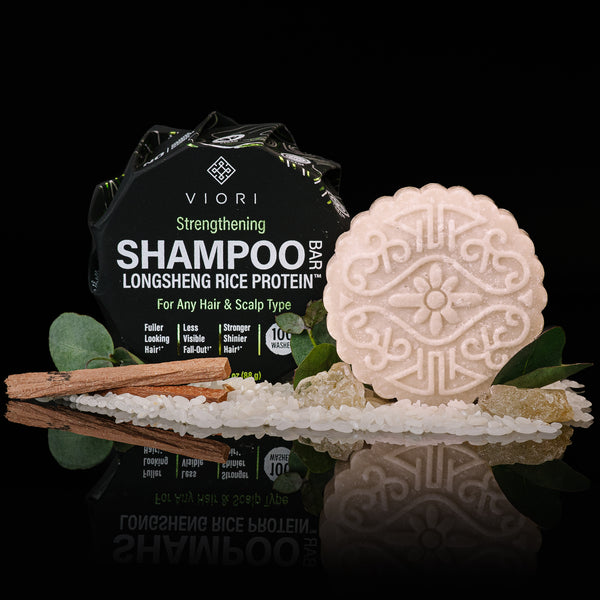
Professional brands invest heavily in pH testing and buffering systems. Viori, for instance, specifically formulates to maintain optimal pH balance, which is one reason their rice-based bars deliver consistent results across so many different hair types.
The Protein-Moisture Balance Most People Get Wrong
Let me get a bit technical here, because this is where amateur formulation really falls apart.
Your hair is approximately 91% protein (specifically, keratin), but it also needs moisture content (around 10-13% water) for flexibility. The balance between these two factors determines your hair's health and behavior.
Here's what imbalance looks like:
- Too much protein: Brittle, straw-like texture that breaks easily
- Too much moisture without protein: Stretchy, limp hair that feels mushy when wet
- Proper balance: Strong hair with natural elasticity
Want to test your own hair? Take a shed hair (find one on your brush) and stretch it gently. Breaks immediately? You need moisture. Stretches excessively-more than 50% of its length-without breaking? You need protein. Stretches moderately, maybe 20-30%, then returns somewhat to its original length? You're balanced.
Most Amazon brands take a one-size-fits-all approach, loading every product with protein OR making everything heavily moisturizing. They're formulating based on trending keywords, not on understanding how hair actually works at a biological level.
Professional formulations segment products by specific purpose, understanding that different hair needs different ratios depending on damage level, porosity, and even seasonal changes.
The Scalp Microbiome: Cutting-Edge Science Budget Brands Ignore
Here's something that represents the absolute forefront of trichological research, and it's a concept that doesn't even appear on most Amazon brand radars: your scalp has its own microbiome, just like your gut.
Recent research shows:
- Your scalp hosts a unique bacterial ecosystem
- Harsh surfactants disrupt this delicate balance
- A disrupted microbiome leads to dandruff, irritation, excess oil production, and potentially even hair loss
- Recovery can take weeks after the disruption stops
The professional implication? The gentler the cleansing system, the better for long-term scalp health. But gentler formulations require more expensive surfactants and more sophisticated chemistry-exactly what budget brands cut corners on to keep costs down.
Here's a technical detail for anyone science-minded: bacteria like Cutibacterium acnes and Malassezia yeast naturally exist on your scalp. They're supposed to be there. It's all about balance. When harsh products create imbalance, you get inflammation, which leads to compromised hair follicles, which leads to thinning over time.
I've watched this happen. Clients come in using ultra-cheap shampoos, develop persistent scalp issues, and then spend months trying to restore balance-even after switching to better products. Prevention would have been so much easier than repair.
The Water Chemistry Variable Nobody Mentions
Here's insider knowledge that completely changed how I advise clients: your water type dramatically affects how any hair product performs.
Hard Water (High Mineral Content)
If you have hard water-meaning high levels of calcium and magnesium-here's what happens:
- Minerals bind to your hair shaft
- Traditional cleansers create soap scum
- Hair feels rough and weighed down
- The formula needs chelating agents like EDTA or citric acid to counteract minerals
Soft Water
With soft water, the experience is completely different:
- Cleansers lather more easily
- Hair can feel slippery or over-conditioned
- You need less product per wash
Professional brands account for this variation. Viori, for example, includes rice protein that naturally binds to minerals and helps prevent buildup, and they provide guidance on adjusting your technique based on your water type.
Amazon brands? They make one-size-fits-all claims that can't possibly work for everyone's water chemistry. Then when the product doesn't work for you, they attribute it to your "unique hair type" rather than acknowledging the limitations of their formulation.
Why Quality Bar Shampoos Are Actually Harder to Make
Since more people are searching for sustainable bar options, let's talk about something most consumers don't realize: quality bar shampoos are actually more technically difficult to formulate than liquid shampoos.
The Technical Challenges
- Anhydrous formulation: Waterless products require completely different preservation strategies
- Structural integrity: The bar must stay solid in your humid shower but break down appropriately when wet
- Even distribution: Active ingredients must disperse uniformly despite the solid format
- pH control without water: More complex buffering systems are required
Here's how Viori handles this professionally: They use Sodium Cocoyl Isethionate (a mild surfactant that's naturally solid), incorporate Behentrimonium Methosulfate for conditioning, add Cetyl Alcohol and Stearic Acid as binding agents (these are fatty alcohols-moisturizing, not drying), use fermented rice water through a proprietary incorporation process, and allow specific curing time to ensure proper pH balance.
What I've seen go wrong with cheap bars:
- Pure soap base with pH of 9-10 (way too alkaline for hair)
- Inadequate conditioning leading to extreme tangling
- Bars that crumble or melt too quickly
- No consideration for the transition period your hair needs when switching products
The Transition Period (Why Immediate Reviews Mean Nothing)
Here's a technical reality that ethical brands explain upfront but ghost brands conveniently ignore: switching products, especially to more natural formulations, requires an adjustment period.
The Science of Transition
Weeks 1-2: Hair may feel rough or tangled. Why? The silicone coating from your previous products is being removed, revealing your hair's actual condition. Your cuticle is exposed for the first time in months.
WHAT CUSTOMERS ARE SAYING
Real reviews for Hidden Waterfall Barra de Champú
Weeks 3-4: Hair may feel greasy or heavy. Why? Your scalp is adjusting its oil production. Your sebaceous glands are recalibrating-they were overproducing to compensate for harsh cleansers stripping away natural oils.
Weeks 5-8: Your true hair condition emerges. Your scalp microbiome is rebalancing, natural sebum production normalizes, and the cuticle layer begins genuine repair.
Professional brands like Viori provide this information upfront and recommend 2-3 months of consistent use before making final evaluations. They educate customers on what to expect because they understand biology.
Amazon brands want immediate 5-star reviews for algorithm ranking. They don't prepare customers for biological reality, which leads to people abandoning products that might have actually worked with proper guidance and realistic expectations.
The Real Cost Analysis Nobody Does
Let me walk you through the math that clients rarely calculate themselves.
Actual Cost Per Wash
Typical Amazon Liquid Shampoo:
- 16 oz bottle: $12
- Washes per bottle: approximately 32 (using 0.5 oz per wash for medium-length hair)
- Base cost per wash: $0.37
- Contains silicones requiring monthly clarifying treatment: add $3/month
- Actual cost: $0.47/wash
Professional Bar (Using Viori as Example):
- 3.2 oz bar: approximately $12
- Washes per bar: 60+ (based on consistent user reports)
- Cost per wash: $0.20
- No buildup requiring additional treatment
- Actual cost: $0.20/wash
The Long-Term Costs Nobody Factors In
Damage from improper pH: Repair treatments run $20-50 monthly. Professional correction can cost $150-300.
Scalp issues from microbiome disruption: Dandruff treatments cost $15-30 monthly. Dermatologist visits can run $100-200 or more.
Hair loss from follicle stress: Replacement products and treatments cost $50-200 monthly. Medical intervention? Potentially thousands.
When you calculate the true cost-including the biological consequences of poor formulation-quality products are actually more economical in the long run.
How to Evaluate Any Hair Product Like a Professional
Since I can't review every Amazon brand individually (and many don't provide enough information anyway), here's how to technically evaluate any product yourself.
The Ingredient Literacy Test
Green flags:
- Ingredients listed in proper INCI (International Nomenclature of Cosmetic Ingredients) format
- First five ingredients make chemical sense for the product type
- Absence of drying alcohols high on the list (Alcohol Denat., SD Alcohol, Isopropyl Alcohol)
- Preservatives are clearly identified (shows formulation knowledge)
- pH


