
I'll never forget the moment I realized that beautiful hair isn't created-it's revealed. It was about seven years into my career, and I was working with a client whose hair just wouldn't cooperate no matter what products we tried. We'd get temporary results in the salon, but within days, she'd be back to square one.
That's when it hit me: we were treating symptoms instead of understanding the underlying chemistry. We were applying band-aids to a problem that required actual healing.
After two decades of transforming hair in the salon chair, I've learned that the difference between hair that looks good temporarily and hair that's genuinely healthy comes down to understanding what's actually happening at the molecular level. Today, I'm pulling back the curtain on what professionals analyze when evaluating haircare-because you deserve to know what you're putting on your hair beyond the pretty packaging and clever marketing.
The Cleansing Conversation Nobody's Having
Let's start where every shampoo formula begins: the cleansing agents. This is where things get fascinating-and where many products make choices that prioritize lather and low cost over your hair's long-term health.
Understanding What's Actually Cleaning Your Hair
Walk into most salons, and you'll hear stylists discussing sulfates. But here's what's really happening when you wash your hair with sodium laureth sulfate (SLES) or sodium lauryl sulfate (SLS):
These molecules carry a negative charge, making them phenomenally efficient at binding with oils and dirt. The problem? They're completely indiscriminate. They can't tell the difference between the unwanted sebum buildup on your scalp and the protective lipid layer your hair desperately needs to stay healthy.
Think of it like using a pressure washer to clean a delicate painting. Sure, it'll remove the dirt-but it'll also strip away layers you actually wanted to keep.
What this means for your hair:
- Your cuticle lifts: The outer protective layer of your hair opens up, increasing porosity over time
- Color fades faster: Those lifted cuticles let color molecules escape with every single wash
- Protein literally washes away: Your hair's structural building blocks leach out through those opened cuticles
- Your scalp's pH gets disrupted: The natural protective barrier (around 4.5-5.5 pH) gets thrown off balance
The Strip-and-Replace Cycle (And Why It Never Ends)
Here's where formulation gets really interesting-and where I wish more people understood what's actually happening in their shower.
When you use aggressive cleansing agents, you must include equally strong conditioning agents to counteract the stripping effect. This creates what I call the "strip-and-replace cycle"-and it's why your hair never seems to improve, just maintains a state of managed damage.
NOT SURE WHICH PRODUCT IS RIGHT FOR YOU?
TAKE THE QUIZTakes 30 seconds · 134,000+ customers matched
Most mainstream formulations tackle this with:
- Quaternary compounds like behentrimonium chloride that deposit on the hair shaft
- Dimethicone and silicones that create immediate slip and shine
- Coating agents that temporarily smooth the cuticle
The issue? These conditioning agents work by coating the hair rather than actually repairing damage at the structural level. It's like putting a fresh coat of paint on rotting wood-looks better temporarily, but the underlying problem keeps getting worse.
I've watched this cycle play out hundreds of times. A client comes in with dry, damaged hair. We recommend a moisturizing shampoo and rich conditioner. Their hair feels amazing-for about a week. Then it starts feeling heavy, greasy, limp. So we switch to a clarifying shampoo to strip away the buildup. Now their hair feels stripped and dry again. Back to the moisturizing products. Round and round we go.
There has to be a better approach.
The Protein-Moisture Balance: Your Hair's Most Critical Need
This is the technical concept I wish every single person understood before buying another product. It's absolutely fundamental to hair health, yet it rarely gets discussed outside professional circles.
What Your Hair Is Actually Made Of
Your hair is approximately 91% protein-specifically, keratin. The remaining 9% consists of lipids that protect and seal the cuticle, water that provides flexibility, melanin for color, and trace minerals.
For a product to truly support hair health, it needs to address this composition. But here's the problem: most formulations focus heavily on moisture while completely neglecting protein replenishment.
Why This Balance Is Everything
When your hair becomes damaged-through heat styling, chemical treatments, environmental stress, or even just regular washing with harsh cleansers-the protein structure becomes compromised. The cuticle lifts, the cortex becomes exposed, and those precious protein molecules literally wash down your drain.
If you only add moisture without protein, you create what we professionals call "hygral fatigue." The hair shaft swells excessively with water, and the internal bonds weaken. Your hair becomes stretchy, limp, and prone to breakage. It feels mushy when wet and looks lifeless when dry.
Conversely, too much protein without adequate moisture creates brittle, straw-like hair that snaps at the slightest tension. It feels rough, looks dull, and breaks instead of bending.
Here's what most people don't realize: Your hair's needs change constantly-seasonally, with your styling habits, as damage accumulates, even with hormonal fluctuations. The ideal routine adjusts to these changing needs rather than applying the same formula day after day, year after year.
The pH Factor: The Most Critical Element Nobody Talks About
If I could make one piece of technical knowledge common understanding, it would be this: pH fundamentally affects how every single product performs on your hair.
The Science That Changes Everything
Hair's natural pH sits between 4.5-5.5-slightly acidic. At this pH level, everything works as it should:
- The cuticle remains closed and smooth
- Your hair retains moisture effectively
- Color molecules (if you have treated hair) stay locked inside
- Your scalp's protective acid mantle remains intact
Now here's the problem: many commercial shampoos have a pH between 6-7 or even higher. Why would companies formulate products this way when it's objectively worse for your hair?
- Higher pH creates more foam (consumers have been conditioned to associate bubbles with cleaning power)
- It's easier to stabilize formulations at neutral pH
- It costs less to manufacture
But when you wash with a high-pH shampoo, your cuticle swells and lifts, creating increased friction between hair strands, higher porosity (your hair absorbs moisture rapidly but also loses it just as quickly), dullness, tangles, rough texture, accelerated color fade, and vulnerability to environmental damage.
Every. Single. Time. You. Wash.
Why Your Grandmother Was Right About Acidic Rinses
This is why professional-grade products often include acidifying agents-and why your grandmother's advice about vinegar or lemon rinses actually has solid scientific backing.
When you follow a higher-pH shampoo with an acidic conditioner or treatment, you help re-close the cuticle and restore your hair's natural pH. It's damage control, essentially.
But what if you didn't create the problem in the first place?
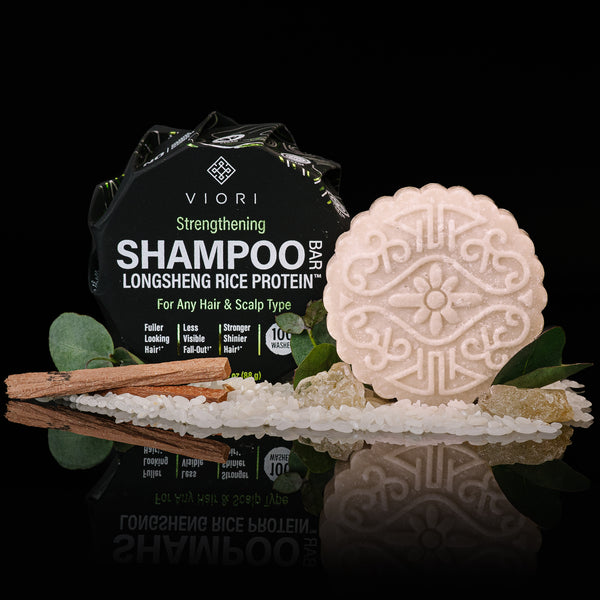
This is where traditional ingredients like fermented rice water become technically fascinating. The fermentation process creates organic acids that naturally lower pH and promote cuticle closure-which is precisely why the Red Yao women's hair care practices, passed down through generations and now incorporated into Viori's formulations, have proven so effective over centuries.
The science validates the tradition.
Ingredient Efficacy vs. Ingredient Marketing
Let me share something that frustrates many of us in the industry: the massive gap between ingredients that actually work at a molecular level and ingredients included primarily for marketing appeal.
I can't tell you how many times I've examined a product's ingredient list and seen exotic-sounding botanicals listed near the end-meaning they're present in such tiny amounts that they couldn't possibly have any functional effect. But they look great on the label and in the advertising copy.
The Clean Beauty Movement: A Professional's Honest Assessment
The shift toward "natural" or "clean" formulations has both genuine benefits and technical challenges. As someone who's watched this movement evolve over two decades, here's my honest take:
Real advantages:
- Reduced exposure to potentially irritating synthetic fragrances
- Lower environmental impact (generally speaking)
- Often gentler pH profiles
- Fewer endocrine-disrupting compounds
- Better for sensitive scalps
Technical challenges:
- Natural preservatives are less effective (shorter shelf life, potential contamination risk)
- Plant-based surfactants sometimes don't cleanse as effectively
- Natural oils can oxidize and become rancid
- Inconsistent active ingredient concentrations (natural sources vary by season and location)
Neither approach is inherently superior-what matters is understanding the trade-offs and formulating intelligently within your chosen framework.
The Silicone Debate: Why It's More Nuanced Than You Think
Silicones have been somewhat demonized in clean beauty circles, but from a technical standpoint, they're some of the most effective conditioning agents available.
What silicones actually do:
- Create a breathable barrier that reduces moisture loss
- Provide heat protection during styling
- Smooth the cuticle for increased shine and manageability
- Reduce friction damage during brushing and styling
The legitimate concern: They can accumulate on the hair shaft over time, eventually creating a barrier that prevents beneficial ingredients from penetrating. Some types can make hair feel heavy or coated.
The professional solution isn't necessarily eliminating silicones entirely but using them strategically and knowing when to clarify your hair to remove buildup. Or-and this is where I've seen the best long-term results-finding formulations that don't rely on the strip-and-replace cycle in the first place.
The Rice Water Phenomenon: Where Ancient Wisdom Meets Modern Chemistry
Since Viori's formulation is rice-based, let's examine why rice water has proven effective across centuries. This is where traditional practice and modern chemistry align in a way that honestly gives me goosebumps.
The Active Compounds That Actually Make a Difference
When rice water undergoes fermentation, several important chemical transformations occur that you can't get from unfermented rice water or from synthetic alternatives:
Inositol Production
Inositol (sometimes called vitamin B8) is a carbohydrate compound that has been clinically shown to penetrate the hair shaft and strengthen internal bonds, remain inside the hair even after rinsing, protect against future damage, and increase elasticity-your hair's ability to stretch without breaking.
This is significant because most conditioning agents only coat the exterior of your hair. Inositol actually enters the cortex layer where structural repair happens. We're talking about actual repair, not just cosmetic improvement.
Amino Acid Concentration
Fermentation breaks down rice proteins into amino acids-the actual building blocks your hair uses for repair. These smaller molecules can penetrate where whole proteins cannot, delivering reconstruction at the molecular level.
I've seen the difference this makes firsthand. Hair that's been treated with amino-acid-rich formulations shows measurably improved tensile strength and elasticity. It's not subjective-it's quantifiable.
pH Optimization
The fermentation process creates organic acids that naturally lower pH to the ideal range for hair (4.5-5.5), promoting cuticle closure without requiring synthetic acidifying agents. The product works with your hair's natural chemistry instead of fighting against it.
WHAT CUSTOMERS ARE SAYING
Real reviews for Hidden Waterfall Barra de Champú
Antioxidant Development
Fermentation increases the concentration of antioxidants like ferulic acid and allantoin, which protect against environmental damage and oxidative stress-the processes that cause premature graying and weakening.
The Clinical Validation
What makes this particularly compelling from a professional standpoint is that we're not just relying on anecdotal tradition. Scientific studies have confirmed these mechanisms, validating what the Yao women have known for over 2,000 years.
When tradition and science align this perfectly, I pay attention.
The Hard Water Problem: The Hidden Performance Killer
Here's something that dramatically affects product performance but rarely appears in marketing materials: water quality.
Mineral Content and Why Your Products Might Not Be Working
If you have hard water (high in calcium and magnesium), these minerals bind with surfactant molecules, reducing cleaning efficacy, deposit on the hair shaft creating buildup that makes hair feel coarse and look dull, increase the amount of product you need to create lather, and can alter the intended pH of your products.
I've had clients swear a product wasn't working for them, only to discover they had extremely hard water. Once we addressed that variable, the same product performed completely differently.
Professional solutions typically include chelating agents-ingredients like EDTA or citric acid that bind to these minerals and prevent them from depositing on your hair. However, these are often omitted from clean formulations for environmental reasons.
The natural alternative: Interestingly, the phytic acid naturally present in rice water acts as a gentle chelator, which may explain part of its effectiveness even in hard water areas.
If you've ever traveled and noticed your hair behaving completely differently, water quality is often the culprit.
The Sebum-Matching Theory: Working With Your Hair, Not Against It
Here's a concept I wish more product lines would embrace: biomimicry in conditioning formulations.
Understanding Natural Sebum
Your scalp produces sebum-a complex mixture of triglycerides (about 41%), wax esters (about 26%), squalene (about 12%), free fatty acids (about 16%), plus cholesterol and cholesterol esters.
This isn't random. This specific composition exists because it's exactly what your hair needs for protection, moisture retention, and flexibility.
The Smarter Approach to Conditioning
The most effective conditioning formulations don't try to replace sebum with completely different substances. Instead, they use ingredients that chemically mimic natural sebum.
This allows your hair to "recognize" and integrate these ingredients into its natural protective layer rather than just coating over it with something foreign that will eventually build up and need to be stripped away.
Ingredients that accomplish this include:
- Jojoba oil (technically a liquid wax ester, nearly identical to human sebum)
- Squalane (a saturated, shelf-stable form of squalene)
- Certain plant ceramides
- Fatty alcohols like cetyl and stearyl alcohol (not the drying alcohols you want to avoid)
Viori's formulation includes jojoba oil and several sebum-mimicking fatty alcohols, demonstrating a more sophisticated approach to conditioning than simple coating agents.


