
In my two decades behind the salon chair, I've witnessed hair care trends that range from brilliant to bewildering. But nothing has quite fascinated me like the recent emergence of alternative media outlets launching their own shampoo lines. It's a peculiar collision of politics, personal care, and consumer psychology that deserves serious examination-both from a professional standpoint and as someone who genuinely cares about the health of your hair.
Today, I'm pulling back the curtain on this phenomenon. We're going to explore what happens when media brands enter the beauty space, what these products actually contain, and most importantly, what it all means for your hair health. Grab your coffee, because we're going deep.
The Skeptical Consumer Paradox: When Distrust Drives Your Product Choices
Here's what makes these products uniquely interesting from a formulation perspective: they're built on what I call the "skeptical consumer paradox." These brands position themselves around distrust of mainstream products, which transforms your daily shampoo from a simple cleanser into something much more complex-a statement of values, a declaration of independence from "big beauty," and a daily reinforcement of your worldview.
Now, let me be clear: there are absolutely legitimate concerns about certain ingredients in conventional hair care. I've spent years studying formulations, and I can tell you that the scrutiny around sulfates, parabens, and synthetic fragrances isn't entirely unfounded. Some of it is warranted science. But-and this is important-alternative media brands often amplify these concerns well beyond what the scientific evidence actually supports.
The Real Talk About Sulfate-Free Formulations
Let's start with sulfates, because this is where I see the most confusion in my salon chair. Sodium lauryl sulfate (SLS) and sodium laureth sulfate (SLES) have been the workhorses of the shampoo world for decades. They're effective, economical, and they work. But yes, they can be harsh-especially if you have a sensitive scalp or color-treated hair.
Here's what most consumers don't realize: replacing sulfates isn't a simple swap. When formulators go sulfate-free, they typically turn to alternatives like:
NOT SURE WHICH PRODUCT IS RIGHT FOR YOU?
TAKE THE QUIZTakes 30 seconds · 134,000+ customers matched
- Decyl glucoside: Beautifully gentle, but it costs three to five times more than SLS
- Coco-betaine: Mild and pleasant, but provides significantly less cleansing power
- Sodium cocoyl isethionate: Effective and relatively gentle, but doesn't create that robust lather that consumers psychologically associate with "getting clean"
The challenge isn't just formulation-it's expectation management. I've had countless clients complain that their sulfate-free shampoo "doesn't work" when what they really mean is "it doesn't foam like my old shampoo." Big bubbles don't equal better cleaning, but tell that to someone who's been conditioned by decades of marketing to believe otherwise.
The Preservation Problem Nobody Wants to Talk About
Now let's tackle parabens, because this is where things get technically complicated. Parabens have been used in cosmetics for nearly a century, and there's a reason: they're exceptionally good at their job. They prevent bacterial and fungal growth, they're stable across various pH ranges, and they work effectively at low concentrations.
When you formulate without parabens, you need alternatives, and each one has limitations:
- Phenoxyethanol: Works well but requires specific pH ranges to be effective
- Potassium sorbate: Provides less broad-spectrum protection than parabens
- Sodium benzoate: pH dependent and can form benzene under certain conditions (which is its own concern)
Here's what keeps me up at night as a professional: without proper formulation knowledge and rigorous testing, "paraben-free" products can actually be less safe due to inadequate preservation. A contaminated product is far more dangerous than the theoretical concerns around parabens. I've seen clients develop scalp infections from poorly preserved "natural" products, and it's heartbreaking because they thought they were making the healthier choice.
The Identity Politics of Your Shower Routine
Let's talk about something that's rarely discussed openly: these products transform everyday grooming into political and ideological acts. Every time you lather up, you're not just washing your hair-you're reinforcing your worldview, your community membership, your place in a particular tribe.
From a behavioral psychology perspective, this is actually brilliant marketing, even if it makes me uncomfortable. Here's how it works:
Daily Rituals Create Powerful Identity Reinforcement
Using a shampoo from a trusted alternative media source creates multiple touchpoints throughout your week that strengthen community identification. It's the same psychological principle behind religious rituals or patriotic symbols-repeated actions that reinforce group belonging. That bottle in your shower becomes a tangible representation of your values, visible every single day.
The Consistency Trap
Once you've purchased one product from an alternative brand, you're psychologically primed to purchase more. It would create cognitive dissonance to trust them for information but not for products, or vice versa. Your brain seeks consistency, and brand ecosystems exploit this beautifully.
Social Signaling in Your Bathroom
These products become conversation pieces. That distinctive bottle in your shower communicates your values to houseguests, family members, romantic partners-anyone who happens to glance at your bathroom shelf. It's identity signaling in one of the most private spaces of your home.
What's Actually in That Bottle? A Professional's Deep Dive
Alright, let's put on my formulation hat and talk about what I commonly see when I examine "alternative" or "natural" product lines. I've tested dozens of these products in my salon, and there are patterns that concern me.
Common Formulation Shortcuts That Compromise Performance
The Glycerin Overload Problem: Many natural formulations rely heavily on vegetable glycerin as a humectant-an ingredient that attracts and retains moisture. While glycerin is indeed plant-derived and can be beneficial, too much creates significant problems. I'm talking about hair that feels sticky or tacky, excessive frizz in humid climates, and a limp, greasy appearance that no amount of styling can fix.
Professional insight: Glycerin should typically comprise 2-5% of a formulation. I've tested alternative brand products where it was 15-20% of the formula. That's not sophisticated formulation-that's cutting corners with an inexpensive ingredient.
Essential Oil Excess: To avoid synthetic fragrances, some formulations use extremely high concentrations of essential oils. This concerns me deeply because essential oils are potent allergens. Lavender and tea tree-two of the most popular "natural" scents-are among the most common sensitizers in cosmetics. I've personally treated clients with significant scalp inflammation and contact dermatitis from "all-natural" products that were actually caused by excessive essential oil concentrations.
Additionally, citrus oils cause photosensitivity (making your skin and scalp more vulnerable to sun damage), and essential oils oxidize quickly, which shortens shelf life and potentially creates irritating compounds over time.
The pH Balance Disaster: This is where I see the biggest technical failures in alternative brands, and it's the issue that makes me genuinely frustrated. Hair's optimal pH range is 4.5-5.5. When products fall outside this range, they leave the hair cuticle raised, which leads to frizz, tangling, increased breakage, dullness, and rapid color fading for anyone with color-treated hair.
Many small-batch manufacturers lack the laboratory infrastructure to properly pH-balance their products. I've personally tested alternative brand products that measured pH 7-8 (neutral to alkaline). Let me be blunt: this will damage your hair over time, regardless of how "natural" the ingredients are. pH matters more than almost any other factor in hair care, and it's often the most overlooked.
The "Detox" Myth: Let's Talk Real Science
I need to address this head-on because it drives me absolutely crazy: the concept of "detoxifying" shampoo is scientifically meaningless. I'm not being harsh-I'm being accurate.
Here's why:
- Hair is dead tissue. It's keratinized protein that has no living processes. You cannot detoxify something that has no metabolism, no circulatory system, no biological function.
- Your scalp doesn't accumulate "toxins" in the way these products suggest. Your liver and kidneys handle detoxification. That's their job, and they're very good at it.
- What these products actually do-when they work-is remove buildup from silicones, styling products, and hard water minerals.
You know what else does this? Any clarifying shampoo. You don't need special "detoxifying" formulations with mystical ingredients, and you certainly don't need to pay premium prices for them. A simple clarifying treatment once or twice a month will accomplish the same goal for a fraction of the cost.
The Manufacturing Reality Nobody Talks About
Here's an industry secret that most consumers don't know: the majority of alternative media brands don't actually manufacture their own products. They're not running laboratories and production facilities. They're not employing cosmetic chemists. So how do these products come to exist?
The White-Label Truth
The process typically works like this: The brand contacts a white-label or private-label manufacturer. They browse a catalog of existing formulations-maybe they request custom fragrances or slight modifications. The manufacturer produces the product in bulk. It's then labeled with the brand's name and marketing copy.
This means several important things:
- The same base formula might be sold to multiple brands with different labels and wildly different marketing claims
- The "proprietary blend" might not be proprietary at all-it might be formulation #37 from the manufacturer's catalog
- Minimum order quantities often force smaller operations to choose from pre-existing formulations rather than creating truly custom products
- Testing limitations mean smaller brands may not conduct the extensive safety and efficacy testing that major corporations routinely perform
Quality Control Concerns That Keep Me Up at Night
Without major corporate infrastructure, here's what worries me professionally:
- Batch-to-batch inconsistency: Your first bottle might perform significantly differently than your third bottle
- Limited stability testing: Does the product remain effective and safe throughout its entire shelf life, or does it degrade after six months?
- Inadequate preservation testing: Has the preservative system been challenge-tested against multiple strains of bacteria and fungi?
- Poor storage conditions: Heat exposure during shipping and warehousing can degrade active ingredients, and smaller operations may not have temperature-controlled logistics
I'm not saying these problems exist in every alternative product. I'm saying that without transparency about manufacturing and testing processes, consumers have no way to know whether they exist or not.
Decoding Certifications and Claims: What They Actually Mean
Let's demystify those badges, seals, and claims you see on product packaging, because there's a lot of strategic ambiguity in labeling.
"Made in USA" vs. "Made with USA Ingredients"
These sound similar but are very different:
- "Made in USA": The product was formulated, manufactured, and packaged in the United States (though ingredients may be imported)
- "Made with USA Ingredients": The product could be manufactured anywhere, using some American-sourced ingredients mixed with ingredients from anywhere else
The "Natural" Loophole
Here's the shocking truth that most consumers don't realize: "Natural" has no legal definition in cosmetics. None. Zero. A product can be called "natural" while containing predominantly synthetic ingredients. There's no regulatory standard, no government enforcement, no consistency across brands or categories.
WHAT CUSTOMERS ARE SAYING
Real reviews for Hidden Waterfall Barra de Champú
When I see "natural" on a label, it tells me almost nothing about what's actually inside the bottle.
Understanding Organic Certifications
- USDA Organic: This is legitimate and regulated, requiring 95% organic ingredients (excluding water and salt)
- "Made with organic ingredients": Only requires 70% organic content-still significant, but very different from USDA Organic
- Various eco-certifications: Often have lower thresholds and less rigorous verification than consumers assume
My professional advice: Always read the actual ingredient list, not just the marketing claims on the front of the package.
Why Alternative Media Brands Launched Product Lines: Follow the Money
From a business strategy perspective, the move into physical products makes perfect sense. Let me break down the economics:
Revenue Diversification in a Hostile Environment
Alternative media outlets face unique monetization challenges-platform demonetization, advertiser boycotts, payment processor restrictions. Physical products provide solutions:
- High profit margins (typically 60-80% markup in personal care)
- Revenue streams that can't be "deplatformed" or algorithmically suppressed
- Valuable customer data for marketing and community building
- Recurring revenue through subscriptions
The Logical Progression from Supplements to Shampoo
There's a clear business logic here:
- Distribution infrastructure for physical products already exists from supplement sales
- Lower regulatory burden-cosmetics have minimal pre-market requirements compared to supplements or medications
- Aligned customer base-consumers skeptical of mainstream medicine often distrust mainstream personal care
- Faster repurchase cycle-you use up shampoo much faster than supplements, creating more frequent transactions
I'm not criticizing the business model. I'm simply observing that product launches are often driven more by business opportunity than by revolutionary formulation breakthroughs.
Do These Products Actually Work? A Performance Assessment
Setting all politics and marketing aside, let's talk about performance. Because at the end of the day, your shampoo has one job: to clean and care for your hair effectively.
My Professional Criteria for Evaluating Any Shampoo
- Cleansing efficacy: Does it remove sebum, product buildup, and environmental debris without stripping?
- Scalp health: Does it maintain or improve scalp condition over time?
- Hair condition: Does hair look and feel healthy after use?
- Manageability: Is hair easier to style and manage afterward?
- Long-term results: Are there consistent improvements over weeks and months of use?
Common Performance Issues I See in My Salon
Insufficient Cleansing: Gentler surfactants may not adequately cleanse oily scalps or remove heavy styling products. I've had multiple clients come in with significant buildup after switching to alternative brands, requiring professional clarifying treatments to reset their hair.
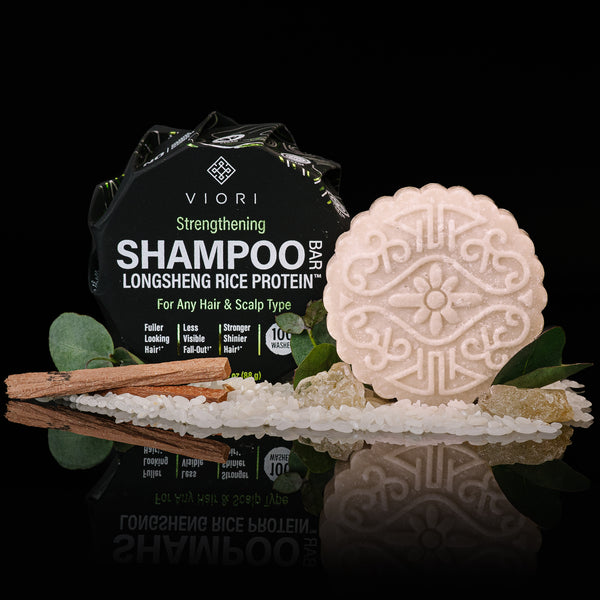
Protein Overload: Many natural formulations rely heavily on various proteins-quinoa protein, rice protein, silk protein. While protein can temporarily strengthen hair, overuse makes hair brittle, stiff, and prone to breakage. If your hair feels straw-like or rough after using a "strengthening" shampoo, you're experiencing protein overload.
Build-Up from Natural Oils: Coconut


