
I'll never forget the day a client sat in my chair, nearly in tears, holding a clump of hair that had broken off during her morning routine. "But I've been using moisturizing products every single day," she said, confused and frustrated. "My hair feels soft, so why is it breaking?"
After two decades behind the salon chair, I've had this conversation more times than I can count. Here's the hard truth that most hair care brands won't tell you: that soft, moisturized feeling might be masking serious structural damage happening beneath the surface.
Today, I'm pulling back the curtain on honey-based hair care systems and the science that most product reviews completely miss. This isn't about bashing any particular product-it's about understanding what your hair actually needs versus what marketing departments want you to believe.
Fair warning: We're going deep into hair chemistry, porosity science, and the protein-moisture balance that literally makes or breaks your hair health. But I promise to keep it real, practical, and rooted in what I've learned from thousands of heads of hair over twenty years.
The Honey Trap: When "Moisturizing" Becomes Your Hair's Worst Enemy
Honey in hair care isn't new-it's been used in beauty rituals for thousands of years, and honestly, the science backs up many of its benefits. As a humectant, honey draws moisture from the air into your hair shaft. It's packed with antioxidants, has antimicrobial properties, and offers that "natural" appeal that we're all looking for these days.
But here's what changed my entire approach to formulating hair care: honey's moisture-drawing power creates a trap that depends entirely on your climate, hair porosity, and protein needs. And most people using honey-based products have no idea this trap exists until the damage is already done.
NOT SURE WHICH PRODUCT IS RIGHT FOR YOU?
TAKE THE QUIZTakes 30 seconds · 134,000+ customers matched
The Technical Reality Nobody Talks About
Honey is mostly fructose and glucose-simple sugars with molecules small enough to actually penetrate your hair cuticle, especially if you have medium-to-high porosity hair. It contains about 17-20% water, which is where that "moisturizing" reputation comes from.
The benefits are absolutely real:
- Moisture retention through those humectant properties
- Antioxidant protection from flavonoids and phenolic compounds
- Antimicrobial benefits that support scalp health
But-and this is huge-when you focus exclusively on moisture without addressing your hair's structural protein needs, you're setting yourself up for long-term damage that feels good in the moment but weakens your hair over time. I've seen this pattern play out hundreds of times.
The Missing Piece Everyone Ignores: Your Hair Is 91% Protein
Let me paint you a picture. Your hair strand is like a brick wall: protein is the bricks (structure and strength), while moisture is the mortar (flexibility and elasticity). You need both. Not one or the other-both.
Natural hair, particularly Type 3 and Type 4 curl patterns, walks a tightrope between these two elements. Too much moisture without adequate protein creates what we professionals call "hygral fatigue"-and this is where I've seen honey-heavy formulations fail my clients time and time again.
What Hygral Fatigue Actually Looks Like
Here's the sequence that happens when you continuously use moisture-rich, protein-light products (and this is based on actual hair science, not marketing copy):
- Humectants draw water into the cortex-the inner structure of your hair
- Your hair shaft swells, causing the protective cuticle layer to lift
- Without sufficient protein, the cuticle stays raised and the structure becomes compromised
- Your hair becomes overly elastic-stretchy, mushy, and prone to breakage
- You experience the paradox: Hair feels soft and moisturized but lacks definition, strength, and resilience
I've watched clients come in month after month, progressively more frustrated because their "moisturizing" routine has left their hair limp, undefined, and breaking despite feeling soft to the touch. The problem? They were addressing only half of their hair's needs while completely ignoring the other half.
Porosity: The One Concept That Changes Everything
If I could sit down with every person struggling with their hair care routine and teach them just one thing, it would be this: Your hair's porosity level completely determines how products will perform on YOUR hair. Not your best friend's hair. Not that influencer's hair. Yours.
Porosity refers to your hair's ability to absorb and retain moisture. It's determined by the condition of your cuticle layer-that outer protective coating of your hair shaft that looks like shingles on a roof.
Low Porosity Hair: When Products Just Sit There
Low porosity hair has tightly closed cuticles. This hair type naturally repels moisture, which means honey's humectant properties often sit on the surface rather than penetrate. The result?
- Product buildup that never quite absorbs
- Greasy, weighed-down appearance by midday
- Minimal actual moisture benefit despite using "moisturizing" products
- Difficulty getting any treatments to actually work
Real talk from the salon chair: If you have low porosity hair, honey-based products work best when applied to damp (not soaking wet) hair and paired with gentle heat, which temporarily lifts the cuticle for better absorption. But even with these techniques, you'll probably find that lighter-weight ingredients serve you better overall.
High Porosity Hair: The Absorption and Release Nightmare
High porosity hair has raised or damaged cuticles-usually from chemical processing, heat damage, or environmental factors. This hair type absorbs everything rapidly, including honey's moisture. The problem? It releases that moisture just as quickly.
Think of high porosity hair like a sponge with tears in it. Sure, you can saturate it with water, but it won't hold that water for long. Without protein-rich treatments to literally fill the gaps in your damaged cuticles, honey-based products provide only temporary relief. You're basically pouring water into a leaky bucket.
The solution: High porosity hair requires a rotation system-moisture-rich products alternated with protein treatments to rebuild hair structure before you can truly retain moisture. It's more complicated, more time-consuming, and honestly, more expensive than most people realize when they start down this path.
Normal Porosity Hair: You're Playing on Easy Mode
Normal porosity hair has a healthy cuticle layer that opens when it should (to receive treatments) and closes when it should (to retain moisture and nutrients). This hair type tends to respond well to a variety of products, including honey-based formulations. But even you folks with normal porosity benefit from periodic protein treatments to maintain structural integrity.
Why Fermented Ingredients Changed My Entire Perspective
About five years ago, I stumbled onto something that completely transformed how I think about hair care formulation: the difference between simple humectants like honey and fermented ingredients.
The Red Yao women of Longsheng, China, have maintained hair that averages six feet in length and remains dark and lustrous into their 80s. Their secret? Fermented rice water-not honey, not some expensive salon treatment, but rice that's been fermented.
What Makes Fermentation Different
When rice is fermented, enzymatic processes break down compounds into smaller molecular structures and create entirely new beneficial substances. This includes:
- Inositol (Vitamin B8): Penetrates deep into the hair shaft to strengthen from within. Clinical studies show it reduces surface friction and helps repair internal damage.
- Panthenol (Vitamin B5): Improves moisture retention while simultaneously adding structure-it's both a humectant and a strengthener, which is incredibly rare.
- Hydrolyzed rice protein: Proteins broken down into small enough molecules to penetrate the cuticle and literally fill structural gaps in damaged hair.
- Amino acids: The building blocks of keratin, allowing your hair to rebuild its own protein structure rather than just coating the surface.
Why This Matters for Long-Term Hair Health
Unlike simple humectants that primarily work on the surface or cuticle layer, fermented rice water contains components that reach the cortex-the structural core of your hair shaft. This creates what I call a triple-action benefit:
- Sustained strength from protein binding
- Moisture retention from B-vitamins
- Cuticle smoothing from reduced surface friction
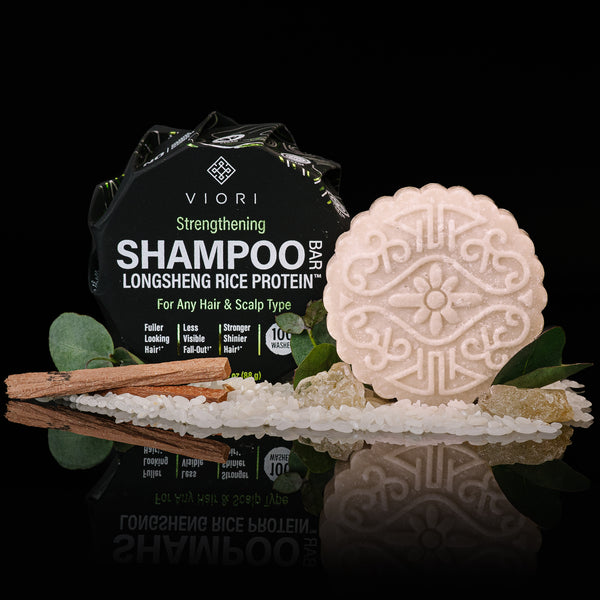
At Viori, our formulations are built around Longsheng Rice Water™-a fermented rice extract that provides what honey simply cannot: a naturally balanced combination of moisture AND protein in a single ingredient. This eliminates the need for those complex rotation systems or supplementary treatments to maintain healthy hair. You're getting both sides of the equation in every wash.
The pH Factor: The Technical Detail That Nobody Tests But Everyone Should
Here's a question I ask every client who comes to me with damaged hair: Do you know the pH of your shampoo?
The answer is almost always no-and that's a massive problem that's slowly destroying hair over time.
Why pH Matters More Than Most Ingredients
Honey has a naturally acidic pH of 3.2-4.5, which can help close the hair cuticle. That's genuinely positive. However, many commercial formulations increase the pH to make products milder and prevent scalp irritation. This modification can completely neutralize honey's cuticle-sealing benefits-so you're left with the sugar content but none of the pH advantages.
Your hair's optimal pH range is 4.5-5.5-slightly acidic. When products fall outside this range, especially on the alkaline side (pH 7 and above), several problems occur:
- The cuticle opens excessively and stays open
- Hygral fatigue accelerates dramatically
- Color fades more quickly
- Moisture escapes, leading to long-term dryness despite using "moisturizing" products
- Hair becomes increasingly porous and damaged with each wash
Without third-party pH testing-which let's be honest, most of us never perform-you're operating on blind faith that your product is properly balanced. Unfortunately, I've tested dozens of commercial formulations over the years, and many clock in at pH 8.0 or higher. That's cumulative damage happening every single time you wash your hair.
WHAT CUSTOMERS ARE SAYING
Real reviews for Hidden Waterfall Barra de Champú
Viori's commitment: Every bar we produce is formulated to maintain that optimal 4.5-5.5 pH range. This isn't just about immediate results-it's about protecting your hair's long-term health and supporting its natural slightly acidic state.
Let's Talk About "Sulfate-Free": Are We Solving the Wrong Problem?
The "sulfate-free" movement has dominated hair care conversations for the past decade, and I get it. Harsh sulfates like Sodium Lauryl Sulfate (SLS) and Sodium Laureth Sulfate (SLES) can absolutely strip hair of natural oils, leading to dryness and damage.
But here's the nuanced truth that marketing teams don't want you to know: Not all sulfates are created equal, and not all "sulfate-free" formulations are gentle.
The Alternative Surfactant Problem Nobody Mentions
Some sulfate-free cleansers use alternative surfactants that can be equally harsh-or sometimes even harsher. Others are so gentle they fail to adequately cleanse, leading to buildup that creates its own set of problems (including blocking moisture from actually penetrating your hair).
The focus shouldn't be on whether a specific ingredient class is present or absent. Instead, we should be asking: Is this formulation effectively cleansing my hair without causing damage? That's the question that actually matters.
What to Look for Instead of Just "Sulfate-Free"
Rather than fixating on "sulfate-free" labels, educated consumers should evaluate:
- What is the primary cleanser? Look for gentle options like Sodium Cocoyl Isethionate (often called "baby foam" for its mildness) derived from coconut oil.
- Is the formula pH balanced? (We just covered why this matters above)
- Does it contain conditioning agents that offset cleansing? Good formulations clean while simultaneously protecting.
- How does it perform on YOUR specific hair type and porosity? Personal testing beats marketing claims every single time.
Viori bars use Sodium Cocoyl Isethionate as our primary gentle cleanser-effective enough to remove buildup and excess oil, mild enough to preserve your hair's natural protective barriers. It's about finding that sweet spot between cleansing power and gentleness.
Building a Professional Rotation System (If You're Using Moisture-Only Products)
If you're committed to using honey-based moisturizing products, here's the professional protocol I've developed to prevent the protein-moisture imbalance that leads to hygral fatigue. I've refined this system over years of trial and error with clients:
Week 1-2: Moisture Phase
- Use your moisturizing shampoo and conditioner system
- Focus on hydration and softness
- Monitor hair elasticity closely: Wet hair should stretch 40-50% and return to its original length without breaking. If it stretches more or feels "mushy," you urgently need protein.
Week 3: Protein Treatment
- Incorporate a protein-rich treatment or mask
- Look for hydrolyzed proteins (wheat, silk, or rice) that are small enough to penetrate rather than just coat the surface
- This rebuilds the structural integrity that was compromised during your moisture-heavy weeks
Week 4: Clarifying Reset
- Use a gentle clarifying treatment to remove buildup
- This prevents accumulation of humectants and conditioning agents that block your hair from absorbing anything
- Prepares hair to receive treatments effectively in the next cycle
Ongoing: Porosity-Based Adjustments
- Low porosity hair: Reduce frequency of heavy moisturizing products; increase protein treatments to every 2 weeks
- Normal porosity hair: Maintain balanced rotation as described above
- High porosity hair: May need protein every 1-2 weeks depending on damage level-test your hair's elasticity to know for sure
Or-and here's where I'll be completely honest about my own approach-you can use a formulation that provides both moisture and protein from the start, eliminating the need for this complex, time-consuming rotation.
This is precisely why Viori formulations contain both moisture


