
After two decades behind the chair, I've developed what you might call a healthy skepticism toward hair care trends. I've watched miracle ingredients come and go, seen packaging redesigns masquerade as innovation, and learned to focus on one thing: what actually happens when products meet hair.
So when natural shampoo and conditioner bars started appearing everywhere, I'll admit-I rolled my eyes. They seemed like eco-packaging wrapped in good intentions, something clients would try for a few weeks before quietly returning to their usual bottles.
I couldn't have been more wrong.
The deeper I dug into the chemistry behind quality bars, the more fascinated I became. These aren't just liquid formulas with the water squeezed out. They're fundamentally different products that work through entirely different mechanisms. The solid format isn't just about sustainability-though that matters. It's about chemistry that simply can't exist in liquid form.
Today, I want to pull back the curtain on what's really happening at the molecular level when you use a well-formulated natural shampoo and conditioner bar. Because once you understand the science, you'll never look at that little bar the same way again.
The Secret Life of Solid Products: It's All About the Crystalline Matrix
Let's start by busting the biggest misconception: a shampoo bar is not just shampoo with the water removed. That's like saying ice is just cold water. Technically accurate, maybe, but missing the profound transformation that occurs when water changes state.
When Ingredients Lock Together, Something Remarkable Happens
When natural ingredients like cocoa butter, shea butter, and plant-derived fatty alcohols are formulated into a solid bar, they undergo a fascinating molecular transformation. They form what chemists call a "crystalline lattice structure"-essentially, a three-dimensional network where ingredients interlock in specific, repeating patterns.
NOT SURE WHICH PRODUCT IS RIGHT FOR YOU?
TAKE THE QUIZTakes 30 seconds · 134,000+ customers matched
This creates what's known as a "eutectic system." Think of it like a championship sports team: the performance of the whole becomes greater than the sum of individual players. The ingredients don't just sit next to each other; they interact and modify each other's behavior.
Here's where it gets practical for your hair: in liquid conditioners, moisturizing ingredients float around in water, ready to deposit the instant they touch your hair. It's all-or-nothing. But in a bar format, these same ingredients are locked in crystalline structures that only release when they reach specific temperatures-conveniently, between 86-98°F, which happens to be exactly the temperature of your scalp and warm shower water.
This creates a graduated release mechanism that's physically impossible in liquid formulations. The ingredients near the surface release first. As that layer melts away, deeper layers gradually release as the crystalline structure slowly dissolves. It's remarkably similar to time-release medication, but for your hair.
This is why so many of my clients tell me bars seem to provide longer-lasting conditioning even though they're using what looks like less product. They're not imagining it. The controlled release genuinely delivers ingredients differently over time rather than all at once.
The Preservation Plot Twist: Why Natural Ingredients May Actually Prefer Being Solid
Here's something that genuinely shocked me when I first researched it: natural, plant-based ingredients may actually perform better and last longer in solid form. This completely contradicts conventional wisdom about "advanced" liquid formulations.
Protecting Delicate Plant Oils From Their Worst Enemy
Natural oils-like the rice bran oil and other plant extracts used in quality bars like Viori's-contain compounds called polyunsaturated fatty acids. These are fantastic for hair health, delivering vitamins, essential fatty acids, and protective antioxidants. But they have one significant vulnerability: they're highly susceptible to oxidation.
Oxidation is basically the process of going rancid, and it's accelerated by exposure to oxygen (obviously), light, heat, and especially oxygen dissolved in water. In liquid formulations, these delicate oils have maximum exposure to dissolved oxygen throughout the product, which accelerates breakdown even with added preservatives.
But in a properly formulated bar, these vulnerable oils are encased in a protective matrix of more stable saturated fats. The solid state dramatically reduces how quickly oxygen can reach and damage them. We're talking about reducing oxidation rates by factors of 10 to 100 compared to liquid products.
What does this mean for you? The vitamins, proteins, and beneficial compounds that make a formula actually work stay active far longer. When Viori talks about their bars maintaining effectiveness for three years, it's not just about preventing bacterial growth-it's about preserving the actual potency of hair-strengthening ingredients like rice protein, inositol (vitamin B8), and panthenol (vitamin B5).
The Concentration Control Paradox
Liquid shampoos are typically 70-80% water. Remove that water, and you'd expect ingredients to be 8-10 times more concentrated, right? But here's where the science gets interesting: the solid structure itself controls how quickly and in what amounts active ingredients actually reach your hair.
This explains something I hear constantly from clients transitioning to bars: "My hair felt weird for the first couple weeks, then suddenly it was amazing." There's a persistent myth that you're "detoxing" from previous products. That's not really what's happening from a chemistry standpoint. What's actually occurring is your hair and scalp are experiencing a fundamentally different pattern of how cleansing and conditioning agents are delivered. Your scalp's oil production is recalibrating to the gentler, more controlled cleansing.
The Friction Factor: How Physical Application Changes Everything
One of the most fascinating aspects of bar formulation is how the requirement for direct contact and friction creates entirely different chemistry than simply pouring liquid on your hair.
Mechanical Action Meets Molecular Science
When you rub a bar directly on your hair-or lather it in your hands first and then apply-you're creating mechanical action that temporarily lifts the cuticle scales. These are the shingle-like layers that cover each hair shaft. This isn't damage; it's controlled, temporary opening that actually helps ingredients penetrate where they're needed most.
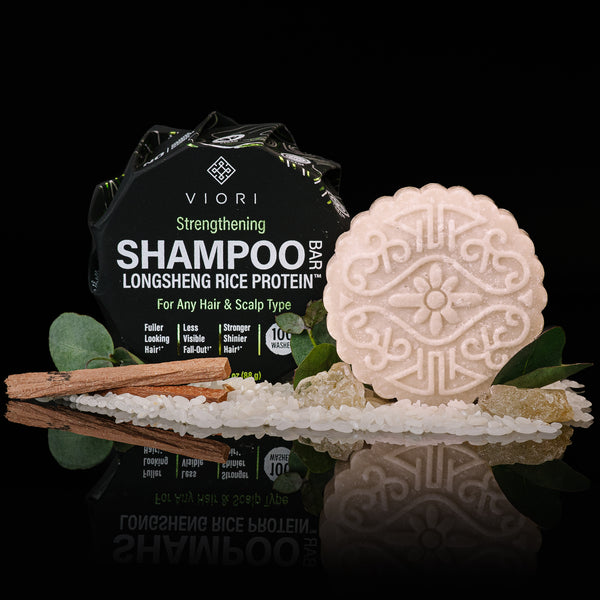
Quality conditioner bars use ingredients like behentrimonium methosulfate. Yes, I know it has "sulfate" in the name, but it's completely different chemistry from harsh sulfates like SLS. It's actually a gentle conditioning agent derived from rapeseed oil. This ingredient carries a positive electrical charge, which means it's naturally attracted to the negatively charged damaged sites on hair-places where protein has been lost or the cuticle is compromised.
In liquid form, this ingredient deposits somewhat randomly across all your hair. But when applied from a solid bar with mechanical friction, there's compelling evidence that it preferentially deposits at sites where the cuticle is lifted-exactly where conditioning is most needed. The friction creates a kind of "smart delivery system" without requiring any complex technology or additional ingredients.
The pH Stability Secret
Maintaining optimal pH-the 4.5-5.5 range that keeps hair cuticles smooth and closed-is significantly easier in solid formulations. Here's why: water can act as either an acid or base depending on what it's mixed with, and it actively participates in pH changes over time, especially with natural ingredients that may continue reacting slowly.
In a solid bar, pH is essentially locked into the crystalline matrix. The natural pH buffers used in quality formulations-Viori uses sodium lactate derived from fermented corn and beet sugars-keep everything balanced. Without water for hydrogen ions to migrate freely through, pH remains remarkably stable over time.
This matters enormously for natural ingredients. Viori's fermented rice water contains organic acids produced during the fermentation process. In a liquid product, these acids would continue reacting with other ingredients, slowly changing the product's chemistry and effectiveness. In solid form, these reactions essentially pause-they simply can't occur at meaningful rates without water as a medium.
The Fermentation Factor: Ancient Wisdom in Modern Form
The Red Yao women of Longsheng village have been using fermented rice water for over 2,000 years, and there's serious science behind why it works. But here's the technical challenge: fermented products are complex, living chemistry.
Enzymes in Suspended Animation
Fermentation produces enzymes-biological catalysts that keep working unless they're specifically deactivated. Some enzymes in fermented rice water, like certain proteases and amylases, are actually beneficial for hair. They gently break down excess sebum and accumulated debris on the scalp without the harshness of synthetic clarifying agents.
In liquid formulations, controlling enzyme activity is tricky. You can use heat treatment, but that destroys beneficial compounds. You can use chemical preservatives, which contradicts "natural" claims. Or you can adjust pH dramatically, which reduces the effectiveness of other ingredients.
In solid bars, enzyme activity is essentially paused. The enzymes are present and structurally intact, but they can't function without adequate water. They only "wake up" during use, when the bar contacts water on your hair. It's like hitting play on a pause button-the enzymes activate right where and when you need them.
This explains something I've observed professionally: clients using Viori bars often report gentle, progressive improvements in scalp health and hair texture over months of use. This isn't typical of most cosmetic products, which usually work immediately or not at all. The enzyme activity suggests these bars provide ongoing, gentle treatment with each wash-something that's nearly impossible to achieve safely in liquid products without aggressive preservatives.
Why Bars Are Different Products, Not Just Better Packaging
Yes, eliminating plastic bottles matters environmentally-about 550 million shampoo bottles end up in landfills annually in the US alone. But the chemistry tells a much deeper story about why solid formats actually work differently on a molecular level.
Natural Preservation Through Physics
Bacteria and fungi need water to grow-specifically, they need what's called "water activity" above 0.6. Properly formulated bars have water activity near zero, even though they may contain some water as an ingredient.
The vegetable glycerin and other humectants in quality shampoo bars attract water molecules, but they also bind those water molecules tightly. This creates a situation where water is physically present but biologically unavailable-microorganisms literally cannot access it to support their growth.
This is why bars like Viori's need no synthetic preservatives-no parabens, no phenoxyethanol, no formaldehyde-releasing compounds-despite containing nutrient-rich ingredients like rice protein, bamboo extract, and aloe vera that would be bacterial paradise in liquid form. The solid state itself is the preservation system.
The Gentle Concentration Advantage
Sodium cocoyl isethionate (SCI)-the coconut-derived cleanser in quality shampoo bars-is considered one of the mildest surfactants available. But "mild" is relative to concentration. In liquid shampoos, you typically need 10-15% SCI to achieve effective cleansing because it's diluted in all that water.
In bars, SCI can be 30-50% of the formula. That sounds like it would be harsher, right? But here's the counterintuitive part: this higher concentration can actually be gentler on your hair and scalp. Why? Because the crystalline matrix controls release rates. You never expose your hair to the full 50% concentration-you get controlled, gradual release that maintains cleaning power while minimizing the aggressive action that strips natural oils.
This explains why many of my clients with oily hair find that bars allow them to wash less frequently. The controlled surfactant release cleans effectively without triggering the rebound oil production that aggressive liquid shampoos cause. I've had clients go from daily washing to every 3-4 days after their scalp recalibrates to the gentler cleansing pattern.
The Rice Water Renaissance: Traditional Ingredients Meet Modern Materials Science
The Red Yao tribe's fermented Longsheng rice water provides a perfect example of how traditional ingredients actually benefit from solid-state formulation in ways that honor and enhance the traditional preparation.
WHAT CUSTOMERS ARE SAYING
Real reviews for Hidden Waterfall Barra de Champú
Stabilizing Fragile Vitamins
Inositol (vitamin B8), which becomes concentrated through the rice fermentation process, has clinical evidence supporting its role in strengthening hair and potentially supporting healthy growth cycles. But it's notoriously unstable in water-based solutions, especially at the slightly acidic pH that's optimal for hair health.
In solid bars, inositol stability is dramatically enhanced. Research shows inositol can degrade 15-30% over just six months in water-based solutions stored at room temperature. In solid matrices with minimal free water, degradation drops to less than 5% over two years.
This isn't just theoretical chemistry-this is why traditional rice water rinses are used fresh or kept refrigerated. They lose potency quickly. The solid bar format essentially "freezes" the beneficial chemistry of fermented rice water at its peak potency, preserving what makes it effective.
The Protein Delivery Advantage
Hydrolyzed rice protein-broken down into smaller peptides that can actually penetrate the hair shaft rather than just coating the surface-presents unique formulation challenges. In liquid products, these proteins can clump together over time, reducing their ability to penetrate. They're also nutrient-rich, which can support microbial growth, requiring aggressive preservation.
In solid bars, individual protein molecules are physically separated throughout the crystalline matrix, preventing clumping. When you use the bar, proteins are released individually or in very small clusters, maintaining their optimal size for penetrating hair. Combined with the mechanical friction of application that temporarily opens cuticles, this creates superior protein delivery compared to liquid products with identical protein content.
The Thermal Engineering You Never Knew Existed
One aspect of sophisticated bar formulation that's almost never discussed in marketing is the deliberate engineering of melting points to match human body temperature and shower conditions.
The Three-Layer Strategy
Well-designed bar formulations use three classes of fats and waxes with different melting points, creating a cascading release system:
- High-melting components (like stearic acid, melting point around 156°F): These provide structural integrity, preventing your bar from melting in a warm bathroom
- Medium-melting components (like cetyl alcohol, melting point around 120°F): These begin softening with warm water contact, helping create initial lather and starting the release of cleansing agents
- Low-melting components (like cocoa butter, melting point around 93°F): These melt right at body temperature, delivering moisturizing benefits and conditioning agents
This creates cascading, sequential release. When you wet the bar with warm water and create friction against your hair or hands, you're not just mechanically removing material-you're selectively melting specific layers designed to release at different stages of application.
Outer layers rich in cleansing surfactants release first, removing oil and buildup. As you continue and your scalp warms the product, deeper conditioning layers melt, depositing moisturizers and proteins exactly when and where they're needed.
This is pharmaceutical-grade controlled-release engineering, the kind typically seen in advanced medications, applied to hair care. It's why the sequence matters: shampoo first removes oil and temporarily opens the cuticle, then conditioner deposits beneficial ingredients at those opened sites and helps seal the cuticle again.
Customization Through Application: One Product, Multiple Techniques
The friction-based application of bars creates an opportunity for customization that liquid products simply can't match. The same bar can deliver different results based on how you use it.
For Damaged, Porous Hair: The Direct Application Method
Damaged hair-whether from color treatment, heat styling, or chemical processing-has raised cuticles and empty spaces where protein and lipids have been lost. When you apply a conditioning bar directly to damaged hair with moderate pressure and friction, you're accomplishing several things simultaneously:
- Mechanically smoothing raised cuticles (temporarily flattening them against the hair shaft)
- Forcing conditioning agents into porous structures through gentle pressure


