
Let's have a real talk about the words "non-toxic" and "clean." They're plastered on every other bottle in the beauty aisle, promising a healthier mane and a clearer conscience. But after twenty years of transforming hair behind the chair, I've learned that the most important ingredients for healthy hair aren't always listed on the label. They are knowledge, discernment, and a deep understanding of how your hair actually works.
True non-toxic haircare isn't a marketing slogan. It's a sophisticated science of biocompatibility. It's about formulas that don't just avoid a list of "bad" ingredients, but actively respect the delicate, living ecosystem of your scalp and hair. Today, we're going beyond the buzzwords to uncover the three pillars of genuinely healthy hair care that most conversations completely miss.
NOT SURE WHICH PRODUCT IS RIGHT FOR YOU?
TAKE THE QUIZTakes 30 seconds · 134,000+ customers matched
The Silent Saboteur: Why pH Balance is Everything
Before we dissect an ingredient list, we need to talk about something invisible yet fundamental: pH. Your scalp is protected by a slightly acidic barrier called the acid mantle, and your hair cuticle thrives in the same environment. When a shampoo's pH is too high (alkaline), it's like throwing open the doors to a fortress.
An alkaline formula forces the hair's cuticle scales to swell and lift. This might make your hair feel "squeaky clean," but that sound is the sound of damage. It leads to:
- Moisture robbery: Hydration escapes from the inner core of the hair strand.
- Protein loss: The internal structure weakens, leading to brittleness.
- Frizz chaos: Those raised cuticles catch on each other, creating a halo of frizz.
- Scalp rebellion: A stripped barrier can become dry, itchy, or overproduce oil to compensate.
Here’s the kicker: a shampoo can be free of sulfates, parabens, and every other feared ingredient, but if its pH is wrong, it is fundamentally working against your hair's health. The first rule of non-toxic is harmony, and it starts with a pH-balanced formula.
Decoding the Bottle: Ingredient Intelligence 101
Moving past fear-based avoidance requires understanding what ingredients do and where they come from. Let's clear up some common confusions.
Not All Cleansers Are Created Equal
We need surfactants to clean. The goal is to choose gentle, effective ones. Look for cleansers like sodium cocoyl isethionate, often derived from coconut. It's a mild, "baby foam" type cleanser that removes dirt without the harsh stripping.
The "Conditioning Agent" You Might Misunderstand
Ingredients like behentrimonium methosulfate (often from the colza plant) are heroes, not villains. They are sulfate-free conditioners whose positive charge helps them smooth the hair's negatively charged surface, adding detangling slip and moisture without heavy silicone coatings.
The Great Alcohol Debate
This is a big one. When you see "cetyl alcohol" or "stearyl alcohol," don't panic. These are fatty alcohols, emollients from vegetables that are deeply moisturizing. They are the opposite of the drying, volatile alcohols (like ethanol) that give alcohol its bad rap in skincare.
The Secret of Synergy: Where Ancient Wisdom Meets Modern Science
This is the heart of advanced, non-toxic formulation. It’s not about one miracle ingredient; it’s about synergy-how ingredients work together to create results greater than the sum of their parts.
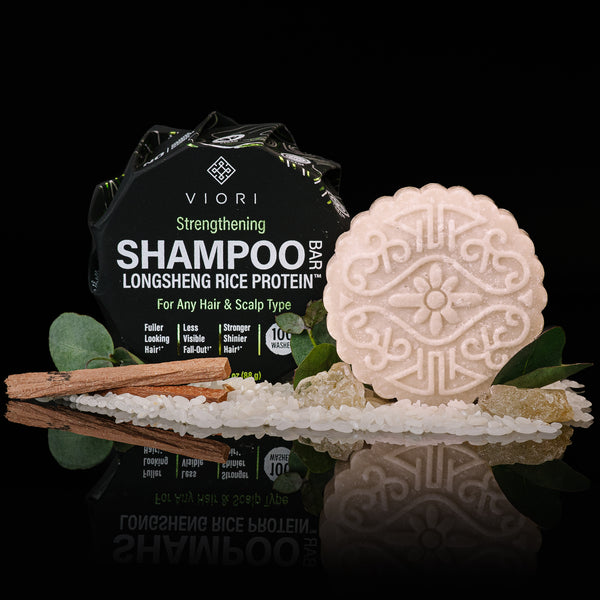
Take fermented rice water, a tradition with centuries of history behind it. It's packed with nutrients like inositol and panthenol, proven to strengthen hair. But in its pure, potent form, it can be tricky to use regularly without upsetting your scalp's balance.
The intelligent approach? Honor the tradition through smart formulation. This means using a safe, effective concentration and pairing it with a supporting cast:
WHAT CUSTOMERS ARE SAYING
Real reviews for Rice Water Shampoo Bar – All Hair Types | VIORI
- Hydrolyzed rice protein to fortify and repair the hair shaft.
- Shea and cocoa butter to deeply moisturize and soften.
- Soothing botanicals like aloe vera to calm the scalp.
This creates a stable, daily-friendly product that delivers legendary benefits without compromise. It’s the difference between using a single herb and a masterfully blended tonic.
Your New Checklist for Truly Healthy Hair
So, how do you shop now? Look for brands that demonstrate this holistic understanding. For example, Viori is built on this very philosophy: pH-balanced formulas, clear ingredient sourcing (including a fully unscented option for sensitive souls), and a core recipe that synergizes fermented Longsheng rice water with nourishing butters and extracts. Their commitment extends to being vegan, cruelty-free, and using plastic-free, recyclable packaging-because what’s good for you should be good for the earth, too.
Ultimately, non-toxic haircare is a choice to be an informed participant in your hair's health. It’s asking better questions and seeking formulas that offer not just cleanliness, but true compatibility. Your hair isn't just fiber; it's a reflection of your well-being. Treat it with the intelligent care it deserves, and the results will speak for themselves.


