guide · 6 min read
Rice Water Shampoo: Fermented vs Plain, DIY vs Bar
The quick answer
Rice water shampoo is shampoo made with water from soaked, boiled or fermented rice. Fermented rice water is more acidic and stronger smelling. For everyday use, choose a pH-balanced shampoo with a mild cleanser and a moderate amount of rice protein, rather than a strong homemade rinse left on for hours.
- Rice water alone does not clean hair; a rice water shampoo pairs it with a cleanser.
- Fermented rice water is more acidic and varies a lot from batch to batch.
- Too much protein can make hair stiff; keep strong DIY rinses occasional.

Rice water shampoo is shampoo made with the starchy water left after rice is soaked, boiled or fermented. People like it because rice water can leave hair feeling smoother and looking shinier. The best choice for most people is a pH-balanced product with a modest amount of rice water, not a strong homemade rinse left on for hours.
What rice water is
When rice sits in water, some of its starch, protein and other natural compounds move into the water. That cloudy liquid is rice water. It has a long history as a hair rinse in parts of Asia, and it has become popular again as a simple, low-cost ritual.
There are two basic kinds:
- Plain rice water. Rice is soaked or boiled, and the water is strained off. It is mild and easy to make, but it spoils quickly.
- Fermented rice water. Plain rice water is left to sit until it turns slightly sour. Fermentation changes the liquid and lowers its pH. It also gives it a strong smell, and the result varies a lot from batch to batch.
Rice water on its own does not clean hair. It has no real cleanser in it. A rice water shampoo combines rice water with a cleanser, so it washes and adds a rice-based ingredient in one step.
What to look for in a rice water shampoo
A gentle cleanser
The cleanser does most of the work in any shampoo. Look for a mild cleanser rather than a harsh sulfate if your hair feels dry or your scalp gets tight. Sodium Cocoyl Isethionate (SCI) is one common mild option that lathers well without a squeaky feel.
A sensible pH
Healthy hair and scalp are mildly acidic, about 4.5 to 5.5. A shampoo that stays close to that range is less likely to rough up the hair surface. Strong homemade rice water can drift well outside that range, especially after long fermentation.
A moderate amount of rice protein
Protein can help hair feel stronger and smoother. Too much, used too often, can leave some hair stiff, dry or straw-like. This is often called protein overload. Low-porosity hair and fine hair tend to notice it first. A product with a modest, consistent amount is easier to use every day.
Conditioning ingredients
Look for butters, plant oils, glycerin or aloe. They help offset the drying effect of washing, especially for curly, coarse or color-treated hair.
Fragrance you actually want
Fermented rice water smells sour on its own. Products add scent to cover it. If your scalp reacts to fragrance, choose an unscented version.
How it rinses
Starch and protein can leave a light film if they are not rinsed well. A good rice water shampoo rinses clean in soft or hard water and does not leave hair heavy at the roots.
DIY rice water vs a rice water shampoo bar
A homemade rinse costs almost nothing and is fun to try. It also has real downsides:
- No way to measure strength. Every batch is different, so results are hard to repeat.
- Unknown pH. Fermented batches can become quite acidic.
- Short life. Homemade rice water has no preservative. It should live in the fridge and be thrown out after a few days, or sooner if it smells off.
- Extra steps. You still need to shampoo, then apply the rinse, wait and rinse again.
- Protein overload risk. Leaving a strong rinse on for a long time is the most common reason hair turns stiff.
A rice water shampoo bar puts a measured amount of rice water into a cleanser that is formulated for a set pH range. You get the rice water step every time you wash, with no mixing, waiting or spoiled jars. Because a bar has very little water in it, it also dries out between uses rather than growing mold the way a homemade rinse can.
How to use a shampoo bar for rice water hair care
- Wet your hair fully. Bars lather best on soaked hair.
- Lather the bar. Rub it between wet hands, or glide it over the scalp a few times. For color-treated hair, lather in your hands first.
- Massage the scalp. Use your fingertips, not your nails, for about a minute. Focus on the scalp, not the ends.
- Rinse well. Rinse until hair feels clean, with no slippery or waxy spots.
- Condition the mid-lengths and ends. A conditioner helps smooth the hair surface after washing.
- Let the bar dry. Store it on a draining dish away from running water.
If you also like a separate rice water rinse, use it once in a while rather than every wash, and rinse it out. That keeps protein from building up.
Which Viori bar fits
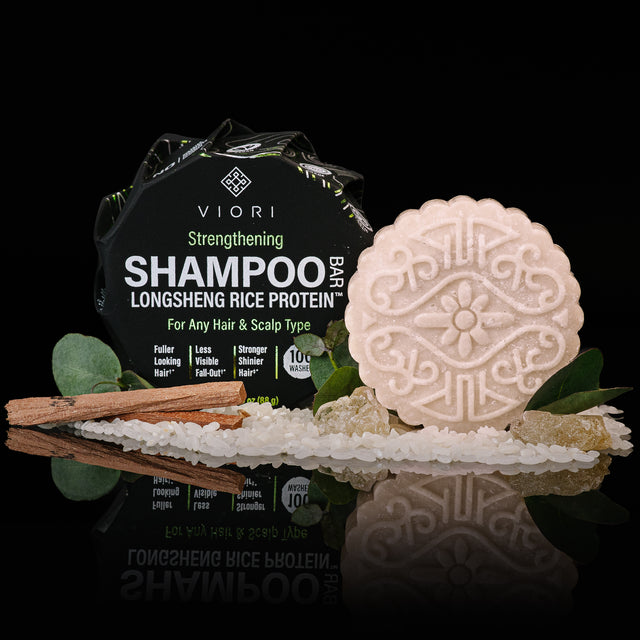
Every Viori shampoo bar is made with fermented Longsheng rice water. The rice comes from the Red Yao women of Longsheng, China, and is prepared the Red Yao way, a process that takes 7 to 10 days. The bars use Sodium Cocoyl Isethionate as the cleanser, use a lower concentration of rice water and a low concentration of rice protein, and are formulated to stay between 3.5 and 6.5 pH.
Rice Water Shampoo Bar – All Hair Types
This is Viori's starting point for most hair types, from fine to coily and from oily to dry scalps. Along with rice water and hydrolyzed rice protein, it lists shea butter, cocoa butter and aloe vera. The scent is jasmine and soft florals.
What customers are saying
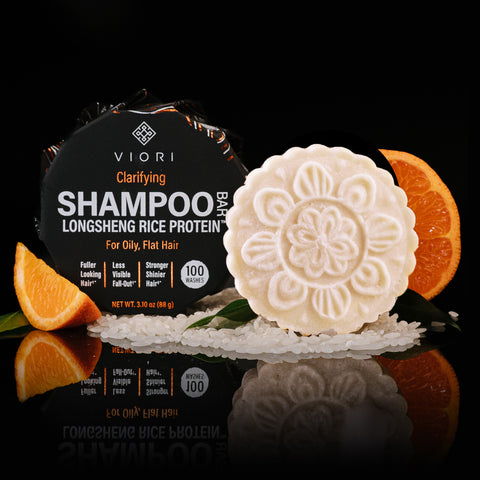
Volumizing Rice Water Shampoo Bar – Oily Scalp
Viori recommends this bar for oily and normal scalps. It is made for hair that goes flat at the roots by the end of the day, or that collects product and hard-water buildup. The scent is bright citrus from bergamot, grapefruit and orange peel.
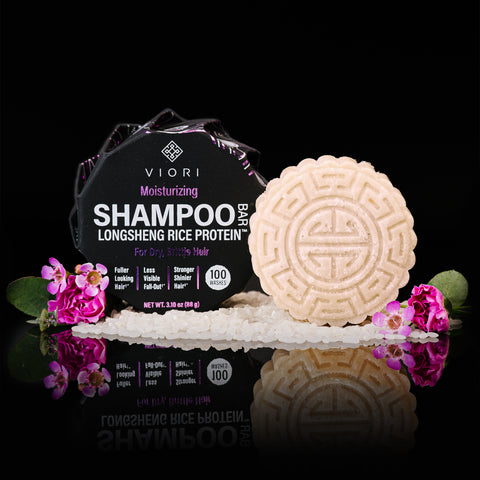
Moisturizing Rice Water Shampoo Bar – Dry Scalp
This is Viori's pick for dry to normal scalps that feel tight or flaky, and for dry, coarse or curly hair that struggles to hold moisture. It lists shea butter, cocoa butter, aloe vera and lavender flower oil, with a lavender and soft garden floral scent.
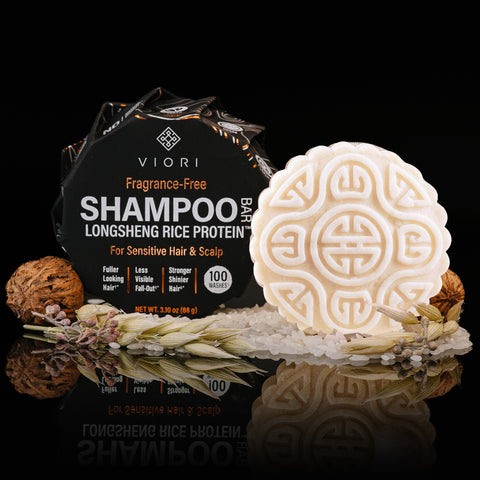
Fragrance-Free Rice Water Shampoo Bar
This bar has no added fragrance. Viori calls it its most gentle bar, and suggests it for dry to normal scalps and for anyone who reacts to fragrance or simply prefers none.
Whichever you choose, give a new routine 2 to 3 months before judging it. Viori's FAQ page answers common questions about the bars and the rice.
Common mistakes
- Using rice water as a cleanser. A rinse alone will not remove oil and buildup.
- Leaving a strong rinse on too long. Long soaks are the usual cause of stiff, brittle-feeling hair.
- Stacking protein products. If your shampoo, conditioner and styler all contain protein, cut back on one if hair feels rough.
- Skipping conditioner. Washing lifts the hair surface a little. Conditioner helps smooth it down again.
- Leaving the bar in a puddle. A wet bar softens and wears away fast.
When to see a dermatologist
Rice water products are for everyday hair care. If you have hair loss, patchy thinning, a scalp that stays itchy, red or flaky, or any rash, see a dermatologist. A shampoo, rice water or not, is not a fix for a medical scalp problem.
Common questions
What is the difference between fermented and plain rice water?
Plain rice water is the starchy water strained from soaked or boiled rice. Fermented rice water is left to sit until it turns slightly sour. Fermentation lowers the pH and changes the liquid, but it also adds a strong smell and makes each batch less predictable.
Is homemade rice water safe to use on hair?
Many people use it without trouble, but it has no preservative and its strength and pH vary. Keep it in the fridge, throw it out after a few days or if it smells off, rinse it out well, and use it only occasionally to avoid stiff, protein-heavy hair.
Can rice water make hair dry or stiff?
Yes, for some people. Rice water contains protein, and too much protein can leave hair feeling rough or straw-like. Fine and low-porosity hair tend to notice it first. Use strong rinses sparingly, and choose products with a moderate, consistent amount.
Can rice water shampoo be used every day?
A gentle, pH-balanced rice water shampoo can be used as often as your hair needs washing. Viori uses a lower concentration of rice water and a low concentration of rice protein in its bars, which it says are safe for daily use.
Does rice water shampoo help with hair loss?
Shampoo is for cleaning and caring for hair and scalp, not for medical problems. If you notice hair loss, thinning patches or a scalp that stays itchy or flaky, see a dermatologist, who can find the cause and suggest options.