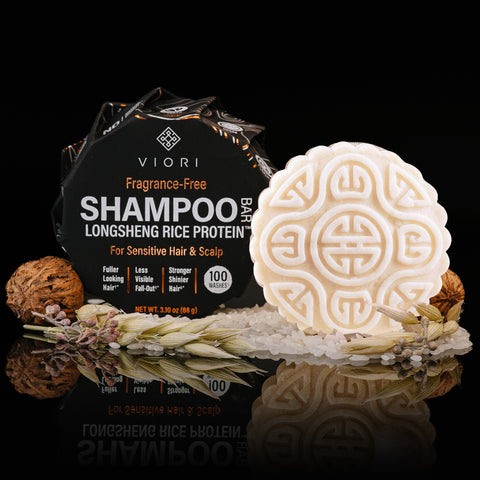
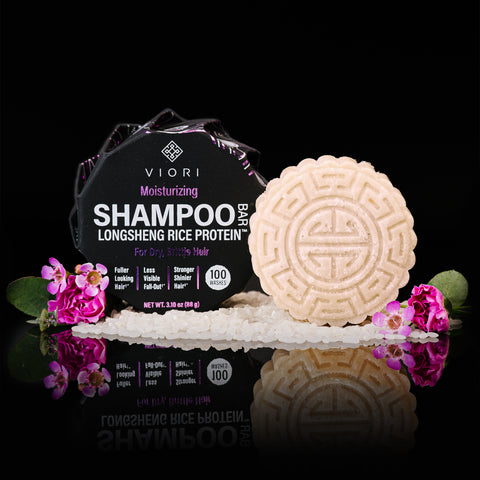
comparison · 5 min read
Viori vs Ethique: Shampoo and Conditioner Bars Compared
The quick answer
Viori and Ethique both make soap-free, plastic-free shampoo and conditioner bars, and both list Sodium Cocoyl Isethionate as a cleanser. Viori builds every bar around fermented Longsheng rice water and makes them in Utah. Ethique says its bars are made in New Zealand, palm oil-free and a Certified B Corporation, and it sells a wider range beyond hair.
- Both are soap-free bars; Viori's bars and Ethique's Gentle bar list SCI as the cleanser.
- Viori is made in Utah with rice water; Ethique says its bars are made in Auckland.
- Viori lists Leaping Bunny and Fair Trade; Ethique lists B Corporation and palm oil-free.
Viori and Ethique both make solid shampoo and conditioner bars that come without plastic packaging. The main differences are where each brand makes its bars, what each formula is built around, and which certifications each lists. Viori's bars are made in Utah with fermented Longsheng rice water, while Ethique says its bars are made in Auckland, New Zealand, and sells a much wider range of solid products.
Format and cleanser
Viori's shampoo bars are syndet bars, not soap. The cleanser is Sodium Cocoyl Isethionate (SCI), a mild cleanser derived from coconut. Viori's bars are formulated to stay between 3.5 and 6.5 pH.
Ethique describes its shampoo and conditioner bars as soap-free and pH balanced. Its product FAQ gives a pH range of 4.5 to 6.0 for shampoo bars and 5.0 to 6.0 for conditioner bars. The ingredient list for Ethique's Gentle Shampoo Bar (fragrance-free) starts with Sodium Cocoyl Isethionate, the same cleanser Viori uses. Ethique's site does not use the word "syndet" in the pages checked here.
What the formulas are built around
Every Viori bar is made with fermented Longsheng rice water, which Viori calls Longsheng Rice Water. The rice is prepared the Red Yao way, a process that takes 7 to 10 days. Viori uses a lower concentration of rice water and a low concentration of rice protein, and describes the bars as safe for daily use.
Ethique builds each bar around a different set of named ingredients. Its Gentle Shampoo Bar lists cocoa seed butter and babassu seed oil. Its Repairing Conditioner Bar lists rice extract, rice bran wax, mango seed butter and shea butter. Ethique also sells bars for specific needs, such as a Hydrating Shampoo Bar and a Clarifying Shampoo Bar.
Conditioner bars
Viori's conditioner bars are built on BTMS (behentrimonium methosulfate, from the colza or rapeseed plant), cocoa butter and cetyl alcohol. The lather is a paste, not a foam. Viori says the conditioner bars can also be used as a deep conditioner or a leave-in.
Viori vs Ethique at a glance
| Viori | Ethique | |
|---|---|---|
| Format | Syndet bar, not soap | Soap-free bar (per Ethique) |
| Cleanser | Sodium Cocoyl Isethionate | Sodium Cocoyl Isethionate first on Gentle Shampoo Bar |
| Stated pH | 3.5 to 6.5 | Shampoo 4.5 to 6.0; conditioner 5.0 to 6.0 |
| Silicone-free | Yes | Yes (FAQ) |
| Sulfate-free | Yes | Stated on Gentle Shampoo Bar page |
| Vegan | Vegan International certified | No animal products (FAQ) |
| Cruelty-free | Leaping Bunny | Certified cruelty-free (certifier not named on pages checked) |
| Palm | RSPO-sourced palm derivatives | Palm oil-free (per Ethique) |
| Packaging | Recycled paper, bamboo steamer | Home compostable, recyclable, plastic-free |
| Made in | Utah, USA | Auckland, New Zealand |
Ethique's Gentle Conditioner Bar also lists behentrimonium methosulfate first, followed by brassica alcohol, candelilla wax, glycerine and cocoa seed butter. Ethique's FAQ directs people to glide the conditioner bar onto wet hair from mid-lengths to ends and then rinse.
Free-from claims
Viori's shampoo and conditioner bars are sulfate-free, silicone-free, paraben-free and gluten-free, with no synthetic preservatives. They are color-safe.
Ethique's FAQ says its formulas are free from parabens, phthalates and silicones. Its Gentle Shampoo Bar page says the bar is sulfate-free and suitable for color-treated hair. Ethique's FAQ says all of its shampoo and conditioner bars are safe for color-treated hair.
Certifications and sourcing
Viori is certified vegan by Vegan International and Leaping Bunny cruelty-free. It also holds Fair Trade and CarbonNeutral certifications. Viori Beauty is a public benefit corporation. It is not a B Corp. Viori's bars are not palm-free; they use RSPO-sourced palm derivatives. Viori buys its Longsheng rice directly from the Red Yao women of Longsheng, China, and gives at least 5% of profits back to Red Yao communities.
Ethique says its entire range contains no animal products and that it is certified cruelty-free. It describes itself as a Certified B Corporation and as palm oil-free. Ethique's impact page describes its production as carbon neutral and says its manufacturer offsets the footprint of production.
Packaging and where the bars are made
Viori's packaging is plastic-free: recycled paper, with bars shipped in a bamboo steamer. Viori's bars are manufactured, stored and shipped from Utah, USA.
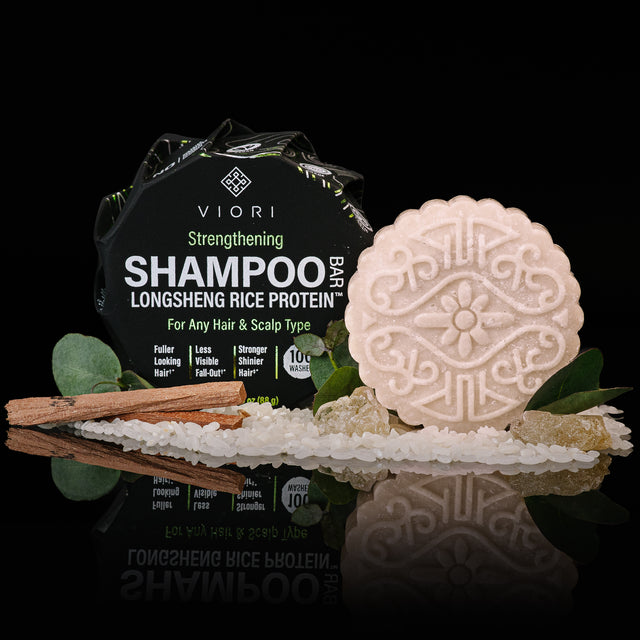
Ethique says its packaging is home compostable and recyclable, and that its bars and packaging are free of plastic. Ethique says its bars are made in Auckland, New Zealand. Its first bar was made in Christchurch in 2012.
Sizes and range
Viori's shampoo bars weigh 90 g (3.5 oz) and its conditioner bars weigh 72 g (2.8 oz). Viori also makes body wash bars and dry shampoo.
What customers are saying
Ethique lists its Gentle Shampoo Bar at 110 g (3.9 oz) and its Gentle and Repairing Conditioner Bars at 60 g (2.1 oz). Ethique's range goes well beyond hair. Its site lists more than 100 products across hair care, skin care, body care, home cleaning and pet care.
Who each one suits
Viori suits people who want a rice water routine, a pH-balanced syndet bar, and a small, focused line of hair bars. Viori's own guidance points dry to normal scalps to the Moisturizing Rice Water Shampoo Bar , oily scalps to the Volumizing Rice Water Shampoo Bar , and most hair types to the Rice Water Shampoo Bar . People who want no added fragrance can use the Fragrance-Free Rice Water Shampoo Bar . Viori may also suit shoppers who look for Leaping Bunny, Fair Trade or US manufacturing.
Ethique suits people who want a palm oil-free brand or a Certified B Corporation, bars built around specific named ingredients, or one brand for hair, skin, body and home. Its Gentle bars are listed as fragrance-free for people who avoid added scent.
How to switch to any shampoo bar
Wet your hair and the bar well. Rub the bar on your scalp or lather it in your hands, then massage and rinse. If your hair is color-treated, lather in your hands first. Let the bar dry between uses on a rack with drainage. Give any new routine 2 to 3 months before you judge it. For more on the switch, see shampoo bars vs liquid shampoo and the guide to the best conditioner bar .
Common questions
What is the main difference between Viori and Ethique?
Viori makes a focused line of hair bars built around fermented Longsheng rice water, made in Utah. Ethique builds each bar around different named ingredients, says its bars are made in Auckland, New Zealand, and sells products for hair, skin, body, home and pets.
Is Ethique vegan?
Ethique's FAQ says its entire range contains no animal products, and its site describes the brand as vegan and certified cruelty-free. Viori is certified vegan by Vegan International and Leaping Bunny cruelty-free.
Are Ethique and Viori shampoo bars soap-free?
Yes. Ethique says its shampoo and conditioner bars are soap-free and pH balanced. Viori's shampoo bars are syndet bars, not soap, with Sodium Cocoyl Isethionate as the cleanser, formulated to stay between 3.5 and 6.5 pH.
Are Viori and Ethique bars safe for color-treated hair?
Ethique's FAQ says all of its shampoo and conditioner bars are safe for color-treated hair. Viori's bars are color-safe; for color-treated hair, Viori suggests lathering the bar in your hands first instead of rubbing it on your hair.
Is either brand palm oil-free?
Ethique describes itself as palm oil-free. Viori is not palm-free; its bars use RSPO-sourced palm derivatives. If avoiding palm matters to you, check each brand's current ingredient lists before you buy.