
Colored dry shampoo is one of those genius “why didn’t I do this sooner?” products-until it isn’t. When it works, your roots look freshly washed, your part looks cleaner, and regrowth seems to disappear. When it doesn’t, you’re left with itchy scalp, dull roots, weird tone shifts, and that unmistakable “product helmet” feel.
After 20 years behind the chair, here’s the most accurate way to think about it: colored dry shampoo isn’t just haircare-it’s cosmetic camouflage for the scalp. The same rules that make face powder look flawless (or cakey) apply here too: particle size, undertone match, layering technique, and how well it’s removed.
The rarely talked-about truth: colored dry shampoo is “invisible scalp makeup”
Most articles treat colored dry shampoo like a simple choice: blonde or brunette, spray and go. But the moment pigment is added, the product starts behaving like a leave-on makeup layer that sits on both your scalp and hair. That’s why results can be dramatically different from person to person-even when they’re using it “correctly.”
It’s also why over-application is so common. People treat it like shampoo. In reality, it behaves more like setting powder: a little looks natural; too much looks heavy.
NOT SURE WHICH PRODUCT IS RIGHT FOR YOU?
TAKE THE QUIZTakes 30 seconds · 134,000+ customers matched
What’s actually in colored dry shampoo (and why your scalp cares)
At a technical level, dry shampoo is built around oil-absorbing powders. Colored versions simply add pigments to prevent that chalky, gray cast that can show up-especially on deeper hair colors.
In most formulas, the oil control comes from two broad categories of powders:
- Starch-based absorbents (plant-derived powders): often feel soft and light at first, but can build up into a film with repeated use.
- Mineral absorbents (like clay/silica-type powders): can be extremely effective at reducing shine, but may feel drier or “tight” on a sensitive scalp.
Once you add pigment, you’re not just absorbing oil-you’re depositing particles that need to sit evenly to look believable. And that’s where most of the real-world problems begin.
Why matching “blonde vs brunette” isn’t enough
Hair color isn’t one flat shade. It’s a moving target made up of:
- Depth (how light or dark it is)
- Undertone (warm, cool, neutral)
- Dimension (highlights, lowlights, gray strands, natural variation)
- Reflectivity (how the cuticle bounces light)
Colored dry shampoo pigments are comparatively “flat,” so mismatches show quickly. A cool-toned pigment can read dusty on warm hair; a warm pigment can look brassy in sunlight on cooler brunettes. And if you have highlights, the wrong shade can visually blur your root dimension and make the top look heavier than it actually is.
My behind-the-chair rule
Match your colored dry shampoo to the shadow root you want to mimic, not the lightest pieces in your hair. If you’re highlighted, you typically want something a touch deeper and more neutral at the root zone so it looks like natural depth-not like powder sitting on top.
The technical detail that changes everything: particle size
This is the piece almost nobody explains, and it’s huge: particle size distribution determines whether colored dry shampoo gives you airy lift or dull heaviness.
- Very fine particles can look beautifully seamless, but they can also pack down and cling tightly-especially when oil is present-making roots feel coated over time.
- Slightly larger particles can create more texture and brush out more easily, but if they clump, you’ll see speckling and patchiness at the part.
Pigments increase the chance of clumping (agglomeration), which is what causes that uneven deposit: greasy in one spot, powdery in another.
The fix: layer it like makeup
Instead of blasting a heavy coat once, apply a small amount, let it work, then add more only where needed. You’ll get a cleaner finish with less buildup.
Scalp biology: why tinted formulas can itch faster
Your scalp isn’t just “skin with hair on it.” It’s an environment with oil, sweat, shed skin, and a natural balance. Colored dry shampoo adds more leave-on particles than clear versions because it has both absorbents and pigment. Over time, that can contribute to:
- Tightness and dryness (when too much oil is removed too often)
- Itch cycles (itch leads to scratching; scratching leads to irritation; irritation makes products sting more)
- Heavier buildup near the part and crown where product is applied most
If you’ve ever thought, “I love it on day two, but by day four my scalp is mad,” that’s usually not a mystery-it’s cumulative leave-on product plus a scalp that’s ready for a reset.
The friction problem: removal can be rough on color-treated hair
Colored dry shampoo doesn’t always cause fading on its own-but the way people remove it can. When pigmenty powders cling, people tend to over-brush, scrub, and shampoo repeatedly. That friction can rough up the cuticle, and once the cuticle is stressed, color can look dull faster (especially if your color is more surface-level).
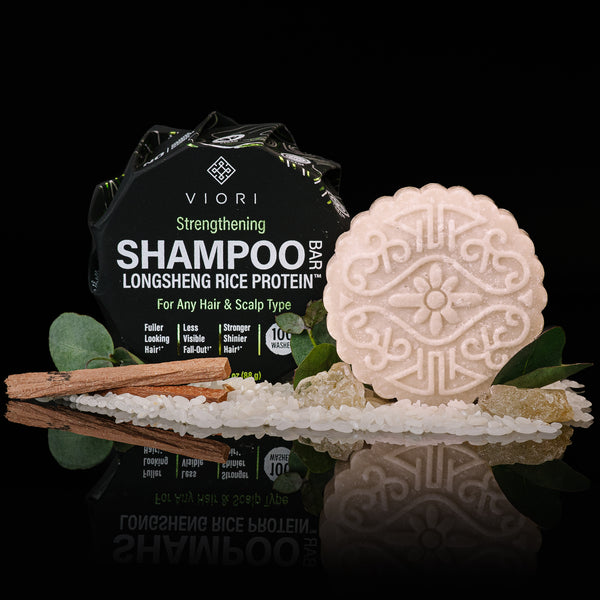
If you’re color-treated and using Viori shampoo bars, one technique matters a lot: build a lather in your hands and apply with your fingers rather than rubbing the bar directly on your scalp. Less friction at the root area generally means better comfort and better longevity for your color.
The “shadow scalp” effect: why it can make hair look thicker (or strangely painted)
Done well, colored dry shampoo is brilliant at reducing the contrast between hair and scalp at the part line. That softens the look of sparse areas and can create a subtle “fuller hair” illusion.
But if the shade is too dark or the application is too heavy, it flips: the scalp looks shaded, the root area looks flat, and everything reads a little too uniform-almost like it was stamped on.
Targeted placement is the difference
In most cases, you’ll get the best result by focusing colored dry shampoo where contrast is highest:
- Part line
- Temples/hairline corners
- Crown/whorl
If you need oil control beyond that, you’ll often do better with lighter, strategic use rather than coating the entire scalp with pigment.
How to apply colored dry shampoo so it looks expensive (not dusty)
If you want the most natural finish with the least buildup, use this stylist-style method.
WHAT CUSTOMERS ARE SAYING
Real reviews for Hidden Waterfall Barra de Champú
- Use it before you look oily. Preventative application gives a cleaner result than trying to “powder over” heavy oil.
- Apply in thin sections, not just one big spray across the top.
- Let it sit for 30-120 seconds before touching it so the powders can bind to oil.
- Massage with fingertip pads (avoid nails-nails can inflame the scalp).
- Remove excess on purpose: a light brush-through or a cool blow-dry pass helps distribute and lift any extra deposit.
Wash-day reset: where most people accidentally sabotage their hair
Colored dry shampoo is only as good as your reset routine. The goal is to remove the powder without over-stripping or creating unnecessary friction.
Viori emphasizes the importance of pH-balanced haircare, because products that skew too alkaline can leave hair feeling rougher over time. A balanced routine helps the cuticle behave, which usually means better softness, less tangling, and less breakage from aggressive detangling.
A simple, effective reset looks like this:
- Rinse thoroughly first to loosen particles before cleansing.
- Cleanse gently but thoroughly (and for color-treated hair, lather in your palms instead of rubbing the bar directly on the head).
- Condition every wash to restore slip and protect the hair while your natural oils rebalance.
The sustainable approach: “control + recovery”
If you rely on colored dry shampoo often, don’t try to brute-force your scalp into constant oil suppression. Instead, rotate between oil-control and comfort-focused care.
- For normal-to-oily scalp days, Viori often recommends Citrus Yao (noted for oil control and a fresh citrus profile).
- For dry, tight, or sensitive scalp days, Viori often points people toward Terrace Garden or the fragrance-free option, Native Essence, which is typically the gentlest choice for those sensitive to scent.
This “control + recovery” rhythm is how you keep the convenience of dry shampoo without slowly pushing your scalp into irritation.
Final thoughts
Colored dry shampoo can be a game-changer-but it’s not a free lunch. Treat it like what it is: a cosmetic layer that needs thoughtful placement, a good shade match, and a real reset. When you get those pieces right, it looks natural, feels comfortable, and genuinely helps you stretch your style.
If you want, tell me your hair depth (blonde to black), undertone (warm/cool/neutral), scalp type (oily/normal/dry), and whether you’re color-treated or gray-blending. I’ll map out exactly where to apply it-and how to pair it with a Viori routine so your roots look fresh without the buildup spiral.


