
Let's have a real talk about hair thinning. For years, you've probably seen the ads and heard the buzzword: DHT shampoo. It sounds so scientific, so targeted-a direct hit on the hormone blamed for genetic hair loss. If you've ever felt tempted by that promise, you're not alone. But after two decades as a stylist, I'm here to tell you that chasing that single solution is like trying to fix a crumbling foundation with a fresh coat of paint. It misses the point entirely.
NOT SURE WHICH PRODUCT IS RIGHT FOR YOU?
TAKE THE QUIZTakes 30 seconds · 134,000+ customers matched
The truth is, lasting hair health isn't about finding a villain to block. It's about becoming a master gardener for your scalp. The real secret to resilient, thriving hair lies in nurturing the entire ecosystem where it grows. Let's dig into the science that actually matters and leave the oversimplified hype behind.
Why the "Block DHT" Story is Incomplete
Yes, DHT (dihydrotestosterone) plays a role in genetic hair thinning for many people. But focusing solely on this one actor is a mistake. Think of your hair follicles as plants. A plant growing in weak, depleted, or acidic soil will struggle, no matter what. Now, imagine that plant also has a genetic tendency to be sensitive to a certain pest. If you only attack the pest but ignore the terrible soil, the plant will still fail.
Your scalp is that soil. A follicle that's inflamed, starved of nutrients, or suffering from a damaged moisture barrier is fundamentally more vulnerable to any stressor-including hormonal shifts. The most advanced approach, therefore, isn't a narrow attack. It's a broad strategy of fortification and care.
The Three Pillars of a Bulletproof Scalp
To build an environment where hair can thrive, we need to support three key areas. This is where you should direct your energy and product choices.
1. Protect the Foundation: Your Scalp's Acid Mantle
Your scalp has a natural, slightly acidic pH (around 4.5-5.5). This "acid mantle" is its first line of defense. It locks in moisture, keeps bad bacteria in check, and creates the perfect environment for healthy hair growth. Using harsh, alkaline shampoos strips this mantle away, leading to dryness, irritation, and inflammation. This inflammatory state can actually accelerate hair loss. Rule number one: cleanse without stripping. Always opt for a pH-balanced, sulfate-free formula.
2. Feed the Follicle: Nutrient-Dense Fortification
Building hair is hard work! Your follicles need the right raw materials. Look for ingredients that deliver proven benefits:
- Panthenol & Inositol (Pro-Vitamin B5 & B8): These powerhouses, often found in fermented rice water, are known to support the hair's internal structure, improve elasticity, and boost shine.
- Hydrolyzed Proteins: These tiny proteins (like rice protein) work to temporarily repair and smooth the hair's outer layer. This strengthens the strand, reduces breakage, and helps hair look and feel thicker.
3. Cultivate Calm: Soothe and Defend
A stressed, irritated scalp is a growth-hostile scalp. Ingredients like aloe vera and bamboo extract are fantastic for their soothing, antioxidant properties. They help calm inflammation caused by environmental stressors, creating a peaceful environment conducive to growth.
WHAT CUSTOMERS ARE SAYING
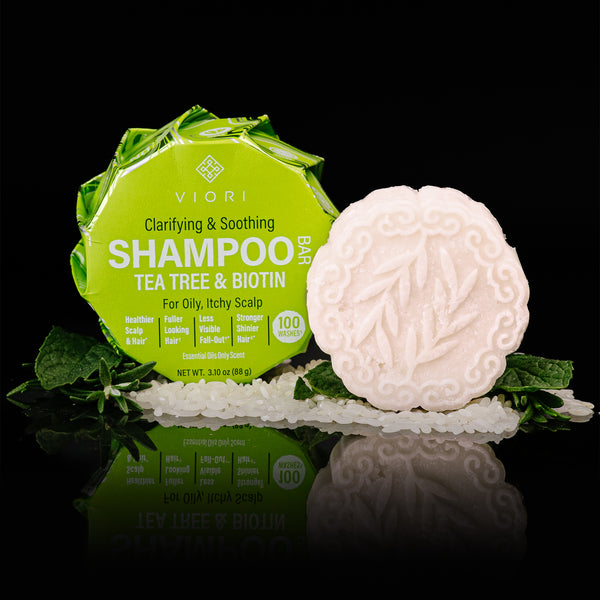
Real reviews for Tea Tree Shampoo Bar – Oily & Itchy Scalp | VIORI
Your Action Plan for Healthier Hair
Ready to move from theory to practice? Here’s your stylist-prescribed roadmap.
- Shift Your Mindset: Stop searching for a "blocker." Start looking for a scalp-nourishing regimen.
- Become a Label Detective: Your next shampoo must be sulfate-free and pH-balanced. This is non-negotiable for scalp health.
- Seek Nutrient Density: Prioritize formulas featuring the fortifying ingredients we discussed above.
- Embrace Consistency: Scalp health is a marathon, not a sprint. Commit to your gentle routine for at least 2-3 months to see true transformation.
- Build Your Professional Team: Use this scalp-care philosophy as your daily foundation. For personalized advice on genetic thinning, partner with a dermatologist or trichologist. They can address internal factors while you master the external environment.
Forget the magic bullet. The most profound results come from consistent, intelligent care. By choosing to nourish your scalp's ecosystem, you're not just following a trend-you're leveraging real biology for stronger, more resilient hair. It's time to put down the fear-based marketing and pick up the tools of cultivation. Your healthiest hair starts with the ground it grows in.


