
We've all experienced it-that cooling, tingling sensation when you lather up with a minty shampoo. It feels invigorating, clean, almost therapeutic. But after two decades working as a hair stylist and beauty professional, I need to share something that might surprise you: that refreshing tingle has almost nothing to do with how clean your hair gets or how healthy your scalp becomes.
In fact, the science behind minty shampoo reveals a fascinating story about sensory perception, marketing psychology, and some genuine concerns that aren't often discussed in the beauty world.
Let me take you behind the scenes of what's really happening when you feel that cool burn-and why understanding the truth can transform your hair care routine.
The Cooling Illusion: Your Brain Is Being Tricked (And That's Not Necessarily Good)
Here's what most people don't realize: menthol doesn't actually cool your scalp.
When you apply a minty shampoo, menthol molecules bind to specific receptors in your skin called TRPM8 receptors. These are the same receptors that respond to cold temperatures (between 46-82°F). But here's the fascinating part-menthol activates these receptors without actually lowering your scalp's temperature at all.
Your brain receives the "cold" signal and interprets it as cooling, even though nothing has physically changed. It's essentially a neurological magic trick.
Why This Matters for Your Hair Health
This might seem like harmless fun-who doesn't enjoy a refreshing sensation? But from a professional standpoint, this receptor activation triggers several responses that can actually work against your hair care goals:
Blood vessel constriction and confusion
Your scalp's blood vessels temporarily constrict, then dilate. This back-and-forth can send mixed signals to your scalp about oil production and regulation.
Sensory distraction
That intense tingling can actually mask real scalp issues you should be paying attention to-dryness, irritation, or product buildup. The sensation is so strong that you might miss warning signs your scalp is trying to send you.
The "clean feeling" illusion
We've been culturally conditioned to associate that cooling sensation with effective cleansing. But they're completely unrelated. Your hair can be perfectly clean without any tingle, and you can have buildup while feeling that "fresh" sensation.
I've worked with countless clients who felt their non-minty shampoo "wasn't working" simply because it didn't provide that sensory punch-even though their hair was visibly healthier, shinier, and stronger.
NOT SURE WHICH PRODUCT IS RIGHT FOR YOU?
TAKE THE QUIZTakes 30 seconds · 134,000+ customers matched
The Hair Growth Myth: Why Stimulation Doesn't Equal Results
One of the most common reasons clients tell me they choose minty shampoo is for hair growth. The logic seems sound: minty sensation = stimulation = increased blood flow = better hair growth.
Unfortunately, the science doesn't support this popular belief.
What Actually Happens
While menthol does cause a brief increase in blood flow after the initial constriction, this response is:
- Extremely short-lived (lasting only minutes, not the sustained hours needed to nourish hair follicles)
- Superficial (affecting only surface capillaries, not the deeper dermal papilla where your follicles actually receive nutrients)
- Not clinically significant according to peer-reviewed dermatological research on hair growth
Think about the Red Yao women of China, whose traditional hair care practices (centered around fermented rice water) have helped them maintain thick, healthy hair well into their 80s. Their centuries-old rituals never included mint-yet their results speak for themselves.
What actually matters for hair growth? Nutrient delivery through gentle, pH-balanced formulations and genuine scalp health maintenance-not temporary sensory stimulation.
The Hidden Chemistry Problem: When Mint Interferes With Conditioning
Here's a technical aspect that rarely gets discussed outside professional circles:
Menthol is fat-soluble, which means in shampoo formulations, it can actually interfere with the beneficial ingredients you want absorbing into your hair.
Specifically, menthol can:
- Compete with nourishing oils trying to penetrate the hair cuticle
- Interfere with conditioning agents that need to coat the hair shaft
- Create a false sense of slip (the cooling makes hair feel conditioned when it isn't)
I've seen clients under-condition their hair for months because the minty sensation mimicked the smooth feel of properly conditioned hair. The result? Increased breakage, dullness, and damage that could have been avoided.
The pH Balancing Act: Too Much of a Good Thing
Most hair professionals will tell you that slightly acidic products are ideal-your hair's optimal pH is between 4.5-5.5. Mint essential oils and menthol naturally fall within this range (pH 4.5-5.5), which sounds perfect.
But here's the complication: when you add these acidic mint compounds to an already slightly acidic shampoo base, the combined pH often drops to 4.0-4.5-which is actually too acidic.
The Consequences of Over-Acidification
When your shampoo is too acidic, several problems emerge:
Excessive cuticle tightening - Your hair cuticles contract too much, making strands brittle and prone to breakage
Accelerated color fading - If you color your hair, overly acidic products can strip your color faster (similar to how friction opens cuticles and releases pigment)
Scalp barrier disruption - Your scalp's natural pH is 5.5. Regular exposure to pH 4.0-4.5 can compromise your scalp's protective acid mantle
I've worked with numerous clients suffering from unexplained scalp sensitivity who were using "all-natural" mint shampoos daily. When we simply reduced usage frequency and allowed their scalp pH to rebalance, their discomfort disappeared within weeks.
The Psychology of Tingle: Why We're Addicted to the Sensation
This might be the most eye-opening aspect of the minty shampoo phenomenon: that tingle is actually triggering a mild pleasure response in your brain.
When menthol stimulates your trigeminal nerve, it causes a small release of dopamine and endorphins-the same feel-good chemicals that create reward sensations. This creates a neurological loop:
- You use minty shampoo
- The sensation triggers pleasure chemicals
- Your brain associates this feeling with "effective" cleaning
- You begin craving that sensation
- Products without it feel weak or ineffective (even when they work better)
This is brilliant marketing, but it's not necessarily good hair care.
The "Freshness" Association Isn't Natural
Our cultural association between mint and freshness comes primarily from dental products-it's learned, not biological. Yet the hair care industry has capitalized on this association for decades.
From a formulation perspective, mint often serves more as a masking agent (covering the smell of base ingredients) than as a genuinely beneficial active ingredient for your hair.
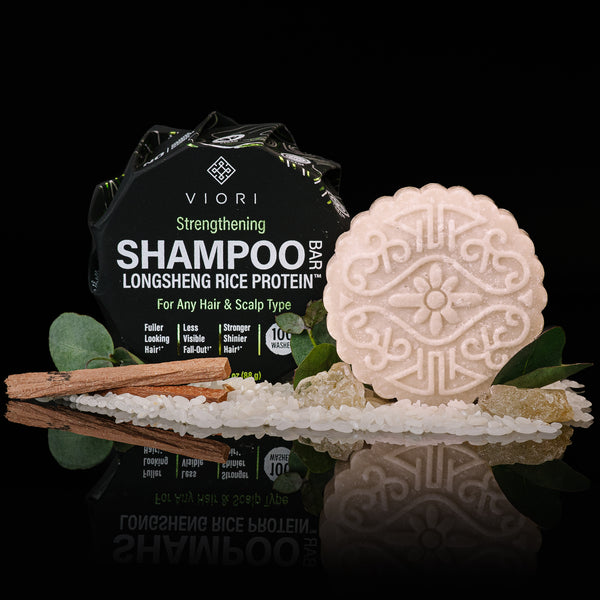
I've guided many clients through the transition to gentler formulations (like Viori's rice-water-based bars), and nearly all of them initially felt the products "weren't strong enough" because they lacked that sensory punch. Yet within 2-4 weeks, they noticed visible improvements: shinier hair, healthier scalp, less breakage, better moisture retention.
The products worked better precisely because they weren't creating that distracting sensation.
The Microbiome Connection: A Concerning New Discovery
Recent research into the scalp microbiome has uncovered something professionals are increasingly worried about.
Your scalp hosts a complex ecosystem of beneficial bacteria, fungi, and microorganisms that:
- Regulate sebum (oil) production
- Protect against harmful overgrowth
- Maintain pH balance
- Support healthy follicle function
Menthol and mint essential oils have antimicrobial properties-which sounds positive. But their action is indiscriminate, meaning they can disrupt beneficial microorganisms along with the harmful ones.
The Paradoxical Timeline I've Observed
With daily minty shampoo users, I've noticed a consistent pattern:
First 1-2 months: Reduced oiliness, fresh feeling, satisfaction with results
3-6 months later: Increased scalp sensitivity, dandruff, or paradoxically, excessive oil production (sebum rebound)
The culprit: Microbiome disruption leading to an imbalanced scalp ecosystem
This mirrors what happened with antibacterial soaps years ago-we learned that killing all bacteria (good and bad) creates more problems than it solves.
What Actually Works: Better Alternatives for Every Minty Shampoo Goal
If you've been using minty shampoo, you probably have specific reasons. The good news? There are better ways to achieve those same goals.
If You Want That "Clean Feeling"
Rather than relying on sensory tricks, look for formulations that provide genuine cleansing:
Gentle surfactants - Cleansers like Sodium Cocoyl Isethionate clean effectively without stripping your scalp's natural protective oils. This is what Viori uses in their shampoo bars, and it provides thorough cleansing without the harsh after-effects.
pH-balanced formulations - Products that maintain your scalp and hair's natural pH (around 5.5) without artificial manipulation work with your biology rather than against it.
Natural strengtheners - Ingredients like rice protein actually fortify your hair structure from within, rather than just creating a temporary sensation on the surface.
If You Want Scalp Stimulation
If you genuinely want to improve scalp circulation for healthier hair:
Scalp massage - Using your fingertips (not nails) to massage your scalp during washing provides real, sustained increases in blood flow. This actually works, unlike the temporary surface-level effects of menthol.
Panthenol (Vitamin B5) - This actually penetrates your hair shaft and scalp, providing documented strengthening and moisturizing benefits backed by research.
Inositol (Vitamin B8) - Clinically shown to support hair growth through cellular signaling pathways, not just creating a sensation you can feel.
Both of these vitamins are present in fermented rice water-which is exactly why traditional rice-based hair care has such impressive historical results. The Red Yao women's beautiful hair wasn't maintained through tingling sensations, but through genuine nutritional support.
Viori's shampoo and conditioner bars harness this ancient wisdom, incorporating fermented rice water along with these beneficial compounds to truly nourish your hair and scalp.
If You Love Pleasant Scents
You don't have to sacrifice enjoyment for effectiveness! The key is choosing products with:
Natural fragrance from beneficial ingredients - Rice water has a subtle, clean scent. Essential oils like lavender or citrus can provide pleasant aromatherapy without the harsh antimicrobial effects of mint.
Honest formulations - Products that smell good because of what they contain, not because they're masking inferior base ingredients.
WHAT CUSTOMERS ARE SAYING
Real reviews for Hidden Waterfall Barra de Champú
The Professional Perspective: What I Tell My Clients
When clients ask me about minty shampoo, here's what I share:
Occasional use is generally fine. If you love the sensation and use a minty shampoo once a week or so, you're probably not causing significant problems.
Daily use is where concerns arise. Regular exposure to the pH disruption, microbiome interference, and potential conditioning problems can add up over time.
Listen to your scalp, not just the sensation. If you're experiencing increased sensitivity, dandruff, oiliness, or unexplained scalp issues while using minty shampoo regularly, that's your body telling you something.
Judge products by results, not feelings. The most effective hair care often feels the most "normal." Great products work at a biological level without creating dramatic sensations.
The Simple Test
If you're currently using minty shampoo and experiencing any scalp issues, try this: Take a 2-3 week break and switch to a gentler, pH-balanced alternative.
Many of my clients report dramatic improvements from this simple change:
- Reduced scalp sensitivity
- Better oil balance
- Decreased irritation
- Improved hair texture and shine
Your scalp's pH and microbiome need time to rebalance after regular mint exposure. Give it a few weeks, and you'll likely notice the difference.
The Bigger Picture: Sensation Versus Science
Here's what I've learned after 20 years in the beauty industry: the most effective products rarely feel dramatic.
They don't tingle, burn, or create intense sensations. They simply work at a biological level to:
- Maintain optimal scalp pH
- Preserve beneficial scalp microorganisms
- Deliver actual nutrients to follicles
- Cleanse gently without stripping
- Condition without buildup
This might sound boring compared to that invigorating mint rush-but your hair follicles can't actually feel that sensation anyway. They respond to nutrition, proper pH, gentle care, and consistent healthy practices.
What Conscious Consumers Should Know
The widespread belief that minty sensation equals cleaning efficacy represents a fundamental misunderstanding of hair biology-one that's been perpetuated (and sometimes exploited) by marketing rather than corrected with education.
You deserve to understand:
What you're actually feeling - Receptor activation creating a neurological illusion, not actual temperature change or cleaning power
What's actually happening - Potential pH disruption, microbiome effects, and interference with beneficial ingredients
What would actually help - Nutrient delivery, gentle cleansing, microbiome support, and scalp health maintenance
The Ingredient Transparency Movement
This is why I'm so passionate about brands like Viori that embrace ingredient transparency and education. When you know why each ingredient is included and what it actually does (not just how it feels), you can make informed decisions about what goes on your hair and scalp.


