
Few haircare topics split people into such intense camps as the gugo bar. One person uses it and can’t stop talking about how clean and bouncy their hair feels. Another tries it once and swears it left a film, caused tangles, or made their scalp feel “off.” After 20 years working with every hair type you can imagine, I can tell you this: the gugo bar isn’t inherently “good” or “bad.” It’s simply a very different cleansing strategy-one that reacts dramatically to your hair’s condition, your technique, and (most overlooked) the water coming out of your shower.
This post breaks down what’s really happening at the fiber level: how gugo-style cleansing works, why it can feel grippy, why water hardness changes everything, and how to use a bar cleanser without turning wash day into a knot-fest. I’ll also explain how a modern, pH-conscious bar system like Viori is engineered to sidestep the most common reasons traditional cleansing bars can feel unpredictable.
What a gugo bar is actually doing (in plain English, with the real science underneath)
Most modern shampoo bars are designed like solid versions of liquid shampoo: controlled cleansing, consistent rinse-out, and a formula built to behave predictably on hair. A traditional gugo bar typically leans on saponins-plant-derived cleansing compounds that can act like surfactants (they have both water-loving and oil-loving parts).
NOT SURE WHICH PRODUCT IS RIGHT FOR YOU?
TAKE THE QUIZTakes 30 seconds · 134,000+ customers matched
That “in-between” nature is the key detail people rarely talk about. Saponins aren’t the same thing as classic soap, and they also don’t behave exactly like the gentle cleansers used in many modern shampoo bars. That’s why the experience can swing from “my hair feels incredible” to “why does this feel like it’s sticking to my hair?” depending on the person.
The real issue most people mislabel as “dryness”: friction
When someone says a bar made their hair feel rough, what they’re usually describing is friction. Hair feel is heavily influenced by how smoothly strands slide past each other-especially when wet.
Your hair’s outer layer (the cuticle) works like shingles on a roof. When those “shingles” lie flat, hair reflects more light (so it looks shinier) and tangles less (so it feels softer). When the cuticle is lifted or the surface is left high-friction, you’ll notice drag during rinsing, snagging while detangling, and more frizz once dry.
Why a gugo bar can feel “grippy” even when your hair is clean
- Not enough built-in conditioning: Many traditional cleansing approaches focus on cleansing first. If there’s no dedicated conditioning step afterward, the hair can feel clean but not slippery.
- More scrubbing to compensate: If the bar doesn’t glide easily, people rub harder. That mechanical friction can rough up the cuticle and irritate the scalp.
- Minerals in your water: Even a great cleanse can feel “sticky” or “coated” if your water chemistry fights the formula.
The variable nobody plans for: water hardness
If you take one thing from this article, make it this: water chemistry can make or break your results. I’ve seen clients love a bar at home, travel once, and suddenly feel like their hair “doesn’t rinse.” Same technique, same product-different water.
What hard water can do to bar-based cleansing
Hard water contains higher levels of minerals (mainly calcium and magnesium). Those minerals can interfere with how cleansing agents rinse and how hair feels afterward.
- Rinsing feels endless, like there’s always something left behind
- Hair feels coated even though the scalp feels clean
- Ends feel stiff while the roots still seem oily (a surprisingly common combination)
- Scalp feels itchy or tight, especially if you scrub more to “fix” the feeling
Why soft water makes everything easier
- Foam tends to build faster
- Rinsing tends to be quicker
- Hair often feels lighter and cleaner with less effort
pH: the quiet factor behind shine, frizz, and even color fade
Hair is sensitive to pH. When your products sit in a hair-friendly range, the cuticle behaves better-lying flatter, reflecting more light, and tangling less. When pH runs too high (too alkaline), the cuticle can lift more easily. That can show up as roughness, dullness, frizz, and in some cases faster fading for color-treated hair.
One reason many people prefer a modern bar system like Viori is that it’s built to be pH balanced. That matters because pH isn’t just a “nice-to-have”-it’s a major control knob for long-term hair quality.
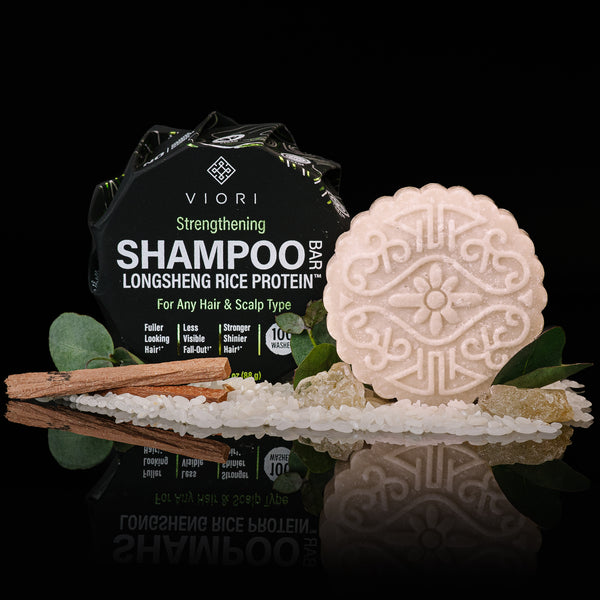
Viori also includes fermented Longsheng rice water in a controlled, hair-safe way. The goal is to support strength, shine, and overall hair health without the downside that can come from using high-concentration rice water too often.
Scalp comfort: cleansing is only half the story
Your scalp isn’t just skin-it’s an ecosystem. Sebum production, barrier health, and sensitivity all influence how you tolerate a cleanser. A gugo bar may feel soothing for some people, but for others it can become a problem if it increases friction, encourages aggressive scrubbing, or doesn’t rinse well in mineral-heavy water.
If you’re already prone to irritation or sensitivity, an unscented, gentle option is often the smarter starting point. Within Viori’s line, Native Essence is the unscented choice that many sensitive-scalp clients prefer.
Who tends to love gugo bars-and who tends to struggle
This is where the conversation gets practical. In my experience, outcomes are often predictable once you factor in porosity, damage level, and water.
Gugo bars often work best for
- Hair that isn’t heavily bleached or chemically stressed
- People who don’t use heavy styling layers that create buildup
- Those who don’t need a lot of slip for detangling
- Soft-water households
Gugo bars are more likely to frustrate
- High-porosity hair (bleached, heat-damaged, or naturally very porous)
- Hard-water households
- Anyone who tangles easily and needs strong conditioning support
- Very reactive scalps-especially if the “grippy” feel leads to extra scrubbing
Pro technique: how to try a gugo bar without wrecking your hair
If you’re going to experiment, treat it like a technique-driven cleanse. The biggest mistakes I see are over-rubbing and under-rinsing.
WHAT CUSTOMERS ARE SAYING
Real reviews for Hidden Waterfall Barra de Champú
- Soak your hair thoroughly (60-90 seconds). Fully saturated hair cleanses more evenly and with less friction.
- Build lather in your hands first. Avoid dragging the bar directly over your hair and scalp.
- Focus on the scalp, not the ends. Let the rinse water cleanse your lengths.
- Rinse longer than you think you need. This matters even more with hard water or dense hair.
- Condition intentionally. If you want slip, softness, and easier detangling, plan a real conditioning step.
Where Viori fits in: predictable bar care without the common bar “downsides”
If what you like about the gugo bar idea is the simplicity of a bar format-but you want results that feel more consistent wash-to-wash-this is where Viori stands out from many traditional approaches. The bars are designed with pH balance in mind, use a mild cleanser suitable for hair, and pair with a conditioner bar that helps restore slip and reduce friction.
Choosing within Viori often comes down to scalp type:
- Citrus Yao is commonly preferred for normal-to-oily scalps (it’s often chosen when oil control is the priority).
- Terrace Garden, Hidden Waterfall, and Native Essence are frequently chosen for normal-to-dry scalps, with Native Essence as the unscented option.
Final thoughts: the “truth” about gugo bars is interaction, not hype
A gugo bar can be a beautiful traditional cleanse-especially when your hair is in good shape, your water is cooperative, and your technique is gentle. But if your hair is high-porosity, your water is hard, or you need serious slip to detangle safely, the experience can go sideways fast.
If you want bar haircare that’s easier to predict and easier to love long-term, a pH-balanced system like Viori (shampoo bar plus conditioner bar) is often the more reliable route-especially if your goal is consistent softness, shine, and scalp comfort rather than trial-and-error.


