
I'll never forget the day a client walked into my salon clutching a bottle of shampoo emblazoned with pristine mountain peaks and crystal-clear waterfalls. "This is going to change everything," she said, her eyes bright with hope. "It's made with authentic mountain spring water!"
That was fifteen years ago, but I still see the same scenario play out regularly. After two decades behind the chair, I've watched countless haircare trends sweep through the industry, but few have shown the staying power of geographic origin stories-especially those centered around majestic mountains, pure alpine springs, and high-altitude ingredients that promise to transform your hair.
Here's what I want to share with you today: there's a fascinating gap between what these mountain-themed marketing stories promise and what's actually happening to your hair at the molecular level. And it's something most reviews never touch on.
This isn't about tearing down specific products. Instead, I want to pull back the curtain and show you the professional lens I use when evaluating formulations-so you can make decisions based on chemistry, not just beautiful imagery.
The Mineral Water Paradox Nobody Mentions
Here's an irony that gets glossed over in virtually every review I've ever read: authentic mountain spring water would actually create serious problems for your hair.
The Hard Water Reality
Real mountain spring water is loaded with calcium, magnesium, and other minerals-what we call "hard water" in the salon world. From a trichological standpoint (that's the science of hair and scalp health), this creates several challenges:
- Mineral buildup that dulls your shine and weighs hair down
- Reduced lather efficiency, meaning you'll need more product per wash
- Accelerated color fading if you have chemically treated hair
- Increased porosity over time, leading to dryness and breakage
As someone who's done color work for years, I can tell you that my clients living in mountain regions with mineral-rich water consistently struggle with maintaining their color. The very minerals celebrated in mountain-themed marketing actually complicate haircare rather than simplify it.
So when a product emphasizes its "authentic mountain water formulation," my first professional question is always: "Have they actually addressed the hard water problem, or are they just romanticizing a chemistry issue?"
What "Mountain Fresh" Really Means
That invigorating, crisp sensation you get from mountain-themed shampoos? It's typically coming from:
NOT SURE WHICH PRODUCT IS RIGHT FOR YOU?
TAKE THE QUIZTakes 30 seconds · 134,000+ customers matched
- Eucalyptus or mint derivatives for that signature scent
- Menthol creating a cooling effect on your scalp
- Blue-green colorants that visually suggest pristine mountain streams
These are sensory marketing tactics, pure and simple. The cooling sensation happens because menthol activates specific receptors on your scalp that signal "cold" to your brain-even though the product is room temperature. It's neurological theater, not enhanced cleansing or purification.
What a True High-Altitude Formula Would Actually Address
If I were genuinely formulating for mountain living conditions-and I mean really optimizing for that environment-here's what I'd prioritize. And it's rarely what these products emphasize.
The Real Environmental Stressors of Elevation
UV exposure increases 10-12% per 1,000 feet of elevation. This oxidizes hair proteins and fades color much faster than at sea level. Yet I rarely see mountain-themed shampoos containing adequate UV filters like benzophenone-4 or ethylhexyl methoxycinnamate.
Humidity drops significantly at higher altitudes. Hair loses moisture rapidly, cuticles remain partially raised, and friction damage increases. You'd need humectants like glycerin, panthenol, or sodium PCA-but many mountain formulas emphasize "lightweight" or "clarifying" properties that actually strip away these protective elements.
Temperature fluctuations are extreme. The hair shaft expands and contracts with these changes, requiring lipid-based protection from ingredients like ceramides, cholesterol, and fatty acids. Instead, most mountain-themed shampoos focus on that "squeaky clean" feeling-which often means they've removed your hair's protective barriers.
Here's the professional insight: A genuinely optimized high-altitude haircare product would look more like high-altitude skincare-rich in antioxidants, UV protection, and moisture-binding ingredients. The opposite of the clarifying, stripping formulas typically marketed with mountain imagery.
The pH Problem Hidden in "Natural" Formulations
Why "Naturally Balanced" Can Be a Red Flag
Natural mountain spring water typically has a pH of 7.0-8.5, which is alkaline. Human hair's optimal pH is 4.5-5.5, which is acidic.
This creates a fundamental incompatibility that most reviews never address:
- Alkaline shampoos cause the hair cuticle to swell and lift
- This creates that "squeaky clean" feeling many people love
- But that sensation actually indicates damage-the cuticle should lie flat and smooth
- Raised cuticles lead to tangling, breakage, dullness, and increased porosity
In professional treatments, we use acidifying products (pH 3.0-4.0) after any alkaline process specifically to reseal the cuticle and restore hair's natural protective state.
Critical question when reading reviews: Does the product list its pH? If it advertises being "naturally balanced" without specifying a number-and especially if that number is above 6.0-that's a significant concern from a professional standpoint.
Decoding the Ingredient List: What You're Actually Getting
Common Mountain-Themed Formula Components
Let me walk you through what you'll typically find and what it actually does:
1. Sodium Lauryl Sulfate or Sodium Laureth Sulfate
Despite "natural" or "pure" branding, most contain these synthetic detergents. They're effective cleansers, but they can be harsh, especially on color-treated or chemically processed hair. The entire sulfate-free movement exists specifically because of their potentially drying effects.
2. Tea Tree Oil or Peppermint Oil
These create that signature tingling sensation. The antimicrobial properties are legitimate, but these oils can irritate sensitive scalps-and they're often included in higher concentrations than therapeutically necessary, purely for sensory impact.
3. "Glacier Minerals" or "Mountain Botanicals"
Usually trace amounts of zinc, copper, or iron oxides. This is marketing terminology rather than meaningful active ingredients. Concentrations are typically too low for any biological activity-often under 0.1%.
4. Panthenol (Pro-Vitamin B5)
Now this is actually beneficial. It acts as a humectant, penetrating the hair shaft to retain moisture. If you see this in the first 5-7 ingredients, that's a genuinely positive sign.
A Different Approach: Rice Water vs. Mountain Water
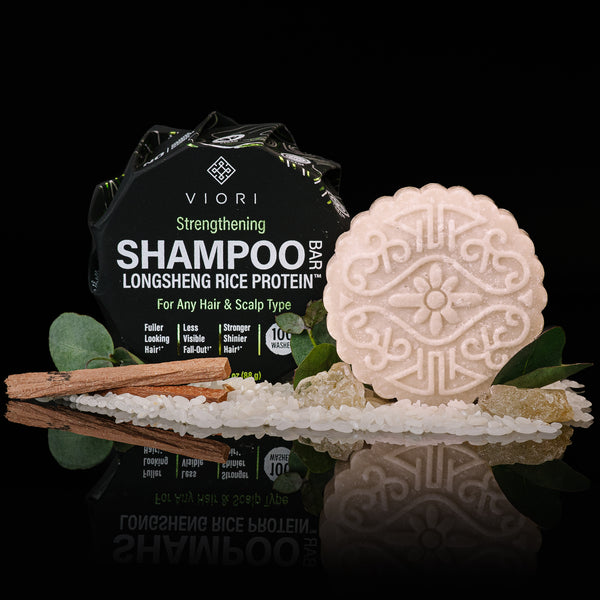
Since I can only reference Viori specifically by name, this creates an interesting point of comparison between geographic marketing narratives and functional ingredient science.
What Rice Water Brings to the Table
Viori's Longsheng rice water approach provides:
- Inositol (a carbohydrate that reduces surface friction and strengthens hair from within)
- Amino acids from fermented rice (actual protein building blocks your hair can use)
- Vitamins E and B complex (documented antioxidants with proven benefits)
- pH-balanced formulation (addressing that critical acidity issue I mentioned earlier)
The Scientific Distinction
Rice water contains polysaccharides that form a protective film on hair strands-think of it as a shield against environmental damage.
The fermentation process increases the bioavailability of nutrients, meaning your hair can actually absorb and use them more effectively.
The proteins are sized appropriately-under 18 amino acids in length-to actually penetrate the hair cortex rather than just sitting on the surface.
Here's the fundamental difference: Mountain narratives sell an environment and an emotional connection to purity. Rice water provides functional molecules with documented mechanisms of action.
That doesn't make one inherently better or worse-but it's a distinction that most reviews never articulate, and it matters when you're making purchasing decisions.
What Actually Matters When Choosing a Shampoo
Beyond the Marketing Story
After two decades of professional practice, here's what I genuinely evaluate:
1. Cleansing Agent Type and Concentration
This is typically the first ingredient after water and determines the balance between gentleness and cleansing power.
- Mild cleansers: Cocamidopropyl betaine, decyl glucoside
- Moderate cleansers: Sodium cocoyl isethionate (what Viori uses in their bars)
- Strong cleansers: Sodium lauryl sulfate, ammonium lauryl sulfate
2. pH Level
This should be explicitly stated or available upon request. Target range: 4.5-5.5 for optimal hair health.
3. Conditioning Agents Within the Shampoo
Look for behentrimonium methosulfate, cetearyl alcohol, or cetyl alcohol. Despite the word "alcohol," these are actually fatty alcohols that condition and protect-they're beneficial, not drying.
4. Protein Content
Hydrolyzed wheat, silk, or keratin proteins are essential for damaged or chemically treated hair. They should appear in the first half of the ingredient list to be present in meaningful concentrations.
5. Actual Actives, Not Just Fragrance
WHAT CUSTOMERS ARE SAYING
Real reviews for Hidden Waterfall Barra de Champú
If the "signature" ingredients-mountain minerals, botanical extracts, or whatever the marketing emphasizes-appear after the preservatives in the ingredient list, they're in "fairy dust" concentrations (usually under 0.5%) and are there for label appeal, not functional benefit.
The Testing Protocol I Use (That Most Reviews Skip)
When I evaluate a new product professionally:
- pH test strip immediately upon opening
- Dilution test: Does it maintain performance when diluted 1:4 with water? (This tells me about surfactant quality and efficiency)
- Wet combing test: After applying to hair, does combing become easier or harder? (Indicates whether it's reducing or increasing friction)
- Rinse residue check: Does hair feel coated, squeaky, or naturally smooth after rinsing?
- 24-hour to 4-week observation: Any scalp irritation, changes in oil production, texture shifts, or cumulative effects
Most consumer reviews rely entirely on immediate sensory experience-scent, tingle, foam volume-rather than actual hair health outcomes measured over time.
The Scalp Microbiome Factor
The Emerging Science That Changes Everything
Recent research in trichology has revealed that your scalp's microbiome composition varies based on:
- Elevation and atmospheric pressure
- Humidity levels
- UV exposure
- Water mineral content
What this means professionally:
A shampoo truly optimized for mountain conditions should actually contain:
- Lower concentrations of aggressive antimicrobials (the scalp microbiome is already stressed by environmental factors)
- Prebiotics like inulin or fructooligosaccharides to support beneficial bacteria
- Ceramide precursors to maintain the scalp's barrier function
Instead, most mountain-themed shampoos load up on tea tree oil and menthol-broad-spectrum antimicrobials that indiscriminately disrupt your scalp's ecology.
This can lead to:
- Rebound oil production (your scalp overcompensates)
- Increased sensitivity over time
- Dandruff or seborrheic dermatitis flare-ups
I've observed with clients who've relocated from sea level to mountain regions that heavily "clarifying" products often worsen scalp conditions within 2-3 months of consistent use.
The Controversial Question: Do You Actually Need Location-Specific Haircare?
My Professional Opinion on Geographic Marketing
Here's something that might be unpopular in an industry built on compelling origin stories: Location-specific haircare is largely marketing fiction.
Why do I say this?
- Hair structure is determined by genetics, not geography
- Environmental damage requires repair ingredients with specific mechanisms, not origin stories
- Water quality issues are solved by filtration systems or chelating shampoos with proven actives, not branded formulas
What actually determines your haircare needs:
- Your hair's porosity level (low, medium, or high)
- Your scalp's natural oil production rate
- Any chemical treatments you have (color, relaxers, keratin treatments)
- Your heat styling frequency and intensity
A person with low-porosity hair has the same fundamental needs whether they live in Colorado or Connecticut. The elevation story creates an emotional connection but doesn't change the underlying chemistry your hair requires.
When Geographic Origin Actually Matters
I don't want to suggest that all geographic branding is meaningless. There are legitimate exceptions where origin correlates with functional benefits:
- Volcanic ash from specific regions provides bioavailable silica for strengthening
- Dead Sea minerals offer documented high concentrations of magnesium and potassium
- Glacial marine extracts contain unique amino acids from cold-water algae
- Rice water from Longsheng (as in Viori) uses specific rice cultivars and traditional fermentation processes
The critical difference: These provide isolated, measurable compounds with documented mechanisms of action. "Mountain essence" or "alpine freshness" typically doesn't offer


