
No-poo (sometimes written “no poo” or “nopoo”) sounds simple: stop using shampoo and let your scalp “reset.” And yes-some people get calmer scalps, better curl definition, and fewer wash days. But I’ve also watched no-poo turn into months of limp roots, stubborn itch, and that frustrating feeling of hair that’s somehow greasy and dry at the same time.
After 20 years doing hair, I don’t think no-poo is a trend you can label as good or bad. It’s a chemistry and scalp-biology experiment. Your results depend on what’s happening at the surface of the hair, the health of your scalp barrier, and (this is the part most people miss) the minerals coming out of your showerhead.
If you’ve ever said, “My hair feels coated no matter what I do,” you’re not alone-and it may have less to do with “too much oil” and more to do with how oil behaves in your specific water.
What people mean when they say “no-poo”
Not everyone doing no-poo is doing the same thing, which is why advice online can feel completely contradictory. In practice, “no-poo” usually falls into a few buckets:
- Water-only washing (no cleanser at all)
- Mechanical cleansing (scalp massage/scritching and brushing to move oil down the hair)
- Alternative cleansing methods (clays, botanical rinses, conditioner-only routines)
- Low-poo routines (very mild cleansing used occasionally rather than eliminated)
Each one affects sebum, buildup, scalp comfort, and hair texture differently-so it’s worth being specific about which method you’re actually using.
NOT SURE WHICH PRODUCT IS RIGHT FOR YOU?
TAKE THE QUIZTakes 30 seconds · 134,000+ customers matched
The real job of shampoo: managing surfaces, not just “removing dirt”
Hair and scalp are basically a constant negotiation between oil, water, and friction. Your strands aren’t just getting “dirty”-they’re collecting layers: sebum from the scalp, minerals from water, styling residue, pollution, and shed skin cells.
A well-formulated cleanser is designed to handle those layers by helping water and oil mix long enough to rinse clean. In technical terms, shampoo helps:
- Emulsify sebum so it can actually rinse away
- Lower surface tension so water wets the scalp and hair evenly
- Lift particles and residue that cling to the cuticle
- Reduce friction during washing, which affects tangling and breakage
When you remove cleansing entirely, you’re relying on water and scrubbing alone to manage chemistry that often needs a little help.
The “transition period” isn’t just your scalp adjusting
People love to talk about the no-poo “transition,” like it’s a single universal phase where your scalp learns to make less oil. Sometimes you do see improvement with time-especially if someone was over-washing and irritating their scalp barrier.
But two less-discussed processes can make that period feel worse, and they don’t magically resolve just because you waited it out.
1) Sebum oxidizes (and oxidized oil behaves differently)
Sebum isn’t static. Heat, UV exposure, and oxygen can oxidize components of oil on the scalp and hair. Oxidized sebum tends to feel stickier, hold onto particles more aggressively, and can be more irritating for sensitive scalps. That’s one reason a scalp can feel itchy or “dirty” even when you’re washing with water faithfully.
2) The issue hardly anyone talks about: hard water + sebum = a waxy film
If your water is hard, it contains higher levels of minerals like calcium and magnesium. Those minerals can bind to fatty components in sebum and create an insoluble film on the hair. Think of it as the hair version of soap scum-except it can happen even when you’re trying to avoid “products.”
This is where that classic no-poo complaint comes from:
- Hair feels waxy or coated at the roots
- Strands look dull instead of shiny
- Hair feels heavy, yet ends can still feel dry
- Rinsing doesn’t seem to help
This is a water chemistry problem, not a willpower problem. If you live in a hard-water area, true no-poo is automatically a higher-difficulty routine.
Scalp health: sebum is helpful, but buildup changes the ecosystem
Sebum isn’t “bad.” In the right amount, it supports the scalp barrier and protects skin. The complication is that the scalp is also home to a living microbiome, and oil can trap shed skin cells, particles, and residue close to the surface.
When cleansing is reduced too far for your scalp type, you can see shifts that show up as:
- Itch that doesn’t match visible dryness
- Stubborn flakes that cling rather than dust away
- Odor that returns quickly after rinsing
- Buildup concentrated at the crown, hairline, or nape
It’s also important to know that not all flaking is the same. Fine, powdery flaking points you in a different direction than waxy, adherent flakes.
Why hair can break more on no-poo (even when it feels “moisturized”)
One of the biggest misunderstandings I hear is: “My hair feels softer because it’s oilier, so it must be healthier.” Oil can absolutely add slip-until mineral film, oxidized sebum, and particles create drag.
When the surface of the hair gets coated unevenly, fiber-to-fiber friction increases. You notice it most when you:
- Brush or detangle
- Air-dry with movement (hair rubbing on clothing)
- Sleep with hair loose
- Style hair that’s already slightly coated
This matters especially for fine hair (less margin for damage) and high-porosity or processed hair (raised cuticles snag more easily).
pH: the quiet variable that changes how your cuticle behaves
Hair tends to behave best when routines stay in a mildly acidic range. When pH drifts too alkaline, the cuticle can feel rougher and hair often tangles more easily. Many DIY or “natural” no-poo experiments accidentally push routines off balance, which is one reason results can feel inconsistent from week to week.
Viori emphasizes that hair products perform best when they’re pH balanced (generally in the 3.5-6.5 range), since overly alkaline routines can dry hair out and contribute to long-term damage. That’s not marketing fluff-it’s basic cuticle behavior.
A more realistic goal for most people: low-poo, not no-poo
If what you want is fewer harsh cleansers and a calmer scalp, you don’t necessarily need to quit cleansing entirely. In my experience, a low-poo approach is often the sweet spot: it keeps the scalp comfortable and the hair light, while preventing that stubborn waxy coating that derails so many no-poo routines.
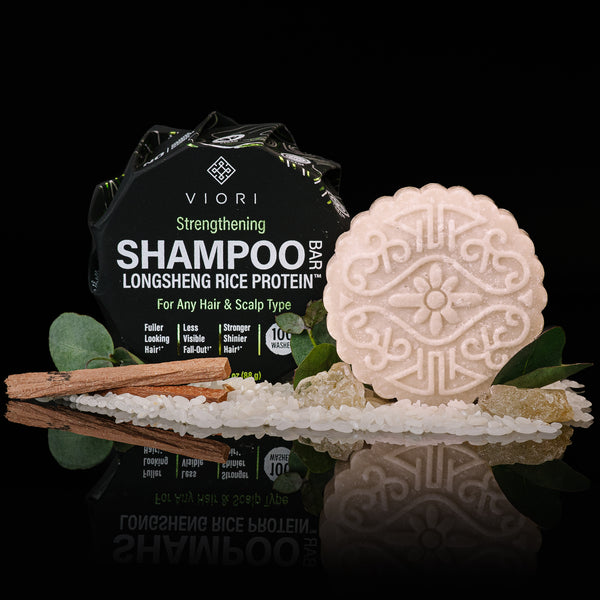
Viori is a strong fit for that middle-ground approach because the shampoo bars use a mild cleanser, Sodium Cocoyl Isethionate (SCI) (often nicknamed “baby foam” in the industry), and the formulas are designed to be pH balanced. Viori also uses fermented Longsheng rice water alongside other supportive ingredients to help hair feel moisturized, strong, and glossy without relying on heavy residue.
And don’t skip what happens after cleansing: Viori’s conditioner bar is built around a positively charged conditioning ingredient, behentrimonium methosulfate. That positive charge helps it bind to the hair shaft (especially where hair is more porous or damaged), improving slip and reducing friction-two things no-poo routines often struggle to replicate consistently.
WHAT CUSTOMERS ARE SAYING
Real reviews for Hidden Waterfall Barra de Champú
The “compatibility triangle” that predicts your no-poo outcome
If you want to know whether no-poo is likely to be effortless or miserable for you, check these three variables. Together, they predict results better than almost any anecdote online:
- Water hardness: soft water makes no-poo easier; hard water makes waxy film more likely.
- Scalp type: dry/sensitive scalps sometimes improve with less cleansing; oily/flaky scalps often feel worse without periodic cleansing.
- Hair porosity/damage: low-porosity healthy hair tolerates buildup longer; high-porosity or processed hair shows dullness, tangling, and breakage sooner.
If two (or all three) of these lean “challenging,” true no-poo may never feel great-unless you introduce a strategy to manage mineral film and buildup.
The pro approach: scalp-targeted cleansing (instead of blanket no-poo)
If you like the philosophy behind no-poo-less stripping, more balance-try this structure instead:
- Cleanse the scalp on purpose (that’s where oil and buildup originate)
- Be gentle on the lengths (that hair is older and more fragile)
- Condition mid-lengths to ends to reduce friction and breakage
This is also especially useful for color-treated hair. Viori notes that because bars involve some friction, it can help to build lather in your hands and apply with your fingers rather than rubbing the bar directly on the scalp. Less friction equals less cuticle disruption.
What to track if you’re experimenting (better than “greasy or not”)
If you want to know whether your routine is actually improving hair and scalp function, pay attention to these markers:
- Itch level (often a buildup/microbiome signal)
- Flake type (powdery vs. waxy/adherent)
- Root lift on day 2-3 (oil distribution + film indicator)
- Drying time (coating can make hair hold water longer)
- Wet slip (low slip often predicts more breakage)
Those details tell you what’s happening on the surface of the hair-where most no-poo success or failure is decided.
Bottom line
No-poo can be a great reset for the right scalp in the right conditions. But when it fails, it’s often not because your scalp is “detoxing.” It’s usually because oil, minerals, and friction have teamed up to create a film your routine can’t remove.
If you want the benefits people chase with no-poo-balance, comfort, shine-without the waxy buildup spiral, a pH-balanced, gentle cleansing routine paired with effective conditioning is often the most reliable route. That’s exactly the niche Viori tends to fill: mild cleansing, supportive ingredients like fermented Longsheng rice water, and conditioning designed to reduce friction and help hair feel healthy over time.


