
After two decades behind the salon chair, I've watched countless trends come and go. Keratin treatments, Brazilian blowouts, purple shampoos that promised to banish brass overnight-I've seen it all. But here's what keeps me awake at night in the best possible way: the quiet revolution happening in how we actually deliver cleansing and conditioning molecules to hair.
I'm talking about bar-format hair care. And before you roll your eyes, let me be clear: this isn't your grandmother's harsh soap bar that turned hair into straw.
What surprises nearly every client who sits in my chair is this: switching from liquid to bar format isn't just an eco-friendly packaging swap. It's a complete molecular overhaul that changes everything from ingredient stability to how active compounds interact with your hair shaft. Yet most stylists-and I'd wager ninety-five percent of consumers-don't understand the actual science.
Let me pull back the curtain.
The Water Factor: What Happens When You Remove 70% of the Formula
Pick up any liquid shampoo from your shower right now. I'll wait. Look at the ingredient list. First ingredient? Water. Almost always. We're talking 70-80% of what's in that bottle.
Now, water isn't just cheap filler, though that's part of it. Water fundamentally dictates what's chemically possible in a formulation. It's the solvent, the delivery system, the base that holds everything together.
But here's where things get interesting.
The Preservation Problem
Water creates life. That's beautiful when we're talking about hydration and cell function. It's less beautiful when we're talking about bacteria, mold, and yeast breeding in your shampoo bottle.
Every water-based personal care product requires a preservation system. Parabens, phenoxyethanol, formaldehyde-releasing agents-ingredients that exist for one reason only: to keep microbes from throwing a party in your shampoo.
NOT SURE WHICH PRODUCT IS RIGHT FOR YOU?
TAKE THE QUIZTakes 30 seconds · 134,000+ customers matched
Bar formats eliminate this problem entirely. Without water, there's nothing for microbes to grow in. The bar preserves itself through simple desiccation. But the implications go way beyond just avoiding preservatives.
Here's the stability secret that blew my mind when I first learned it: many beneficial ingredients break down rapidly in water. Certain vitamins, proteins, botanical extracts-they start degrading the moment they're mixed into a water base. In waterless bar format, these same ingredients remain stable for years.
A quality shampoo bar can maintain a 3-5 year shelf life without synthetic preservatives. Liquid shampoos typically need replacing every 12-18 months, even unopened. Same ingredients, wildly different longevity. That's not marketing spin-that's molecular chemistry.
Concentration: When "More Active Ingredients" Creates New Challenges
Let's talk about what actually cleans your hair: surfactants. The molecules that lift oil and dirt so water can rinse them away.
A typical liquid shampoo contains maybe 10-15% surfactants by volume. The rest is water, conditioning agents, thickeners, and preservatives. When you create a bar, you're suddenly working with 70-90% active ingredients.
This creates a fascinating formulation challenge: How do you deliver effective cleansing without stripping hair down to the cuticle?
The Surfactant Selection Game
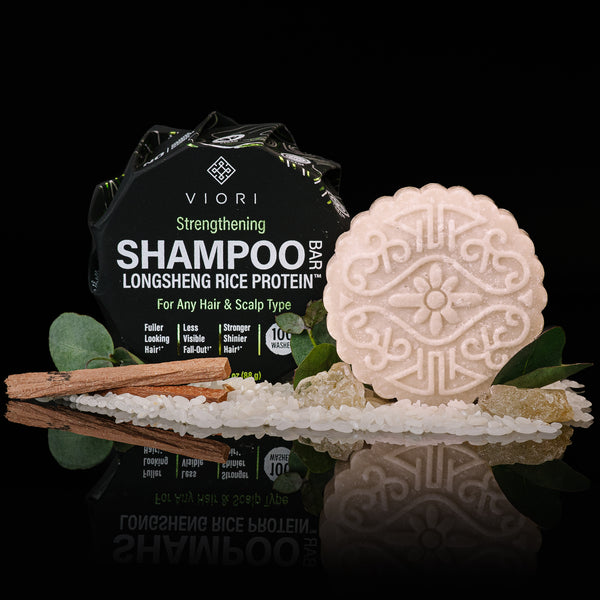
This is where formulation sophistication separates the amateurs from the professionals. Sodium Cocoyl Isethionate-you'll see it abbreviated as SCI-is the primary cleanser in quality shampoo bars like those from Viori. It's derived from coconut oil, and what makes it perfect for bar format is its ability to create effective cleansing structures even when highly concentrated, without the aggressive, hair-stripping action of harsher sulfates.
But here's the nuance: not all concentrated cleansers behave the same way. SCI's molecular structure allows it to form what chemists call micelles-tiny spherical structures that trap dirt and oil without destroying the lipid barrier that keeps hair healthy and flexible.
I've seen cheap bar shampoos that use harsh soap bases, and the damage is immediate and obvious. Dry, tangled, color-stripped hair that feels like you washed it with dish detergent. The format isn't the problem. The chemistry is everything.
The pH Precision Challenge
Your hair's happy place is pH 4.5-5.5-slightly acidic. Water naturally buffers pH, which makes liquid formulation more forgiving. You can be a little off and the water compensates.
In bar format, achieving and maintaining proper pH requires precision. Formulators use fatty alcohols, stearic acid, and pH adjusters like citric acid to hit that target range. There's no water buffer to forgive mistakes.
This is the difference between a harsh soap bar with a pH of 9-10 that leaves hair feeling like a Brillo pad, and a properly formulated shampoo bar that leaves it soft and manageable. The bar format isn't inherently bad-the chemistry makes or breaks it.
The Conditioner Conundrum: Why You Can't Just Compress Liquid
Here's where hair care chemistry gets truly fascinating, and where many bar products fail spectacularly.
Conditioners work through cationic molecules-positively charged-that magnetically attract to anionic, negatively charged damaged sites on hair proteins. Opposite charges attract. This is fundamental chemistry, not marketing poetry.
And here's the critical point: you cannot simply compress liquid conditioner into bar form. The chemistry doesn't translate. You need completely different formulation architecture.
Understanding BTMS
Ever noticed Behentrimonium Methosulfate in ingredient lists? Despite having "sulfate" in the name, it's classified as sulfate-free. Confusing, right? I thought so too until I dug into the chemistry.
Here's the distinction: BTMS is a cationic surfactant-it doesn't cleanse; it conditions. The "methosulfate" portion is completely different from the aggressive sulfate anions found in harsh cleansers like sodium lauryl sulfate. This molecular distinction matters enormously for hair health.
In bar format, BTMS serves triple duty:
- Structure: Gives the bar firmness and stability so it doesn't crumble in your hands
- Function: Delivers conditioning by bonding electrostatically to damaged hair sites
- Slip: Creates glide that prevents mechanical breakage during application
But here's the formulation challenge: concentrated BTMS must be precisely balanced with emollients like cocoa butter or shea butter and humectants to prevent over-conditioning that leaves hair limp and greasy.
This is why conditioner bars feel different from liquid conditioners-they're chemically rebalanced for waterless delivery. When formulated correctly, as Viori does with their conditioner bars, you get targeted conditioning without the weight.
Ancient Ingredients Meet Modern Stability: The Fermented Rice Water Story
The incorporation of fermented rice water into bar formulations absolutely fascinates me because it's where ancient botanical wisdom collides with cutting-edge cosmetic chemistry.
The Fermentation Advantage
When rice starches undergo fermentation, enzymatic processes increase concentrations of inositol, also known as vitamin B8, and panthenol, vitamin B5. These aren't just trendy buzzwords on an ingredient label-they're specific molecules with measurable effects:
- Inositol penetrates the hair shaft and strengthens internal cellular structures
- Panthenol binds to hair proteins, improving elasticity and moisture retention while forming a protective film on the hair surface
But here's what most people don't know, and what made me genuinely excited when I learned it: these molecules are more stable in bar format than in water-based solutions. Inositol particularly degrades when exposed to water and light. By incorporating fermented rice water into a waterless base, you preserve these beneficial compounds far longer than traditional rice water rinses or liquid products ever could.
The fermentation process also creates rice peptides-short chains of amino acids that can penetrate the hair cortex and temporarily repair internal bonds damaged by heat styling or chemical treatments. This isn't permanent repair, nothing topical is, but it's chemically significant temporary reinforcement that you can actually feel.
The Physics of Application: Why Rubbing a Bar Works Differently
Here's an aspect almost no one discusses, and it's one of my favorite technical details: the physical mechanics of bar application create fundamentally different chemical interactions than pouring liquid from a bottle.
When you rub a shampoo bar on wet hair, you're creating several simultaneous conditions:
- Mechanical abrasion that physically dislodges sebum and debris from the scalp and hair shaft
- Friction heat that temporarily increases molecular activity and absorption
- Controlled dilution as water gradually dissolves the bar surface
- Direct deposition of concentrated ingredients before dilution occurs
You're essentially creating a custom concentration gradient based on how long and vigorously you apply the bar. This creates a more dramatic delivery pattern than pre-diluted liquid shampoo ever could.
The Cuticle Opening Sequence
Quality bar shampoos work through a specific sequence that I think about every time I wash my hair:
- Initial water contact causes cuticle swelling
- Surfactant penetration begins lifting lipids and debris
- Conditioning agents immediately begin depositing
- pH-balanced rinse causes cuticle closure, trapping beneficial molecules inside
Liquid shampoos accomplish this too, but the concentrated-to-dilute application pattern of bars creates a more intense treatment phase followed by natural dilution. This is why some users report stronger results with bars-you're getting more targeted delivery before the rinse phase.
The Protein Difference: Rice Protein in Waterless Format
Hydrolyzed rice protein appears in countless hair products, but its behavior in bar format reveals something special that I've observed repeatedly with clients.
In water-based products, rice proteins-amino acids and peptides in the 200-1000 Dalton molecular weight range-remain in solution and apply evenly but may rinse away quickly.
In bar format, particularly when combined with butters and oils, rice protein creates a more lasting protective barrier on the hair shaft. Without water dilution, proteins deposit in higher concentrations with each application, building a strengthening layer over time.
This explains why Viori bar users often report cumulative benefits-hair that gets progressively stronger, shinier, and more manageable. You're creating a semi-permanent protein coating that strengthens with repeated use, similar to professional keratin treatments but gentler and temporary.
The Hard Water Reality: Why Your Location Dramatically Affects Results
Here's a factor that drastically affects bar performance but rarely gets discussed in reviews or marketing: your water's mineral content.
The Soap Scum Science
When cleansing agents encounter calcium and magnesium ions in hard water, they form insoluble complexes. Soap scum. This happens with all cleansers, liquid or bar, but it's more noticeable with bars due to higher surfactant concentration.
Bar formulations also have lower pH buffer capacity than liquid products simply because there's less water to act as a buffer. This means hard water's alkalinity can more dramatically affect how the bar performs during use.
This isn't just perception or user error-it's chemistry. I've had clients in soft water areas rave about bars while clients in hard water areas struggle initially. The geography genuinely affects performance.
If you have hard water, you may need:
- Longer rinse times to remove mineral complexes
- Acidic final rinses-diluted apple cider vinegar works beautifully
- More thorough conditioner application to counteract dryness
Understanding your water chemistry helps you adjust your technique accordingly. It's not that bars don't work in hard water-you just need to work with the chemistry, not against it.
WHAT CUSTOMERS ARE SAYING
Real reviews for Hidden Waterfall Barra de Champú
The Sustainability Advantage: Beyond Plastic-Free Packaging
Environmental discussions around bars typically focus on eliminating plastic bottles, but the chemistry reveals much deeper sustainability benefits that deserve attention.
The Absurdity of Shipping Water
Transportation fuel consumption for personal care products is primarily about shipping water. Think about this: a 90g shampoo bar providing 60+ washes contains maybe 10-15% water. The equivalent amount of liquid shampoo-approximately 1,800ml-contains about 1,400ml of water.
We're literally burning fossil fuels to transport something that comes out of every tap on the planet. When you understand the chemistry, it seems absurd.
The carbon savings aren't just about packaging-they're built into the fundamental chemistry of concentration.
The Preservation Energy Cost
Synthesizing and incorporating synthetic preservatives requires energy and creates chemical waste streams. Self-preserving formulations eliminate this entirely. Additionally, the stability of waterless formulations means less product spoilage and waste from expired products.
The environmental impact starts at the molecular level, not just at the packaging stage.
Professional Guidance: How to Get the Best Results from Bar Hair Care
After twenty years of analyzing products and observing hair responses across hundreds of clients, here's my technical guidance for optimal bar usage:
Application Techniques That Matter
Water temperature: Warm water opens cuticles for cleaning; a cool final rinse seals them. This matters more with concentrated bars than dilute liquids because you're depositing more active ingredients that need to be sealed in.
Application method: Create lather in hands first if you have color-treated or very fragile hair. Direct application provides deeper cleaning but creates more friction and potential color fade. Know your hair and adjust accordingly.
Expect a transition period: If you're switching from silicone-heavy products, give it 2-4 weeks. Bars strip silicones effectively but gradually, so there's an adjustment phase as buildup clears. Your hair might feel weird initially-that's normal and temporary.
Storage chemistry: Keep bars in mesh bags or slotted holders that allow complete drying between uses. Water exposure accelerates degradation through hydrolysis-literally breaking chemical bonds that hold the bar together and maintain ingredient stability.
Hard water adjustment: If you have mineral-heavy water, try a final acidic rinse. One tablespoon of apple cider vinegar in two cups of water. This restores optimal pH and removes mineral film. Game changer for hard water users.
The Professional Perspective: Chemistry Over Marketing
Here's what I tell every client who asks about bars: The bar-versus-liquid debate isn't about which format is inherently "better." It's about understanding that these are fundamentally different delivery systems for similar active ingredients.
Bar format offers distinct advantages:
- Higher active ingredient concentration
- Superior stability for certain molecules, particularly those in fermented rice water
- Self-preservation without synthetic preservatives
- Dramatically reduced environmental transportation burden
- Longer shelf life for beneficial ingredients
But it requires different things from the user:
- More precise formulation science on the manufacturer's end
- Different application techniques from the user
- Understanding of your specific water chemistry


