
Private labeling a shampoo bar looks straightforward on paper: choose a base, pick a fragrance, print your packaging, and you’re in business. But in real life-especially if you want a bar that performs like true haircare-this category has a lot of hidden complexity.
After two decades behind the chair, I can tell you the complaints that sink shampoo bars usually aren’t about “bad ingredients.” They’re about the stuff most people never think to evaluate: pH behavior, wet friction, conditioning deposition, bar durability in humid bathrooms, and even how customers physically apply the bar.
This post breaks down what actually matters when you’re exploring shampoo bar private label, with a focus on the technical levers that shape results, reviews, and return rates-and how Viori approaches many of these issues in a way that aligns with healthy hair performance.
First, define what you’re private labeling: shampoo bar vs. soap bar
Not every “shampoo bar” is formulated the same way. In private label, the biggest fork in the road is whether the product is built as a soap-based bar or a syndet (surfactant-based) shampoo bar. That single decision affects how hair feels immediately, and how it holds up over time.
Soap-based bars (saponified oils)
Soap-based bars cleanse using salts of fatty acids created during saponification. Many of these formulas run more alkaline than hair prefers. In practice, that can mean a raised cuticle, more tangling, and a rougher feel-especially on porous, damaged, or color-treated hair.
NOT SURE WHICH PRODUCT IS RIGHT FOR YOU?
TAKE THE QUIZTakes 30 seconds · 134,000+ customers matched
Some people can absolutely use soap-based bars successfully, but it often requires extra steps and careful technique. If your goal is consistent “salon-like” feel across a wide range of hair types, soap can be a harder path.
Syndet bars (surfactant-based shampoo bars)
Syndet bars are made with surfactants-the same broader category of cleansers used in many modern shampoos-so they can be engineered to be pH balanced for hair. A common mild cleanser used in bar formats is Sodium Cocoyl Isethionate (SCI), sometimes nicknamed “baby foam” because it creates a creamy, gentle lather.
Viori’s bars use a mild cleanser system like SCI and put a strong emphasis on being pH balanced, which matters more than most shoppers realize.
The make-or-break metric almost nobody talks about: wet friction
If you want a unique angle that explains most shampoo bar drama online, here it is: wet friction. That’s the resistance you feel when hair is saturated-how “grabby” it is, how easily it tangles, and how much force you need to detangle it.
Bars naturally introduce a mechanical variable that liquids don’t: rubbing. Many customers apply bars by dragging them along the scalp and through the lengths. That creates direct contact, and direct contact increases the chance of abrasion-especially on hair that’s already fragile.
One of the most useful pieces of guidance Viori gives is to build lather in your hands and apply with your fingers rather than rubbing the bar directly on the head. That’s not a “cute tip.” It’s friction management, and it can make a noticeable difference in breakage risk and color preservation.
“Conditioning during cleansing” is real-so is the risk of buildup
High-performing shampoo bars often aim to cleanse without leaving hair feeling stripped. One way formulators do this is by controlling deposition: the way conditioning ingredients lightly attach to the hair fiber to improve slip.
A common conditioning ingredient used in bar-style hair systems is Behentrimonium Methosulfate (BTMS), which is frequently misunderstood because of its name. In haircare, BTMS is widely used for its conditioning and detangling benefits. It is not the same thing as harsh sulfate-based surfactants (the ones associated with stripping).
Here’s the private-label catch: a bar can deliver ingredients at a higher local concentration right where it touches the hair. If the balance is off, customers may describe the result as “coated,” “waxy,” “heavy,” or “like residue.” Those reviews often come down to deposition balance, water type, and application technique-not just the ingredient list.
pH isn’t a marketing line-it’s a performance boundary
Hair generally behaves best when products land in a hair-friendly range (commonly discussed as roughly pH 3.5-6.5). Go too alkaline too often and the cuticle can stay more lifted than you want, which can translate to tangling, dullness, frizz, and long-term dryness.
Viori calls out pH balance as a core quality standard and notes that overly alkaline products can dry hair out over time. In private label, don’t accept “pH balanced” as a phrase-treat it as a measurable spec you want verified.
Rice water and proteins: the dose matters more than the story
Fermented rice water and hydrolyzed rice protein can be wonderful for hair feel and resilience when used thoughtfully. But the internet tends to glamorize “more” as “better,” and hair doesn’t always agree.
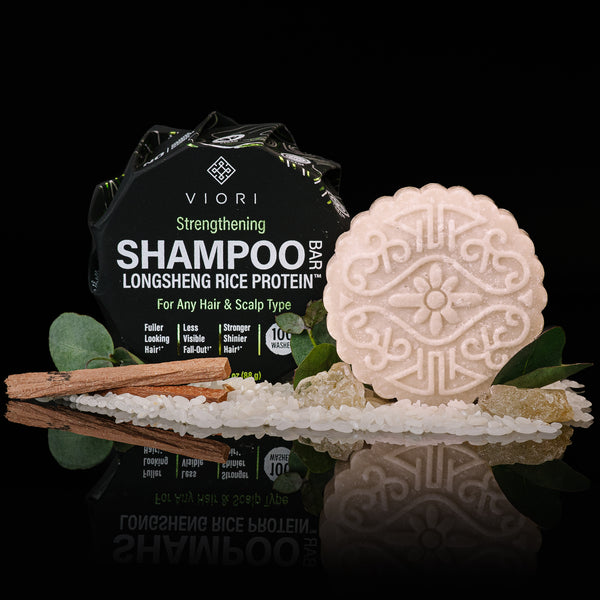
Viori specifically notes they use a lower concentration of Longsheng rice water because high concentrations of rice water can disrupt hair and scalp pH if used too often or in too much quantity. That’s a nuanced, technically responsible stance-and it’s exactly the kind of thinking that helps a product work for more people without unpredictable side effects.
Why “same formula, different scent” can still perform differently
In private label, fragrance is usually treated like decoration. In reality, scent systems can shift performance more than people expect.
Viori openly explains that although their bars share a core formula, the scent profiles can change how the bar suits different needs. For example, Citrus Yao contains citric acid, which helps break down oil and can help extend time between washes for some users. That means “choosing a scent” can accidentally become “choosing a function,” whether you intended it or not.
If you plan to sell multiple scents in a private-label line, this is a big deal: you either guide customers properly, or you end up with wildly mixed reviews because people choose based on fragrance alone.
Bar integrity engineering: melting, crumbling, sweating, and “mushy bar” complaints
Bar performance isn’t just chemistry-it’s physics. Even an excellent formula will get dragged in reviews if the bar can’t survive a real bathroom.
These are the behind-the-scenes factors that often decide whether a bar holds up:
- Humectants (like glycerin or sodium lactate) can improve feel but attract moisture, which can cause “sweating” in humid climates.
- Fatty alcohols and acids (like cetyl alcohol and stearic acid) help bind and structure the bar.
- Pressing force, cooling curve, and curing influence micro-cracking and how easily a bar breaks apart near the end of its life.
- Storage and drainage change everything. A bar that sits in water will dissolve fast-no matter how premium it is.
Viori leans into real-world storage education and recommends keeping bars out of direct water contact and allowing them to dry between uses (for example, with a holder). That’s not just about longevity; it’s about keeping the product experience consistent from wash one to wash sixty.
Color-treated hair: bars add a unique risk-friction
When color-treated clients struggle with bars, it’s often blamed on “cleansing strength.” But one of the more overlooked issues is friction-based cuticle disruption, especially when users rub a bar directly down the lengths.
Viori’s guidance to lather in the hands and apply with fingers is particularly smart for color-treated hair, because it reduces unnecessary abrasion. If you’re building a private-label bar aimed at color-treated customers, your instructions should be just as intentional as your formula.
WHAT CUSTOMERS ARE SAYING
Real reviews for Hidden Waterfall Barra de Champú
The question that prevents the most returns
Before you decide on your private-label direction, ask this:
What hair problem is this bar engineered to solve-and who will dislike it?
Every cleansing system has tradeoffs. The brands that win long-term are the ones that match bars to scalp needs and sensitivity profiles instead of selling a “one bar fits everyone” fantasy.
Viori does this well by steering customers based on scalp type and sensitivity:
- Citrus Yao is often the best fit for normal-to-oily scalps (oil breakdown support via citric acid).
- Terrace Garden, Hidden Waterfall, and Native Essence are commonly preferred for normal-to-dry scalps and more moisture support.
- Native Essence is a strong option for fragrance-sensitive users because it’s unscented.
A private-label shampoo bar checklist (the non-negotiables)
If you’re evaluating a private-label manufacturer, these are the questions I’d want answered clearly before committing:
- Is it soap-based or syndet? What is the primary cleansing agent?
- What is the finished bar pH, and how is it tested (with a defined dilution method)?
- How does it perform in wet friction? Any combability/slip testing or structured salon testing?
- How does it behave in hard water? Any drag or residue issues?
- What’s the deposition strategy? How do you deliver slip without heaviness?
- How stable is it in humidity and heat? Sweating, softening, fragrance bleed?
- What happens when it gets thin? Does it crumble, crack, or keep structure?
- What is the recommended application method? Hand-lather vs direct-to-hair?
- What’s the color-care guidance? Especially for friction-sensitive lengths.
- What’s the shelf-life expectation when stored correctly?
Bottom line: a great shampoo bar is a formula and a tool
A shampoo bar that earns loyal reorders isn’t just “clean” or “natural-looking.” It’s engineered-and supported-through the details: balanced pH, controlled friction, smart conditioning deposition, and bar durability in real bathrooms.
Viori’s approach-especially their emphasis on pH balance, scalp-type matching, and reduced-friction application-is a strong example of treating bars like legitimate haircare, not novelty soap.
If you’re mapping a private-label concept and want it to feel professional from day one, start where performance starts: define the hair/scalp target, validate pH and friction behavior, and build customer instructions that prevent the most common failure points before they show up in your reviews.


