
I'll be honest with you-after twenty years working in salons and watching beauty trends come and go like seasonal fashion, I've developed a healthy skepticism toward "revolutionary" products. So when shampoo bars started gaining traction, my first thought was: "Here we go again. Another gimmick."
Then I actually looked at the chemistry. And I realized something most people-even many professionals-completely miss: creating a truly effective solid shampoo bar is one of the most challenging feats in modern cosmetic formulation. We're talking genuinely impressive engineering that deserves recognition, not the eye-rolls these products often get.
Let me walk you through what's really happening when you hold a quality shampoo bar in your hands, because understanding this changes everything about how you think about hair care.
The Problem Nobody Tells You About: Why Most Bar Shampoos Are Technically Doomed From the Start
Here's the uncomfortable truth that rarely makes it into beauty blog posts: there's a fundamental incompatibility between solid format and effective hair cleansing. It's almost like trying to make ice that stays frozen in boiling water-you're fighting basic chemistry.
Think about what makes traditional liquid shampoo work. It's roughly 80% water, which serves as a delivery system for gentle cleansing agents (surfactants). These surfactants are carefully calibrated to remove dirt and oil without stripping your hair's natural protective layer.
Now imagine removing that 80% water to create a solid bar. Suddenly, you've got a massive problem: most of those gentle surfactants can't maintain their structure in concentrated solid form. They either become too harsh-turning into something closer to laundry detergent that leaves your hair feeling like straw-or they become too soft, melting into a goopy mess the moment your shower steam hits them.
This is why early shampoo bars were essentially just soap bars marketed for hair. Sure, soap holds its shape beautifully. It also has a pH around 9-10, while your hair's optimal pH is 4.5-5.5. Using high-pH soap on your hair is like washing silk with bleach-technically it gets clean, but you're destroying it in the process.
The Breakthrough That Changed Everything: Enter SCI
The real game-changer in quality shampoo bars came with a surfactant called Sodium Cocoyl Isethionate-mercifully shortened to SCI. Viori uses this as their primary cleansing agent, and from a technical standpoint, it's a remarkable choice.
NOT SURE WHICH PRODUCT IS RIGHT FOR YOU?
TAKE THE QUIZTakes 30 seconds · 134,000+ customers matched
What makes SCI special? It has a unique molecular structure with fatty acid chains that can actually form a stable crystalline structure when pressed together. Unlike soap (which relies on saponification), SCI creates a fundamentally different chemical architecture. This is why a well-made shampoo bar feels completely different from a soap bar-because at the molecular level, they literally are different things.
But here's where it gets really interesting: maintaining the right pH in a solid format is absurdly difficult. Your hair needs a pH between 4.5 and 6.5 to stay healthy. Achieving that in a bar that has to remain stable at room temperature, in humidity, when wet, and when dry-all while not falling apart or separating-requires incredibly precise buffering chemistry.
It's like trying to keep a soufflé perfectly risen while someone's shaking the table. The citric acid and sodium citrate buffer system that makes this possible is genuinely impressive work, even if no one puts it on the marketing materials.
Fermented Rice Water: Ancient Wisdom or Actual Science? (Why Not Both?)
Okay, let's address the ingredient that probably brought you here-fermented rice water. I know what you're thinking: "Is this legitimate biochemistry or just clever storytelling wrapped around a cultural tradition?"
My answer might surprise you: it's both. But the real science is way more interesting than the folklore.
What Fermentation Actually Does to Rice Water (And Why It Matters for Your Hair)
When you ferment rice water for 7-10 days, you're not just steeping rice in water and hoping for magic. You're triggering biotransformation-microorganisms are literally breaking down the rice's chemical structure and creating new compounds that didn't exist before.
One of the most significant is inositol (vitamin B8). During fermentation, inositol levels increase dramatically. Research published in the International Journal of Cosmetic Science demonstrated that inositol can actually penetrate your hair cuticle through the cell membrane complex-these tiny lipid-rich pathways between cuticle cells.
Once inside your hair shaft, inositol does something fascinating: it reduces what scientists call "hygral fatigue." Every time you wash your hair, it swells with water. Every time it dries, it contracts. This constant expansion-contraction cycle is basically giving your hair the equivalent of repetitive stress injury. Over months and years, this mechanical stress creates microscopic cracks and damage.
Inositol helps stabilize this process by strengthening the hydrogen bonds between keratin protein chains-think of it as reinforcing the molecular scaffolding that gives your hair its structure. It also improves elasticity by maintaining better moisture balance within the hair cortex, which is why properly formulated rice water products can make hair feel both stronger and more flexible simultaneously.
The Concentration Question Everyone Misses
Here's something that actually impressed me about Viori's approach: they specifically mention using a lower concentration of rice water because high concentrations can disrupt pH balance.
Most brands would just dump in as much as possible and slap "MAXIMUM STRENGTH RICE WATER" on the label. But pure rice water has a pH of 8-9, which would cause your hair cuticle to swell and sustain damage-exactly what you're trying to avoid.
The real skill is extracting the beneficial compounds (inositol, panthenol, amino acids) while maintaining that crucial pH balance we talked about earlier. It's formulation restraint, which is much harder than formulation excess.
Why Fermentation Time Isn't Arbitrary
That 7-10 day fermentation period isn't mystical numerology-it's about giving microorganisms enough time to create specific biotransformations:
- Short-chain peptides that your hair can actually absorb, rather than whole proteins that just sit on the surface
- Enhanced B-vitamin content, particularly panthenol and inositol
- Organic acids that naturally lower pH to hair-friendly levels
- Ceramide precursors from rice bran lipids that help repair your hair's protective barrier
This is legitimate biochemistry creating more bioavailable compounds, not just adding rice water for marketing appeal.
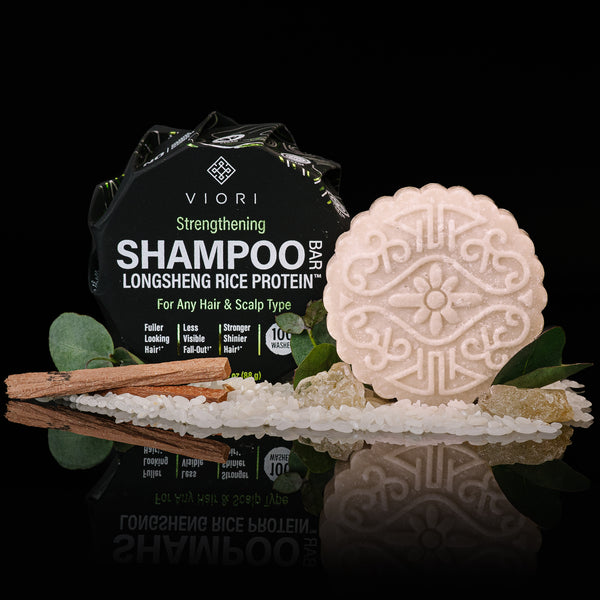
The "Sulfate-Free" Confusion: Let's Clear This Up Once and For All
This one drives me crazy because it confuses even other professionals sometimes. Viori's products contain Behentrimonium Methosulfate (BTMS), yet they claim to be "sulfate-free." So are they lying? Are they playing word games?
Actually, no. They're technically correct, and understanding why reveals something important about how ingredients actually function versus how they're named.
The Chemistry Lesson You Actually Need
Traditional sulfates (like SLS, SLES, and ALS) are anionic surfactants-negatively charged molecules that strip oils aggressively through detergent action. These are what dry out your hair and scalp, strip color, and generally cause the problems people associate with "sulfates."
BTMS is a quaternary ammonium compound-a cationic (positively charged) conditioning agent. Yes, it contains the SO4²⁻ group. But here's the crucial difference: the quaternary ammonium structure completely changes how it behaves:
- Opposite electrical charge makes it attracted to damaged hair (which carries negative charge), rather than stripping everything away
- Forms a protective film rather than removing oils
- Cannot penetrate skin like small anionic sulfates can
- Acts as an emulsifier holding the bar together while depositing conditioning agents
Calling BTMS a "sulfate" in the problematic sense is like calling table salt "chlorine." Yes, they're technically related elements. Functionally? Completely different behavior.
It's the naming that's confusing, not the chemistry. One strips your hair; the other conditions it. Those aren't subtle differences.
The Secret Science of Scent: Why Different Fragrances Actually Change Performance
This might be the most overlooked technical aspect in shampoo bar formulation, and it reveals sophisticated understanding that most brands completely miss.
When Viori recommends their Citrus Yao bar for oily scalp and customers report being able to go longer between washes, that's not just marketing alignment. That's chemistry.
Citrus Formulations: Functional Fragrance
Citric acid-from citrus essential oils and citrus-derived compounds-at 0.5-2% concentration does three specific things:
- Chelates minerals from hard water that cause buildup on your scalp
- Lowers scalp pH to 4.5-5.0, which inhibits Malassezia yeast overgrowth (a major cause of oily scalp and dandruff)
- Contracts the hair cuticle more tightly, reducing porosity and how quickly your hair absorbs oils
The scent isn't just fragrance-it's a functional ingredient altering the pH and performance profile of the entire bar. This is formulation sophistication that most consumers completely miss.
Vanilla, Musk, Sandalwood: The Moisture Retention Design
On the opposite end of the spectrum, scents containing heavier aromatic molecules (like vanilla, musk, and sandalwood compounds) actually:
- Slow water evaporation from the hair shaft
- Fill damaged cuticle gaps with larger aromatic molecules
- Create an occlusive layer preventing moisture loss
This explains why specific scents get recommended for dry hair-the fragrance compounds themselves have different molecular weights and hydrophobic properties that affect how your hair retains moisture.
It's not magic. It's molecular chemistry applied to real hair problems.
Why Solid Format Might Actually Be Superior (Not Just More Sustainable)
Here's an angle I almost never see discussed: the solid format may actually deliver certain ingredients more effectively than liquid formulations, completely aside from environmental benefits.
The Water Problem in Liquid Formulations
In liquid formulations, active ingredients-proteins, vitamins, botanical extracts-exist in dilute solution where they're constantly subjected to:
- Hydrolysis (breakdown in water over time)
- Microbial degradation (requiring preservatives that can irritate skin)
- Separation (requiring emulsifiers and stabilizers that add nothing beneficial)
In a properly formulated solid bar:
- Ingredients are locked in a lipid matrix (cocoa butter and shea butter in Viori's formula)
- Minimal water means 3-5 year shelf life without synthetic preservatives
- No separation means consistent dose every single use
- Cold-pour process preserves heat-sensitive vitamins that would degrade in hot-process manufacturing
The "First Touch" Phenomenon
When you apply a bar directly to wet hair, you're creating an instantaneous concentrated solution right on your hair surface. This brief moment of high concentration allows ingredients to:
- Penetrate the cuticle before dilution occurs
- Adsorb onto damaged sites (proteins bind directly to keratin damage points)
- Form stronger bonds than possible with pre-diluted liquid products
This is why some users report dramatically better results from bars than liquid versions with "similar" ingredients-the delivery mechanism is fundamentally different.
It's the difference between dropping a sugar cube directly in your coffee versus pouring in pre-dissolved sugar water. Same ingredient, completely different concentration at point of contact.
WHAT CUSTOMERS ARE SAYING
Real reviews for Hidden Waterfall Barra de Champú
The Conditioner Bar Challenge: Why That Irregular Top Actually Matters
If you've looked closely at Viori's square conditioner bars, you've noticed they have irregular, mountain-range-like tops rather than smooth surfaces. I'll admit, I initially thought this was just aesthetic-making them look handcrafted.
Then I thought about the formulation challenges, and I realized it's actually a sophisticated solution to a genuine problem.
Why Conditioner Bars Are Harder to Formulate Than Shampoo Bars
Conditioners need to do contradictory things simultaneously:
- Deposit ingredients (while shampoos remove them)
- Stay solid in your shower but melt slightly on contact with hair
- Not leave residue but create slip for detangling
- Resist water sitting in your dish but rinse clean from your hair
These requirements actually contradict each other at a chemical level. The ratio of butters (cocoa and shea) to BTMS (that conditioning agent we discussed) determines hardness, slip, and rinse feel. Too much butter and it won't spread evenly. Too little and it melts too fast, becoming mushy.
That irregular top surface? It actually increases functional surface area-more points of contact means faster emulsion formation when you rub it on your hair, which means better spread and more even conditioning.
Form follows function, even in something as simple as the shape of a bar.
Professional Honesty: What Even Good Brands Don't Tell You
After two decades in this industry, I've learned that professional integrity requires acknowledging limitations-even with well-formulated products like Viori's.
The Protein Concentration Vagueness
Viori states they use "low concentration" of rice protein for daily use safety. From a professional standpoint, this is both smart and frustratingly non-specific.
Protein overload is absolutely real. Hair can only incorporate about 0.5-2% hydrolyzed protein per application before becoming stiff and brittle-the opposite of what you want. Without knowing exact percentages, we can't fully assess whether someone with protein-sensitive hair should avoid daily use or not.
This isn't necessarily Viori being evasive-exact formulations are proprietary across the industry. But it does mean some trial and error may be necessary for your specific hair type.
The Gray Hair Claims: Scientifically Possible But Clinically Unproven
Viori's FAQ carefully walks back gray hair reversal claims while mentioning "anecdotal customer experiences." Let me be professionally clear about this:
Scientifically plausible mechanisms exist:
- Catalase activation could reduce hydrogen peroxide buildup in follicles (which contributes to graying)
- Copper peptides from rice protein support melanin production
- Reduced inflammation may allow melanocytes (pigment cells) to function better
Reality check: No cosmetic product has demonstrated reliable gray hair


