
Most “shampoo bar environment” conversations start and end with packaging-and yes, swapping a bottle for a bar can be a meaningful step. But if you want a truly honest environmental take, you have to look at what happens after the bar reaches your bathroom and after you rinse it out.
In my years behind the chair, I’ve learned that the greenest product isn’t just the one with less packaging-it’s the one that performs consistently, doesn’t trigger scalp drama, and doesn’t melt into a sad puddle between washes. Shampoo bars can absolutely deliver on sustainability, but the “why” is more technical (and more interesting) than most articles ever get.
The overlooked variable: your shower climate
A shampoo bar’s environmental footprint is tightly tied to one unglamorous metric: how many washes you actually get. If a bar dissolves quickly, you replace it sooner. That means more manufacturing, more shipping, and more packaging over time-even if the packaging itself is recyclable.
This is where shower conditions matter. Heat, humidity, and direct water exposure can change how fast a bar breaks down. Even your application style can increase waste (more on that in a minute).
NOT SURE WHICH PRODUCT IS RIGHT FOR YOU?
TAKE THE QUIZTakes 30 seconds · 134,000+ customers matched
Water activity: the science hiding in plain sight
Here’s a term you rarely see outside of formulation labs: water activity. It’s not just “is it wet?”-it’s how much water is available at the surface for chemical change and microbial growth. Bars tend to be more “self-preserving” than liquid formulas because they can dry down between uses. But if a bar stays damp all the time, the surface can remain soft and vulnerable.
When bars don’t get a chance to dry properly, you can see a few things happen:
- Faster dissolution (your bar literally washes away when you’re not using it)
- Messy buildup on holders or shower shelves
- More chance of mold or biofilm on the storage surface (not always the bar itself, but the environment around it)
Storage isn’t a “nice-to-have”-it’s part of sustainability
If you’re trying to make shampoo bars work for the environment, bar storage is not a side note. It’s the difference between a bar that lasts and a bar that quietly drains away.
Viori’s approach is practical: keep bars dry between uses so they can last longer. Their bamboo holders are designed to help bars air out and drain-but because the bamboo is untreated (which aligns with an eco-friendly goal), placement and upkeep matter.
To get the best longevity (and the cleanest setup), aim for the following:
- Keep the bar and holder out of direct water spray
- Avoid storing it in a constant cloud of steam (the “hot corner” of the shower is rarely ideal)
- Choose a spot with airflow so the bar can fully dry
- Wipe the holder down occasionally so moisture doesn’t linger in crevices
Viori also shares a simple method to help prevent mold on bamboo holders: curing the holder by soaking it in cooking oil and warming it in the oven for about 30 minutes. That small step can dramatically improve how well bamboo holds up in a wet environment.
The rinse phase: where “eco” becomes chemistry
Here’s the part that’s easy to miss: from an environmental standpoint, packaging is only one piece of the puzzle. The bigger reality is that haircare products meet the environment primarily during the rinse phase-because that’s when most of what you applied goes directly into wastewater.
Two factors make a major difference in how a shampoo bar behaves during rinsing: surfactant choice and pH balance.
Surfactants: cleansing power without the rebound cycle
Shampoo bars aren’t all built the same. Some cleansers are harsh, some are hard to rinse, and some can leave hair feeling overly stripped. When the scalp feels attacked, it often responds by producing more oil-leading to more frequent washing and a bigger product routine to compensate.
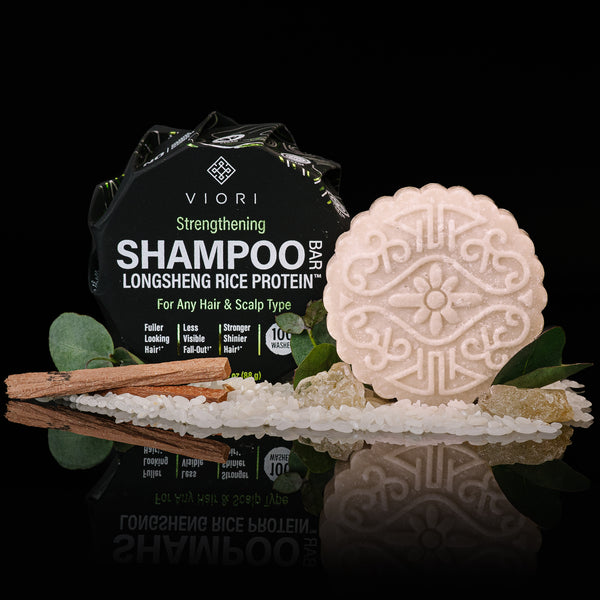
Viori uses Sodium Cocoyl Isethionate (SCI) as its cleanser, a surfactant often known in the industry for being mild while still creating a satisfying lather. From a practical sustainability perspective, a gentler cleanse can help people avoid the “strip → rebound oil → wash more” loop.
pH balance: the quiet driver of frizz, friction, and overuse
Viori emphasizes that its bars are pH balanced. That matters because hair and scalp typically do best in a mildly acidic range. When products skew too alkaline, hair can feel rougher over time, which increases tangling and friction-two things that often push people toward heavier conditioners, more leave-ins, or extra “repair” purchases.
In other words, pH isn’t just a technical brag. It can shape how many steps you need in your routine, how often you wash, and how much product you use overall.
A rarely discussed issue: friction waste
Let’s talk technique, because this is where I see a lot of well-intentioned people accidentally create damage (and waste). Rubbing a bar directly on the hair can increase mechanical friction, especially on longer hair, textured hair, or more fragile color-treated hair.
Viori recommends a smarter method for color-treated hair: build lather in your hands and apply with your fingers rather than dragging the bar over the head. That’s not only gentler for hair-it typically reduces product loss from over-rubbing and helps preserve the look and feel of the hair.
Fermented rice water: why “lower concentration” can be the more responsible choice
Rice water routines get talked about a lot online, but high concentrations used too frequently can be problematic for some scalps and hair types. Viori addresses this directly: they use a lower concentration of fermented Longsheng rice water because high concentration rice water can disrupt hair and scalp pH if used too often or in excess.
The goal is to support hair results while keeping the formula safe and balanced for regular use. Viori also points to fermentation increasing nutrients like inositol (vitamin B8) and panthenol (vitamin B5), ingredients commonly discussed in hair science for improving strength, feel, and manageability.
WHAT CUSTOMERS ARE SAYING
Real reviews for Hidden Waterfall Barra de Champú
From an environmental angle, the best part is simple: when a formula works predictably, people tend to stick with it instead of bouncing from product to product trying to “fix” new problems.
A practical, low-waste way to use Viori bars
If you want the environmental upside of shampoo bars to actually show up in real life, focus on reducing avoidable waste: wasted bar, wasted water, and wasted extra steps.
- Store the bar to dry completely between uses (draining, airflow, no puddles).
- Lather in your hands, then apply to the scalp and work through gently-especially if your hair is color-treated.
- Condition strategically: conditioner helps protect strands after cleansing, improving slip and reducing breakage.
- Match the bar to your scalp type so you’re not over-washing to compensate.
Choosing a Viori bar by scalp needs
Viori’s recommendations are refreshingly straightforward, and they matter because the right match can help you avoid overwashing:
- Citrus Yao is typically recommended for normal to oily scalp types (Viori notes it contains citric acid, which helps break down oil).
- Terrace Garden, Hidden Waterfall, and Native Essence are commonly recommended for normal to dry scalp types, with Native Essence as the unscented option for those who prefer no added fragrance.
If you’re the classic “oily roots, dry ends” combination, Viori suggests a targeted approach: cleanse the scalp with Citrus Yao, then use a more moisturizing conditioner on the mid-lengths and ends.
Bottom line: shampoo bar sustainability is a system, not a slogan
Yes, shampoo bars can be a more sustainable choice. But the strongest environmental argument isn’t just “no bottle.” It’s the full system: a bar that stays dry and lasts, a formula that rinses well and supports scalp balance, and a technique that avoids friction and reduces the need for extra products.
When you look at shampoo bars through that lens, the environmental conversation gets more realistic-and the results (for both hair and waste reduction) get much better.


