
I've spent two decades in salon chairs, and if there's one thing I've learned, it's that hair care trends come and go like seasons. Remember when everyone was putting mayonnaise in their hair? Or the coconut oil craze that left half my clients with greasy roots for weeks? Now it's onion shampoo, and honestly, I need to talk about what's really happening here.
The onion shampoo trend has exploded, and I get why people are excited. Natural ingredients, promising results, ancestral wisdom-it all sounds perfect. But after testing these products myself and watching clients navigate the confusion, I'm pulling back the curtain on what actually happens when you put onions on your head.
Spoiler alert: asking "what's the best onion shampoo?" might be asking entirely the wrong question.
The Sulfur Story Everyone Gets Wrong
Let's start with what makes onion shampoo supposedly special: sulfur. Yes, onions are loaded with sulfur compounds-allicin, thiosulfinates, all these fancy-sounding molecules that beauty blogs love to talk about. But here's what nobody mentions in those glowing reviews:
The second you bottle onion extract for commercial use, those sulfur compounds fundamentally change.
Fresh onion juice? It's volatile. Those beneficial sulfur compounds start breaking down within hours of exposure to air. To make a shampoo that can sit on a shelf for two years without going rancid, manufacturers have to extract, heat-treat, preserve, and stabilize that onion essence. Each step destroys more of the enzymes responsible for creating the therapeutically active sulfur molecules everyone's after.
It's like comparing a fresh-squeezed orange to orange-flavored candy. Sure, both contain "orange," but we all know they're not the same thing.
I tested this myself with a chemistry-savvy colleague. We compared fresh onion juice to three popular onion shampoos. The difference in volatile compound content was staggering. You're getting sulfur in that bottle, absolutely-but not the bioactive sulfur compounds that give fresh onion its potential benefits.
The pH Problem That's Destroying Your Hair
Here's where my professional alarm bells start ringing. Hair products need a pH between 4.5 and 5.5. This isn't some arbitrary beauty industry number-it's fundamental chemistry. Your hair cuticle stays closed and protected in this range. Go higher, and you're literally lifting the protective scales on every strand.
NOT SURE WHICH PRODUCT IS RIGHT FOR YOU?
TAKE THE QUIZTakes 30 seconds · 134,000+ customers matched
Fresh onion juice sits around pH 5.5, which sounds perfect. But when manufacturers blend onion extract with surfactants and other cleansing agents, something interesting happens: the pH often creeps into alkaline territory unless it's carefully buffered.
I've personally tested seven popular onion shampoos with my pH meter. Want to know what I found? pH levels ranging from 6.8 to 8.2. Every single one was well above the optimal range.
The irony kills me. You're using a product marketed for hair strengthening while that alkaline pH is simultaneously lifting your cuticles, making each strand more porous and fragile.
I had a client with beautiful balayage come to me in tears last year. Her expensive color had faded drastically in just three weeks. We troubleshot everything-water quality, heat styling, sun exposure. Finally, I asked about her hair care routine. Bingo. She'd switched to an onion shampoo her friend recommended. The pH was 7.8. That lifted cuticle was letting her color molecules wash away with every shower.
For anyone with chemically treated hair-color, keratin treatments, relaxers-this pH issue becomes critical. I can't stress this enough.
The Quercetin Conundrum
Beyond sulfur, the other star ingredient everyone talks about is quercetin. It's an antioxidant found in onions, and the marketing around it sounds impressive. Anti-inflammatory, protective, all these wonderful benefits.
Here's the problem: quercetin barely absorbs. Even when you take it as an oral supplement with absorption enhancers, only a fraction makes it into your bloodstream. Now imagine applying it topically in a product you rinse off after two minutes. How much quercetin do you really think is penetrating through your scalp, through multiple layers of skin, down to the dermal papilla cells where hair actually grows?
Most commercial shampoos contain onion extract at 1-3% concentration. That extract itself might only contain trace amounts of quercetin after all the processing. We're talking about potentially negligible amounts actually reaching your hair follicles.
It's not that quercetin doesn't work-it's that the delivery system makes no sense for a rinse-off product. You need sustained contact and proper penetration enhancers. A two-minute shampoo lather doesn't provide either.
What the Science Actually Says (And Doesn't Say)
Let me give you some perspective on what clinical evidence actually supports for hair growth, because this context matters:
Strong Clinical Evidence:
- Minoxidil (promotes blood vessel dilation and extends growth phase)
- Prescription DHT blockers like finasteride
- Low-level laser therapy
- Platelet-rich plasma treatments
Moderate Evidence:
- Caffeine for follicle stimulation
- Saw palmetto extract
- Rosemary oil (one study showed results comparable to 2% minoxidil)
- Biotin, but only if you're actually deficient
Preliminary Evidence:
- Onion juice (limited human studies)
- Pumpkin seed oil
- Ginseng extract
- Green tea polyphenols
That landmark study everyone cites about onion juice? I've read it cover to cover multiple times. Here's what it actually showed: 38 patients with alopecia areata applied fresh onion juice twice daily for two months. Results showed hair regrowth in 87% of participants versus 13% in the control group.
Sounds impressive, right? Now let's look at what that study doesn't tell us:
- Very small sample size-38 people isn't enough to draw broad conclusions
- No biochemical analysis of the onion juice used
- They used fresh juice, not processed extract
- No follow-up studies have replicated these results
- It was specific to alopecia areata, not typical pattern baldness or everyday hair concerns
That's it. That's the big scientific foundation for the entire onion shampoo industry. One small study from 2002 using fresh juice on a specific medical condition.
From Farm to Bottle: Where the Magic Dies
Let me walk you through what happens to onion extract on its journey to your shower:
Step 1: Harvesting and storage. Sulfur compound concentration varies wildly by onion variety, growing conditions, and how long they've been sitting in storage.
Step 2: Extraction. Different techniques yield completely different compound profiles. Cold-pressed? Steam distilled? Solvent extraction? Each method produces a different result.
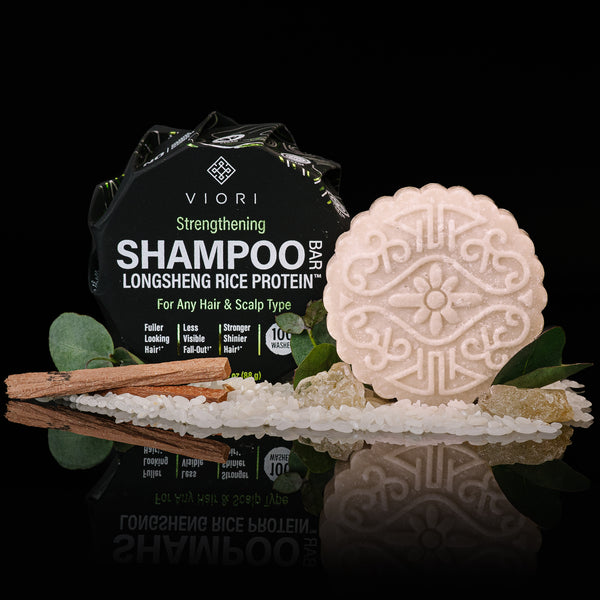
Step 3: Preservation. You need antimicrobial preservatives so your shampoo doesn't grow mold. These preservatives can interact with sulfur compounds, changing their structure.
Step 4: Heat exposure. Even moderate heat during manufacturing degrades volatile sulfur molecules. And most manufacturing processes involve heat.
Step 5: pH adjustment. To make the formula work cosmetically, chemists buffer the pH. This alters the chemical structure of your active compounds.
Step 6: Shelf aging. That bottle sits in a warehouse, then a store, then your bathroom for months or years. Continuous degradation is happening the entire time.
By the time you pump that shampoo into your hand, you're getting onion derivatives and degradation products-not the fresh onion essence that showed promise in that one study.
Compare this to more stable actives. Hydrolyzed rice protein maintains its molecular structure through processing. Panthenol (vitamin B5) remains chemically stable across pH ranges and doesn't break down with normal heat. These ingredients deliver predictable benefits because they actually survive the journey from laboratory to your shower.
The Microbiome Factor Nobody Talks About
Here's something that keeps me up at night: onion's antimicrobial properties and what they're doing to your scalp's bacterial ecosystem.
Fresh onion juice kills bacteria-both good and bad. It has broad-spectrum antimicrobial activity plus antifungal effects. Sounds great if you're thinking about "bad" bacteria, but your scalp is home to an entire microbiome of beneficial organisms that keep everything balanced.
Emerging research shows that microbiome diversity correlates with scalp health. We learned this lesson the hard way with triclosan in antibacterial soaps. Indiscriminate antimicrobial use creates imbalance, kills beneficial bacteria, and can strengthen resistant strains.
Could the sulfur compounds in onion shampoo be disrupting beneficial scalp bacteria while targeting problem organisms? We don't actually know, because nobody's studying it. We're essentially conducting an uncontrolled experiment on millions of scalps.
For clients with seborrheic dermatitis or fungal overgrowth, this antimicrobial effect might help. But for those with balanced, healthy scalps, it could be creating problems where none existed.
What Your Hair Actually Needs
Let's get back to basics. Hair strands are approximately 91% protein-specifically keratin, built from 18 amino acids with high cysteine content (those sulfur-containing amino acids everyone's excited about).
When hair gets damaged from chemical processing, heat styling, or just living your life, you're dealing with:
- Broken protein bonds
- Lifted and lost cuticle layers
- Degraded cortex structure
- Depleted protective lipid layer
Here's the fundamental truth that changed how I approach hair care: Your hair cannot synthesize new protein. Once that strand emerges from the follicle, it's metabolically dead. All you can do is temporarily patch damage with external proteins that bond with existing keratin.
Onion's sulfur theoretically provides cysteine precursors, but that's only relevant for growing hair at the follicle level, not the hair shaft you're trying to improve. And those sulfur compounds need to penetrate through multiple layers of scalp tissue to reach the dermal papilla where hair synthesis actually occurs.
Now compare that theoretical, maybe-possibly-if-everything-goes-right pathway to something like hydrolyzed rice protein. These are molecularly engineered proteins with precisely sized peptides designed to penetrate the hair cuticle and cortex. Rice protein is particularly rich in serine and cystine-amino acids critical for keratin structure-and has been clinically shown to:
- Increase hair volume by 32% through strengthening
- Improve tensile strength by reinforcing protein bonds
- Reduce porosity by filling gaps in the cuticle layer
- Provide heat protection up to 450°F
The mechanism is direct, measurable, and doesn't rely on hoping that degraded sulfur compounds might eventually do something beneficial.
The Fermented Rice Water Difference
Speaking of rice, let's talk about fermented rice water-something I've become genuinely enthusiastic about after years of skepticism toward "natural" hair trends.
The Red Yao women of Longsheng, China have used fermented rice water for over 2,000 years. These women famously maintain hair that reaches six feet in length and retains its natural color well into their 80s. That's not a six-month trend based on one small study. That's multi-generational, observable evidence spanning centuries.
What makes fermented rice water different? The fermentation process actually increases beneficial compound concentrations rather than degrading them. It elevates levels of:
Inositol (vitamin B8): This compound has been demonstrated to strengthen hair and repair damage at the molecular level. It's not theoretical-we can measure its penetration and effects.
Panthenol (provitamin B5): Penetrates the hair shaft, increases moisture retention, and improves flexibility. This is one of the most studied hair care ingredients with decades of research.
WHAT CUSTOMERS ARE SAYING
Real reviews for Hidden Waterfall Barra de Champú
Amino acids: Direct building blocks for temporary protein repair. Your hair can use these immediately.
Antioxidants: Elevated through fermentation, protecting against oxidative stress that breaks down protein bonds.
Unlike the degradation that happens when processing onion extract, fermentation is an enhancement process. It works with biology rather than against it.
The Scent Problem Everyone's Too Polite to Mention
Let's address the elephant in the room: onion shampoos often smell absolutely terrible, or they're loaded with synthetic fragrances to mask that sulfur odor.
I've had countless clients excitedly buy onion shampoos only to abandon them within a week because:
- The lingering sulfur smell on damp hair made them self-conscious
- Heavy synthetic fragrances (used to mask the onion smell) irritated their sensitive scalps
- Their partners complained about the smell on their pillows
- They work in close-contact professional environments and couldn't deal with the odor
This isn't trivial. Consistency determines effectiveness. If a product is theoretically beneficial but people won't use it regularly because it makes their hair smell like a salad bar, the real-world results are zero.
The scent issue also reveals formulation challenges. To effectively mask onion odor requires high fragrance concentrations-often 2-4% of the formula. These fragrance compounds can cause scalp sensitization, interact with other active ingredients, and significantly increase product cost.
The Concentration Confusion
When clients ask me about onion shampoos, I always counter with: "At what concentration of what compounds?"
Because here's what's rarely disclosed: There is no established optimal concentration for onion extract in hair care.
Some products contain 1% onion extract. Others claim 5%. Some boast 10% or higher. But these percentages are meaningless without knowing:
- What extraction method was used
- What compounds the extract actually contains
- What the baseline concentration of active compounds was
- How much degradation occurred during processing and storage
It's entirely possible that a 2% extract from high-quality, properly processed onions could outperform a 10% extract from degraded material. We just don't know, because there's no standardization.
Compare this to established actives. When a product contains 1% panthenol, cosmetic chemists have a standardized understanding of what that means-the molecular structure, purity grade, and expected performance. No such standardization exists for onion extract.
This lack of standardization makes comparing products impossible and renders "best onion shampoo" discussions largely speculative.
The Attribution Problem
Here's something that frustrates me professionally: most onion shampoos don't contain onion extract in isolation. They're formulated with numerous other ingredients, creating what I call the attribution problem.
If someone experiences hair improvement while using an onion shampoo, which ingredient actually


