
Locs have a way of humbling even the most “perfect” wash routine. You can rinse until the water runs clear, use a product that claims to be clean, and still end up with locs that feel dull, coated, or heavy. The reason is simple: locs don’t behave like loose hair. They’re a compact, interlocked fiber structure-and that changes the rules of cleansing.
Most advice about shampoo for locs stops at “avoid buildup.” I want to take it a step deeper. The real goal isn’t just removing dirt and oil-it’s managing what gets left behind at a microscopic level, because whatever deposits inside a loc can stick around far longer than it would in loose hair.
Why locs hold onto product (even when you rinse well)
Think of a loc as a dense bundle of keratin fibers with tons of internal surface area. Water and dissolved materials move through it via tiny channels, and the structure itself creates a “one-way-in, hard-to-get-out” effect. That’s why two people can use the same shampoo and have completely different results-locs are simply better at storing residues.
NOT SURE WHICH PRODUCT IS RIGHT FOR YOU?
TAKE THE QUIZTakes 30 seconds · 134,000+ customers matched
From a technical standpoint, locs are defined by two features that make cleansing tricky:
- Capillary trapping: small spaces between hairs pull water, oils, and product inward.
- Fiber entanglement memory: the structure holds onto deposits because it isn’t being brushed or separated like loose hair.
If your locs ever feel like they’re “never fully clean,” this is often the reason. It’s not necessarily that your shampoo is bad-it may be that the deposit-and-rinse dynamics don’t match the architecture of locs.
The unglamorous detail that matters: pH
One of the most overlooked topics in loc care is pH. Hair performs best when products are within a hair-friendly pH range, because pH influences how much the cuticle lifts or lays down. When products drift too alkaline, the cuticle can swell and lift, which increases roughness and friction.
With locs, repeated high-friction cleansing doesn’t just create “a little frizz.” Over time, it can contribute to a rougher surface, more snagging, and even weak points in older lengths. Viori bars are pH balanced, which supports a more stable cuticle environment-something I care about a lot for long-term loc integrity.
Surfactants: cleansing power is only half the story
Shampoo works because of surfactants-cleansing agents that lift oils so they can rinse away. For locs, the question isn’t only “Will it cleanse?” It’s also, “Will it rinse cleanly from a dense fiber bundle without forcing me to overwork the hair?”
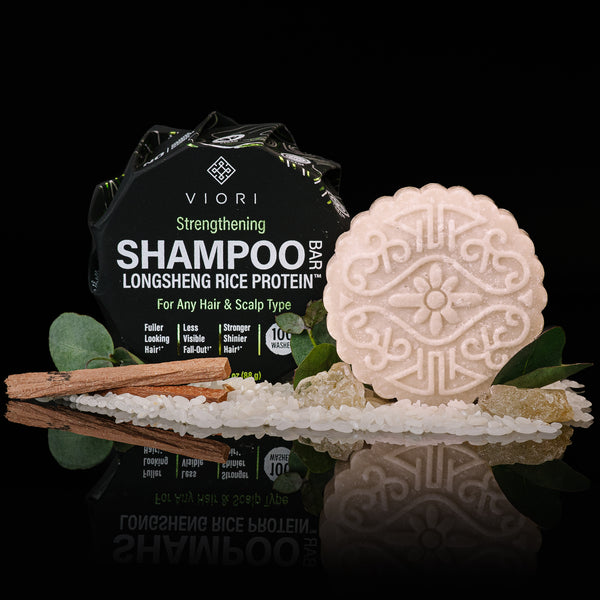
Viori uses Sodium Cocoyl Isethionate (SCI) as its cleanser. In the professional world, SCI is known for being very mild and producing a creamy lather. That matters for locs because a well-distributed lather lets you cleanse the scalp thoroughly without scrubbing your loc lengths like you’re trying to wash a sweater by hand.
The rare buildup conversation: cationic deposition
Here’s a nuance most people never hear: many conditioning ingredients are designed to stick to hair on purpose. Hair often carries a slightly negative charge (especially when it’s weathered or porous), and conditioning agents are typically positively charged so they cling and reduce static and friction.
Viori includes behentrimonium methosulfate (BTMS), a conditioning ingredient commonly used in haircare. In the right routine, that can be a real advantage for locs because it can reduce harsh, squeaky friction during washing. But there’s a catch: in a loc, anything that deposits easily can also accumulate if you apply heavily to the lengths or rinse too quickly.
In my experience, residue issues show up more often when these factors stack up:
- Product is applied directly down the loc length repeatedly
- Rinsing is rushed (locs need more rinse time than loose hair)
- You have hard water (minerals can contribute to a film-like feel)
- Leave-ins and oils are layered after washing
Hard water: the “buildup” that isn’t really product
If your locs feel waxy, dull, or chronically coated-especially if it happens no matter what you use-consider your water. Hard water minerals can leave deposits that mimic product buildup and increase drag on the hair. In locs, minerals can settle not just on the surface, but also within the internal channels as the loc dries.
A big clue is travel hair: if your locs suddenly feel lighter and cleaner when you wash somewhere else, hard water may be part of your puzzle.
Protein and locs: strength support vs. stiffness
Protein is another area where loc care tends to get oversimplified. Viori includes hydrolyzed rice protein and fermented Longsheng rice water components, and the concentration is kept low enough to be safe for frequent use. That balance matters because protein can support strength and resilience, but too much protein can leave some hair types feeling stiff-especially if moisture balance is already off.
Locs often contain older hair in the mid-lengths and ends, so I like routines that support strength without tipping into that brittle, “crunchy” zone.
How to shampoo locs with a bar (without roughing up your locs)
If you take only one tip from this entire post, make it this: avoid rubbing the bar directly on your scalp or locs. Direct friction can roughen the loc surface, encourage fuzzing, and create uneven wear over time.
WHAT CUSTOMERS ARE SAYING
Real reviews for Hidden Waterfall Barra de Champú
Viori recommends building lather in your hands and applying it with your hands, and that’s exactly the method I prefer for locs. Here’s a loc-smart approach that keeps friction low and cleansing effective:
- Fully saturate your scalp and loc roots with water (give it a moment-locs slow water penetration).
- Lather the Viori shampoo bar in your palms until you have a rich, creamy lather.
- Apply lather to the scalp first using the pads of your fingers (no nails).
- Let the runoff cleanse the lengths; if needed, gently compress/squeeze locs rather than scrubbing.
- Rinse longer than you think you need to-thorough rinsing is the difference between “clean” and “coated.”
- Repeat only if your scalp truly needs it (heavy sweat weeks, workouts, product days).
Picking the right Viori bar for locs (based on scalp type)
When it comes to locs, I choose shampoo primarily by scalp behavior. Your scalp is living skin; your locs are the structure attached to it. Start with what your scalp needs, then adjust technique for the lengths.
- Oily scalp or oily flaking: Viori Citrus Yao is often the best fit because it contains citric acid, which helps break down oil effectively.
- Dry, reactive, or fragrance-sensitive scalp: Viori Native Essence (unscented) is the gentlest option and a smart way to simplify variables.
- Dry-to-normal scalp that wants more moisture support: Viori Terrace Garden or Hidden Waterfall tend to feel more moisturizing and comfortable.
Don’t forget the final step: dry-down matters
You can nail the perfect wash and still end up unhappy if your locs stay damp too long. Moisture trapped inside a dense loc can affect freshness and comfort. After washing, press water out with a towel (avoid aggressive rubbing) and aim for airflow whenever possible. If you can avoid sleeping with wet locs, do-it makes a difference.
Final thoughts
The best shampoo for locs isn’t just “buildup-free.” It’s a formula and method that respect the realities of loc structure: deposits accumulate more easily, rinse-out takes longer, and friction has long-term consequences.
Used with a scalp-focused, low-friction technique, Viori can be an excellent option for loc wearers-especially if you match the bar to your scalp type and give rinsing and drying the time they truly require.


