
After twenty years behind the salon chair and countless hours researching botanical haircare ingredients, I've developed a perhaps unhealthy fascination with the gap between what could work for hair and what actually works. Today, I want to talk about a flower that perfectly embodies this gap: the morning glory.
This isn't your typical "miracle ingredient" article. In fact, I'm going to tell you upfront that morning glory will probably never revolutionize your haircare routine. But understanding why reveals everything you need to know about choosing truly effective hair products.
The Chemistry Most Beauty Writers Won't Touch
Let's start where most haircare articles fear to tread: actual molecular chemistry.
Morning glories (genus Ipomoea) contain a fascinating combination of lysergic acid alkaloids, resin glycosides, and phenolic compounds. If your eyes just glazed over, stick with me-this gets interesting.
The resin glycosides, particularly compounds called jalapins, have documented surfactant-like properties. In professional terms, they naturally attract both water and oil, theoretically making them excellent cleansing agents. But here's what makes them genuinely unique: they don't work like conventional shampoo surfactants.
Even gentle cleansers work by essentially dissolving away sebum and debris. Morning glory glycosides operate differently-they encapsulate oil through something called glycosidic bonding. Instead of stripping oil away, they wrap it in a biodegradable molecular package.
Think of it like the difference between scrubbing a stain away versus lifting it out intact. Different mechanism, different results, different implications for your scalp.
The Scalp Microbiome Revolution (That Nobody's Talking About)
Here's where morning glory gets genuinely fascinating, and where my professional experience intersects with cutting-edge research.
After two decades of working with every hair type imaginable, I've observed something that science is only recently confirming: the problem usually isn't dirty hair-it's imbalanced hair.
NOT SURE WHICH PRODUCT IS RIGHT FOR YOU?
TAKE THE QUIZTakes 30 seconds · 134,000+ customers matched
Your scalp is home to dozens of bacterial and fungal species living in delicate balance. When clients complain about persistent issues-chronic oiliness, recurring dandruff, that weird smell that appears six hours after washing-they're usually experiencing microbiome disruption, not inadequate cleansing.
Conventional shampoos (even many natural ones) essentially carpet-bomb this ecosystem. You strip everything away, and your scalp has to rebuild its bacterial community from scratch every single wash. This triggers rebound oil production, creates opportunities for problematic species to colonize, and sets up a vicious cycle of overwashing.
Now here's what makes morning glory truly interesting: its phenolic compounds demonstrate selective antimicrobial properties in laboratory studies. They're particularly effective against Malassezia species (the fungi behind most dandruff cases) while showing significantly less activity against beneficial bacteria like Staphylococcus epidermidis.
This is the haircare equivalent of a precision tool versus a sledgehammer. Instead of destroying everything and hoping the good stuff grows back first, you'd theoretically maintain balance while controlling problematic overgrowth.
I've never seen this property in any commercial shampoo.
So Why Aren't We All Using Morning Glory Shampoo?
If morning glory offers such unique benefits, why have you never seen it on a shelf? The answer reveals some uncomfortable truths about the beauty industry.
The Regulatory Nightmare
Those lysergic acid compounds that give morning glories their interesting properties? They also create massive regulatory complications. Even though topical application differs entirely from ingestion, no major brand wants to navigate the legal complexity of using a plant associated with psychoactive compounds.
It's guilt by botanical association, and it's enough to kill any commercial prospects.
The Standardization Impossibility
Here's a professional formulation reality: morning glory alkaloid content varies wildly based on species, growing conditions, harvest timing, and even time of day the plant is collected.
Creating a consistent, safe product would require extraction and standardization processes so complex they'd eliminate any "natural" positioning-and cost more than most consumers would ever pay for shampoo.
The Consumer Education Mountain
How do you market "works differently than everything you know about shampoo" to consumers trained to expect lather, that squeaky-clean feeling, and immediate results?
The educational lift is enormous. Most people won't buy a product they don't understand, no matter how scientifically impressive it is.
What This Reveals About Real Hair Innovation
Here's what twenty years in this industry has taught me: the most chemically interesting ingredients are rarely the most commercially viable ones.
And that's actually okay.
Consider the alternative approach: using botanicals that offer similar benefits through more accessible sources. Viori's Longsheng rice water, for example, contains inositol and panthenol (vitamins B8 and B5) created through natural fermentation. These are the same beneficial vitamins found in morning glory, but from a source that's:
- Culturally accepted and historically documented (nearly 2,000 years of use)
- Consistently standardizable through controlled fermentation
- Regulatory compliant worldwide
- pH-compatible with hair (around 5.5, perfectly matched to hair's natural acidity)
The rice proteins strengthen hair through ionic bonding with damaged sites on the hair shaft. The fermented rice water creates an acidic environment that naturally closes the cuticle and inhibits fungal growth without destroying beneficial bacteria.
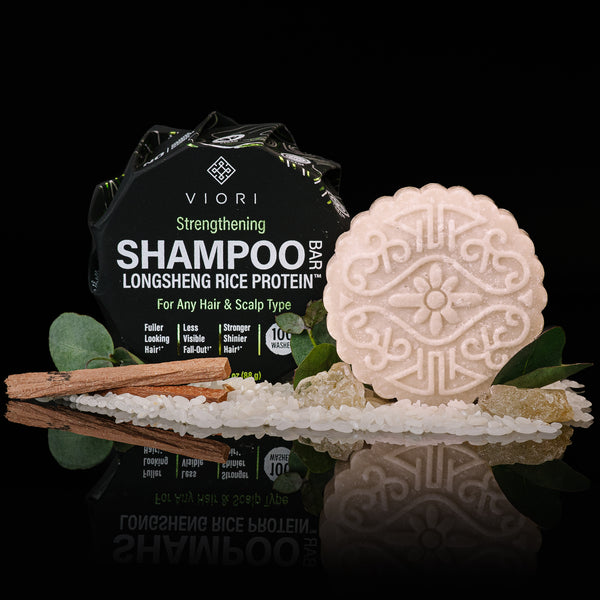
These aren't mystical properties-they're reproducible chemistry that happens to come from a culturally-proven source.
This is the professional insight most beauty articles miss: sometimes the "boring" choice is actually the sophisticated one.
The DIY Reality Check
I know some of you are thinking, "But what if I made my own morning glory hair rinse?"
Let me give you the technical reality from someone who has seen countless DIY disasters in my salon chair.
A safe, effective home preparation would require:
- Specific species identification (Ipomoea tricolor or I. violacea have been most studied for haircare properties)
- Cold-water extraction to minimize potentially problematic alkaloid concentration
- pH testing and adjustment (morning glory extracts run alkaline at 8.5-9.0, which will damage your hair cuticle)
- Immediate use (no preservation system means rapid bacterial growth)
- Realistic expectations (any noticeable effect would require weeks of consistent use)
The risk-benefit ratio simply doesn't make sense. The likelihood of creating an unbalanced pH that damages your hair cuticle far exceeds the potential benefits from any of the glycosides or phenolic compounds.
I've spent two decades repairing damage from well-intentioned DIY treatments. This would likely be another one.
What Morning Glory Teaches Us About Ingredient Marketing
The morning glory discussion illuminates a crucial tension in modern haircare: the gap between innovation theater and actual innovation.
We've been conditioned to believe that the next miracle ingredient is always around the corner-some exotic botanical or laboratory-created peptide that will finally solve all our hair problems. The beauty industry encourages this belief because novelty sells.
But here's the professional truth: most genuine hair improvement comes from understanding and working with your hair's natural structure and chemistry, not from discovering increasingly exotic ingredients.
The future of haircare isn't necessarily in finding new botanicals with novel mechanisms. It's in understanding why traditional ingredients-like the Longsheng rice the Red Yao women have used for centuries-actually work at a molecular level, then standardizing and optimizing them with modern techniques.
Traditional wisdom, validated by chemistry, refined by technology. That's the formula that actually delivers results.
The Biomimicry vs. Tradition Debate
I've watched this debate play out in professional formulation circles for years: should we use cutting-edge biomimetic ingredients that mimic hair's natural structures, or should we rely on traditionally-used botanicals?
Morning glory represents the biomimetic approach-an ingredient with fascinating properties that might offer benefits we can't get elsewhere. It's intellectually exciting. It suggests possibilities.
But traditional ingredients like rice water represent something equally valuable: proven effectiveness across hundreds of generations, with modern science now explaining why they work.
Rice protein strengthens because it's structurally similar to hair protein and bonds to damaged sites. Fermented rice water works because the fermentation process creates precisely the pH, vitamins, and antioxidants that hair needs. These mechanisms are reproducible, scalable, and time-tested.
After twenty years of professional experience, I trust results over possibilities.
What to Look for Instead
If you're drawn to botanical haircare with legitimate scientific backing (and I genuinely hope you are), focus on ingredients that offer:
Consistent standardization: The product should contain the same concentration of active ingredients every time you use it.
pH compatibility: Your hair and scalp thrive at pH 4.5-6.5. Ingredients and formulations should respect this.
Documented use history: Decades or centuries of traditional use doesn't guarantee safety, but it's a strong indicator.
Regulatory acceptance: If an ingredient faces regulatory hurdles, there's usually a good reason.
WHAT CUSTOMERS ARE SAYING
Real reviews for Hidden Waterfall Barra de Champú
Complementary action: The best ingredients work with your hair's natural processes, not against them.
This is why fermented rice water makes such beautiful sense as a haircare base. It checks every single box while offering legitimate benefits: strengthening proteins, cuticle-smoothing acidity, antioxidant protection, and microbiome-friendly properties.
It's not exotic. It won't make for breathless marketing copy. But it works-and after two decades in this industry, "works" is my favorite ingredient property.
The Professional Bottom Line
Morning glory represents fascinating chemistry that will likely remain forever in the "interesting but impractical" category.
If this botanical ever does make it into mainstream haircare (and I'm skeptical), it will appear as isolated, synthesized resin glycosides in concentrations around 0.5-2%, probably in clarifying treatments rather than daily shampoos. The compounds would be extracted, purified, and standardized beyond recognition from the original flower.
Because that's usually how botanical beauty ingredients actually work in professional formulations. The distance between "interesting botanical properties" and "effective hair product" is filled with extraction chemistry, stability testing, safety trials, and regulatory approval.
Most flowers never make that journey. Morning glory probably won't either.
But understanding why helps us become more sophisticated consumers of both haircare products and the marketing narratives that surround them.
What This Means for Your Hair Routine
After this deep dive into morning glory chemistry, microbiome science, and formulation reality, what should you actually do with this information?
First, be skeptical of "revolutionary" new ingredients. Ask questions: Is there actual research? Has it been safety tested? Is the concentration standardized? How does it interact with hair's natural pH and structure?
Second, appreciate the sophisticated science behind seemingly simple traditional ingredients. Rice water isn't exciting or exotic, but the chemistry of why it works is genuinely impressive.
Third, remember that your scalp is an ecosystem, not a surface to be sterilized. The goal isn't eliminating all oil and bacteria-it's maintaining balance. Choose products that support this balance rather than disrupting it.
And finally, trust results over hype. I've seen thousands of clients over twenty years, and the ones with the healthiest hair aren't using the newest, most exotic ingredients. They're using thoughtfully formulated products with proven ingredients, applied consistently, with respect for their hair's natural structure.
That's not as exciting as a miracle flower extract. But it's what actually works.
Have questions about botanical haircare ingredients or the science behind traditional hair treatments? After twenty years working with every hair type and concern imaginable, I love talking about the real chemistry behind beautiful hair. The more we understand what actually works (and why), the better choices we can make.


