
Rice haircare gets talked about like it’s a miracle shortcut-longer hair, more shine, less breakage, a happier scalp. And while rice can absolutely be a smart ingredient choice, the real results don’t come from rice alone. They come from how rice is formulated, delivered, and balanced inside a shampoo-and-conditioner system.
After two decades behind the chair, I can tell you the most common reason people “quit” a rice routine isn’t because rice is ineffective-it’s because the product was too harsh, too heavy, too protein-forward, or simply wrong for their scalp type. The best rice shampoo and conditioner is the one that gets the boring (but critical) details right: pH, concentration, protein form, cleansing strength, conditioning slip, and application technique.
The rarely discussed truth: rice isn’t the hero-the system is
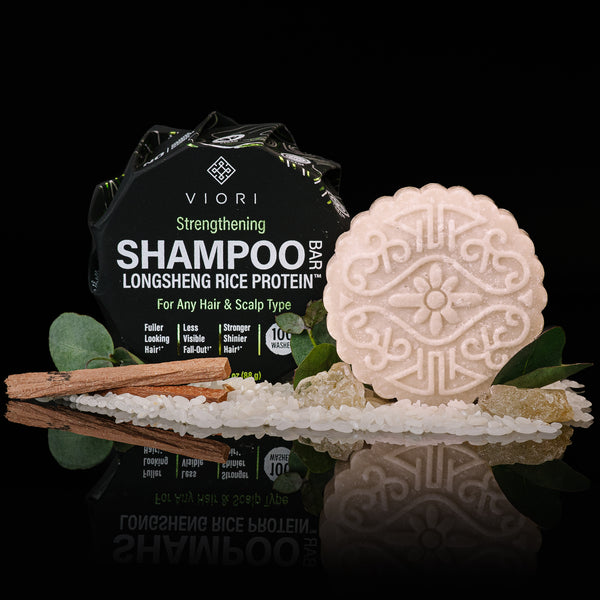
Most online advice treats rice like a single magic switch you flip for better hair. In practice, rice is only as good as the delivery system it’s sitting in. Viori takes the “system” approach seriously by building its shampoo and conditioner bars around fermented Longsheng rice water while keeping the formulas pH balanced and designed for regular use.
If you’re trying to find the “best,” you’ll get further by evaluating how a product behaves on hair-how it cleanses, how it conditions, and how it respects scalp comfort-than by chasing the highest number of rice-related buzzwords.
NOT SURE WHICH PRODUCT IS RIGHT FOR YOU?
TAKE THE QUIZTakes 30 seconds · 134,000+ customers matched
1) pH: the difference between smooth shine and chronic frizz
Let’s start with what most people never check: pH. Hair and scalp typically perform best in a mildly acidic range. When hair products drift too alkaline, the cuticle can lift more easily, which increases friction-and friction is the quiet driver behind tangling, frizz, dullness, and breakage over time.
Viori is upfront about why it uses a lower concentration of Longsheng rice water: rice water at high concentration, used too often, can disrupt hair and scalp pH for some people. Their bars are formulated to be pH balanced, which is a big reason a rice routine can stay comfortable and consistent instead of feeling great for a week and rough by week three.
If you take one thing from this post, make it this: the best rice shampoo and conditioner isn’t the one that’s “the most rice”-it’s the one that keeps hair behaving like hair, not like a swollen fiber you’re constantly fighting.
2) Fermentation: not marketing-actual biochemistry
“Fermented” gets tossed around casually online, but fermentation can meaningfully change what rice brings to the table. Viori points to fermentation increasing levels of Vitamin B8 (inositol) and Vitamin B5 (panthenol).
- Inositol (B8) is often associated with hair that feels more resilient and supported over time.
- Panthenol (B5) is a classic hair-care workhorse for softness, flexibility, and shine-especially helpful if your hair tends to feel rough or “grabby.”
This is the nuance that rarely gets explained well: a good rice routine isn’t just about adding protein. It’s about supporting hair so it stays strong and workable, not strong and stiff.
3) Rice protein: the right type at the right dose
Hair can’t “heal” the way skin does, but it can absolutely be improved through surface reinforcement and protection. Viori includes hydrolyzed rice protein, which matters because hydrolyzed proteins are broken down into smaller components that tend to interact more easily with the hair fiber.
In the real world, that can translate to hair that feels:
- More polished and reflective (better shine)
- Less prone to static and roughness (lower friction)
- Slightly fuller in appearance (more body/volume)
But protein is a balancing act. Too much protein too often can make certain hair types feel dry, rigid, or brittle. Viori states it uses a low concentration of rice protein that’s safe to use daily if needed, which is exactly the kind of restraint I like to see in a routine meant to be lived with long-term.
4) The bar format: brilliant-if you stop treating it like soap
Bars are easy to travel with, plastic-free, and surprisingly high-performing. But they’re also where I see the most user error. When people rub a bar directly on the hair over and over, they’re creating unnecessary friction. And friction is basically a cuticle’s worst enemy-especially if your hair is fine, high-porosity, or color-treated.
Viori specifically recommends a technique that I also teach clients: build lather in your hands first, then apply with your hands rather than scrubbing the bar over your head. It’s a simple switch that can noticeably improve softness and reduce tangling.
5) Conditioner isn’t optional-it’s charge chemistry
If your shampoo does its job, it removes oil and buildup. That’s cleansing. But once you cleanse, you also need to restore protection and manageability. Conditioner helps because it’s typically positively charged, and hair-especially damaged hair-often carries more negative charge. Opposites attract, which is why conditioner “sticks” where it’s needed most.
Viori explains this in practical terms: washing removes some natural sebum, leaving strands more vulnerable, and conditioner helps replace that protective feel until oils naturally replenish. Their conditioner formula includes behentrimonium methosulfate (BTMS), a conditioning ingredient valued for slip and cuticle-smoothing performance (and importantly, it’s not the same thing as harsh cleansing sulfates like SLS/SLES).
The takeaway is simple: the best rice shampoo won’t feel like the best rice shampoo unless the conditioner step is doing real work-detangling, smoothing, and reducing friction.
6) Scalp-first thinking: oily flakes and dry flakes are not the same problem
One of the biggest reasons people feel “nothing works” is because they’re treating all flaking the same way. Viori separates recommendations based on whether you’re dealing with oily scalp dandruff or dry scalp dandruff, which is exactly the right approach.
- For oily scalp dandruff, Viori recommends Citrus Yao shampoo and conditioner.
- For dry scalp dandruff, Viori recommends Hidden Waterfall, Terrace Garden, or Native Essence shampoo.
- If you have oily roots but dry ends (very common), Viori suggests Citrus Yao shampoo on the scalp and a more moisturizing conditioner on the ends.
This “split routine” idea is something pros do instinctively because scalp and ends are different materials: your scalp is living skin, and your ends are older hair fiber that’s been through weather, heat, brushing, and time.
7) Porosity: the detail that quietly decides whether you love rice haircare
Porosity is your hair’s ability to absorb and retain moisture. It’s also the reason the same product can feel weightless on one person and heavy on another. Viori shares a simple at-home porosity check using a glass of water:
- If your strand floats, you likely have low porosity hair.
- If it stays in the middle, it’s likely medium porosity.
- If it sinks, you likely have high porosity hair.
Viori’s guidance aligns well with what I see in practice: low porosity hair often prefers lighter, more cleansing routines (they point toward Citrus Yao), while high porosity hair tends to need more support for softness and strength (they point toward Terrace Garden, Hidden Waterfall, or Native Essence).
WHAT CUSTOMERS ARE SAYING
Real reviews for Hidden Waterfall Barra de Champú
So what makes the “best” rice shampoo and conditioner?
When I’m evaluating a rice-based routine professionally, I’m looking for a product that does more than “contain rice.” With Viori, the strongest case for “best” is that the routine is built as a complete system-balanced, repeatable, and technique-friendly.
Here’s the checklist that matters:
- pH balanced for long-term hair and scalp comfort
- Fermented Longsheng rice water used thoughtfully (not in an overly aggressive concentration)
- Hydrolyzed rice protein at a controlled level
- A mild cleanser (Viori uses sodium cocoyl isethionate)
- Real conditioning deposition for slip and cuticle support (Viori uses BTMS)
- Options that match scalp type and porosity
Choosing the right Viori bar: a practical guide
If you want a clean, simple way to choose, start with your scalp-then fine-tune based on sensitivity and the condition of your ends.
- Oily scalp / want to feel cleaner longer: Viori Citrus Yao
- Normal to dry scalp / frizz-prone / moisture-seeking: Viori Terrace Garden or Native Essence
- Not sure where you fall / want a balanced option: Viori Hidden Waterfall
- Sensitive scalp or fragrance concerns: Viori Native Essence (unscented)
How to use rice shampoo and conditioner bars for the best results
This is the part that makes a bigger difference than most people expect. Here’s the method I recommend (and Viori supports, especially for color-treated hair):
- Soak hair thoroughly before you start-bars perform better on fully saturated hair.
- Lather in your hands first, then apply the lather to the scalp with your fingertips.
- Focus shampoo on the scalp; let the suds rinse through the lengths rather than scrubbing your ends.
- Apply conditioner mid-lengths to ends, then gently work through with fingers or a wide-tooth comb.
- Let conditioner sit for a few minutes, then rinse well.
- Store bars where they can dry between uses to prevent premature softening and waste.
When should you expect results?
Some people notice a difference immediately-usually in shine, softness, and how the hair detangles. Others need a longer runway. Viori notes that results can vary widely and suggests giving the routine 2-3 months before deciding it isn’t for you, which is a fair timeline for hair to settle into a new baseline.
If you want the best outcome, aim for consistency, gentle handling, and the right match for your scalp type. Rice haircare works best when it becomes a steady habit, not an intense sprint.


