
I'll never forget the day Sarah walked into my salon, her eyes brimming with frustration. "I don't understand," she said, her voice cracking slightly. "I switched to those eco-friendly shampoo bars everyone's raving about, and my hair has never looked worse. But they're supposed to be better for you, right?"
As I ran my fingers through her hair-noticeably drier and more brittle than just three months prior-I knew exactly what had happened. She'd fallen into the same trap I'd seen play out dozens of times before: assuming all shampoo bars are created equal.
After two decades behind the chair, I've learned that the most expensive hair care mistake isn't splurging on premium products you don't need. It's buying cheap products that slowly damage your hair while you're genuinely trying to do the right thing.
Today, I want to share what I've learned about why budget shampoo bars often cost you far more than their price tag suggests-and what truly separates the good from the harmful.
The Chemistry Your Hair Deserves (But Cheap Bars Don't Deliver)
Here's something most people don't realize: your hair is incredibly sophisticated. It's not just dead protein hanging from your scalp-it's a complex structure with specific pH requirements, moisture needs, and protein balance that must be maintained for optimal health.
Creating a shampoo bar that respects this complexity isn't simple. It's not just soap pressed into a cute shape with maybe some lavender oil thrown in. It requires genuine formulation expertise and quality ingredients that work synergistically with your hair's natural biology.
And that's exactly where budget bars cut corners.
The pH Problem That No One Warns You About
Your hair and scalp naturally sit at a pH of about 4.5 to 5.5-slightly acidic. This acidity is critical. It keeps your hair cuticle (the outermost layer) closed, smooth, and protected.
Traditional bar soaps? They typically clock in at a pH of 9 to 11-highly alkaline. That's perfectly fine for cleaning your hands, but absolutely terrible for your hair.
NOT SURE WHICH PRODUCT IS RIGHT FOR YOU?
TAKE THE QUIZTakes 30 seconds · 134,000+ customers matched
Here's what happens when you wash with an improperly pH-balanced bar:
Your hair cuticle is forced open. Imagine roof shingles standing straight up instead of lying flat against the house. Every single time you wash, you're essentially roughing up the surface of each hair strand.
Over weeks and months, this leads to:
- Increased porosity - Your hair absorbs moisture rapidly but can't hold onto it, leaving it perpetually thirsty
- Rapid color fading - That expensive balayage washes away faster than it should
- Protein loss - The internal structure of your hair literally leaks out through those raised cuticles
- Dullness and roughness - Light can't reflect properly off those raised cuticles, so your hair loses its shine
- Breakage - Damaged cuticles make hair vulnerable to snapping, especially when wet
I've had clients tell me they thought they were going through a "transition period" with their new bars. But here's the truth: there's no magical transition. What they were experiencing was progressive damage from pH shock, pure and simple.
Now, modern shampoo bars can be properly pH-balanced. But achieving this requires several things:
- Premium surfactants (more on this in a moment)
- Careful acidification with citric acid or similar compounds
- Actual laboratory testing to ensure consistency batch after batch
All of this costs money. Real money. When you see a shampoo bar for $3 or $4, the math simply doesn't work for these quality-control measures to be included. The margins aren't there.
Not All Cleansers Are Created Equal
Let's talk about what actually cleans your hair-the surfactants. This is where things get really interesting from a chemistry perspective.
Cheap shampoo bars typically use saponified oils, which is essentially traditional soap. Sounds natural and appealing, right? The marketing certainly makes it seem that way. But here's the problem: soap has a fundamental incompatibility with hair care.
Soap reacts with minerals in water.
Unless you have exceptionally soft water (and most of us don't), traditional soap combines with calcium and magnesium in your water to form deposits. These deposits cling to your hair shaft like barnacles on a ship, creating:
- That waxy, coated feeling that no amount of rinsing seems to fix
- Dullness that makes your hair look lifeless under any lighting
- Tangles that seem to appear out of nowhere
- Gradual buildup that weighs everything down over time
I've seen clients spend literally months trying to figure out why their hair felt "weird," trying different conditioners and treatments and deep conditioning masks, when the real problem was the cheap bar creating an invisible coating with every single wash.
Premium shampoo bars use modern sulfate-free surfactants that don't react with water minerals. These include ingredients like:
- Sodium Cocoyl Isethionate (SCI)
- Coco Glucoside
- Decyl Glucoside
These surfactants cost three to five times more than basic saponified oils. When you do the math on ingredient costs, manufacturing expenses, packaging, and retail markup, it's virtually impossible for a $3 shampoo bar to contain adequate amounts of these premium ingredients.
The numbers simply don't lie.
The Conditioning System That Cheap Bars Skip Entirely
Here's where the difference between professional-grade and budget hair care becomes crystal clear, at least to someone who works with hair every single day.
When you cleanse your hair, you temporarily strip away natural oils and leave the hair shaft vulnerable. Quality shampoo bars include conditioning agents that deposit onto your hair during the washing process itself.
These provide:
- Immediate detangling
- Cuticle smoothing
- Reduced static and frizz
- Protection against damage when you dry and style
A well-formulated bar includes ingredients like:
- Behentrimonium Methosulfate (yes, it sounds chemical, but it's actually a gentle conditioning compound derived from rapeseed oil)
- Cetyl alcohol (a fatty alcohol that's moisturizing, not drying like ethanol)
- Hydrolyzed proteins from rice, wheat, or silk
- Panthenol (Vitamin B5)
Budget bars often skip these entirely, or include them in such tiny amounts they're basically decorative on the ingredient list-there for marketing purposes rather than functional benefits.
The result? Hair that feels "clean" but stripped bare. Then you're stuck in this frustrating cycle of needing heavy conditioners, leave-in products, and styling aids just to compensate for what your shampoo bar is doing to your hair in the first place.
The Protein-Moisture Balance Your Hair Is Begging For
This is where my two decades of experience really come into play. I've seen every hair type imaginable-fine, coarse, straight, curly, color-treated, heat-damaged, you name it-and one universal truth has emerged: healthy hair requires a specific balance between protein and moisture.
Protein strengthens your hair structure. It fills in gaps in damaged cuticles and fortifies the internal cortex. Quality bars include hydrolyzed proteins-broken down small enough to actually penetrate the hair shaft rather than just sitting on the surface looking pretty.
Moisture keeps hair flexible, elastic, and resistant to breakage. This requires humectants like glycerin and aloe, plus emollients like plant oils and butters-in specific, functional ratios that actually make a difference.
Cheap bars typically offer neither in adequate amounts.
Sure, they might list "coconut oil" or "shea butter" on the label. But here's the technical reality that manufacturers don't advertise: in a solid bar format, these ingredients need to be present in sufficient quantities to survive the manufacturing process and still provide actual benefits to your hair.
At budget price points, they're usually present at 1-2%-just enough to claim on the label, but nowhere near enough to meaningfully affect your hair's health.
The Slow Damage Pattern I've Watched Unfold Hundreds of Times
Over my years as a stylist, I've observed the same predictable deterioration pattern in clients using inadequate bars. It's almost eerie how consistent it is:
Weeks 1-2: Hair feels different, but not necessarily bad. Some people even think it feels "cleaner" because it's been stripped of everything.
Weeks 3-6: Gradual buildup starts (especially if they have hard water and a soap-based bar). Hair becomes harder to style. Shine disappears. They start using more product to compensate.
Weeks 6-12: Cuticle damage from pH issues becomes visually apparent. Hair tangles more easily. Split ends seem to multiply overnight. Color-treated hair loses its vibrancy and starts looking muddy.
3-6 months: Noticeable textural changes that can't be ignored. Hair feels drier, more brittle. Increased breakage, especially around the hairline and where hair ties rest.
The insidious part? This happens gradually enough that most people don't connect their hair's declining condition to their shampoo choice.
They blame the weather. Stress. Getting older. Their hair tie. Their pillowcase. Hormones. Everything except the one thing they're using on their hair multiple times a week.
They start spending money on intensive treatments and additional products, trying desperately to fix what their cleanser has been causing all along.
The "Savings" That Cost a Fortune
Let me break down the real economics of cheap shampoo bars, because this is where the truth gets really uncomfortable for the budget-product industry.
When I calculate the true cost for my clients, here's what it actually includes:
- The bar itself: $3-5
- Extra conditioner needed to compensate for stripping: $8-15
- Leave-in treatments to manage the damage: $12-20
- More frequent trims due to increased splitting: Every 6-8 weeks instead of 8-12 weeks (that's an extra $40-60 every few months)
- Color corrections if color fades unevenly: $80-150
- Deep conditioning treatments to address accumulated damage: $25-45
Add it up, and the monthly cost of "saving money" with a cheap bar easily exceeds $30-50 when you factor in all the compensatory products and services you need just to maintain halfway decent hair.
Now compare that to investing in a quality shampoo bar at $12-18 that:
- Lasts 60+ washes (2-3 months for most people)
- Dramatically reduces your need for additional products
- Maintains your hair health, so you need professional services less frequently
- Preserves your color integrity for months longer
- Minimizes your styling product requirements because your hair is actually healthy
Over a six-month period, the premium option often costs less while delivering exponentially better results.
WHAT CUSTOMERS ARE SAYING
Real reviews for Hidden Waterfall Barra de Champú
I've had clients literally gasp when I show them this math on paper.
What Actually Makes a Shampoo Bar Worth Your Investment
Based on both formulation knowledge and real-world results with hundreds of clients over the years, here's what separates quality from cheap:
1. Proper pH Balancing (4.5-5.5)
This is non-negotiable. A quality bar is formulated and tested to maintain your hair's natural pH. This single factor prevents the majority of long-term damage issues I see in my chair.
2. Modern Surfactant Systems
Premium bars use gentle, effective cleansers that work with all water types and don't leave residue. Look for ingredients like Sodium Cocoyl Isethionate or similar compounds high up in the ingredient list.
3. Integrated Conditioning
Quality formulations include conditioning agents throughout the ingredient list, not just tacked on at the end as an afterthought. These should include things like Behentrimonium Methosulfate and conditioning fatty alcohols.
4. Protein and Moisture Balance
Both hydrolyzed proteins (for strength) and moisturizing ingredients (for flexibility) should be present in functional amounts-not just for label decoration.
5. Protective Ingredients
Antioxidants like Vitamin E and protective botanical extracts defend against environmental damage and oxidative stress that your hair faces daily.
6. Transparency About Sourcing
Premium brands discuss where their ingredients come from and how they're processed. This transparency typically correlates with genuine quality control throughout the entire supply chain.
For example, some quality bars incorporate fermented rice water-an ingredient used for centuries in Asian hair care traditions. The fermentation process increases B vitamins that have clinically demonstrated benefits for hair growth and strength.
But authentic fermented rice water is expensive to produce and incorporate into a stable bar formula. Budget bars might claim "rice extract" without the fermentation benefits that make it truly effective.
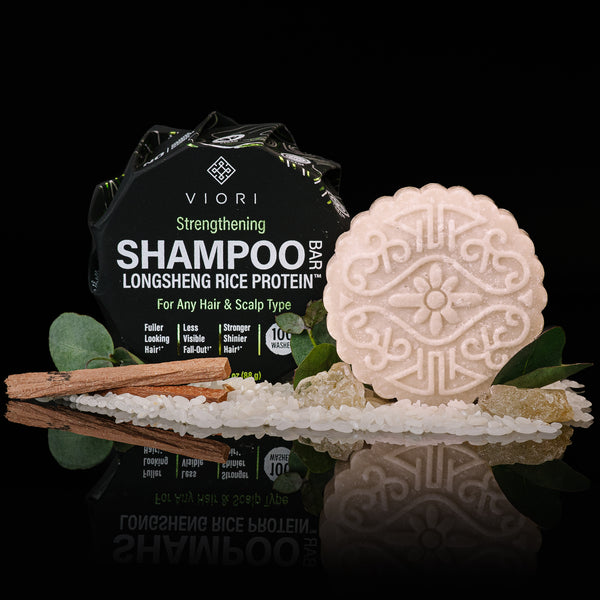
Take Viori, for instance-they work directly with Red Yao village women who have maintained their hair care traditions for centuries. Their bars contain authentic Longsheng rice water, fermented using traditional methods that maximize its benefits. That level of ingredient integrity and cultural partnership simply isn't possible at budget price points. The infrastructure alone requires significant investment.
Your Hair Type Matters More Than You Think
Here's something rarely discussed in shampoo bar marketing: your hair's porosity level dramatically affects how different formulations will perform on your specific head of hair.
Low porosity hair (cuticle lays flat, resists moisture):
- More susceptible to buildup from cheap bars
- Needs lightweight but thorough cleansing
- Benefits enormously from pH-balanced formulations that don't force the cuticle open
High porosity hair (damaged cuticle, absorbs everything):
- Desperately needs the conditioning agents cheap bars lack
- Suffers more from pH imbalance because the cuticle is already compromised
- Requires the protein-moisture balance budget formulations don't provide
Medium porosity hair (healthy, balanced):
- Most forgiving of various formulations
- Can mask cheap bar inadequacies temporarily
- But still experiences cumulative damage over time that eventually becomes visible
Cheap bars are formulated for "average hair"-which doesn't actually exist.


