
After two decades of working with every hair type imaginable, I've discovered something that changed how I approach hair care entirely: the best conversations about hair products aren't about chasing specific brands-they're about understanding the actual science behind what makes ingredients work for your unique hair and scalp.
Today, I want to share something that most beauty articles completely gloss over. This isn't about telling you what to buy-it's about giving you the knowledge to understand what's actually happening on your scalp and along your hair shaft when you use different products.
The Ancient Secret Modern Science Finally Caught Up To
Here's something that blew my mind when I first learned it: fermentation timing dramatically affects pH stability in hair care products. This isn't new-age wellness talk-it's biochemistry that traditional cultures figured out centuries before we had laboratories.
Traditional hair care methods relied on fermented ingredients not just for nutrients, but because fermentation creates a naturally stable pH environment that actually mirrors what your scalp needs to thrive.
Take fermented rice, for example. During controlled fermentation, something remarkable happens at the molecular level:
- Inositol (Vitamin B8) emerges as phytic acid breaks down during the fermentation process
- Panthenol (Vitamin B5) concentrations increase as fermentation progresses
- Lactic acid develops naturally, creating an acidic environment that matches your scalp's ideal pH of 4.5-5.5
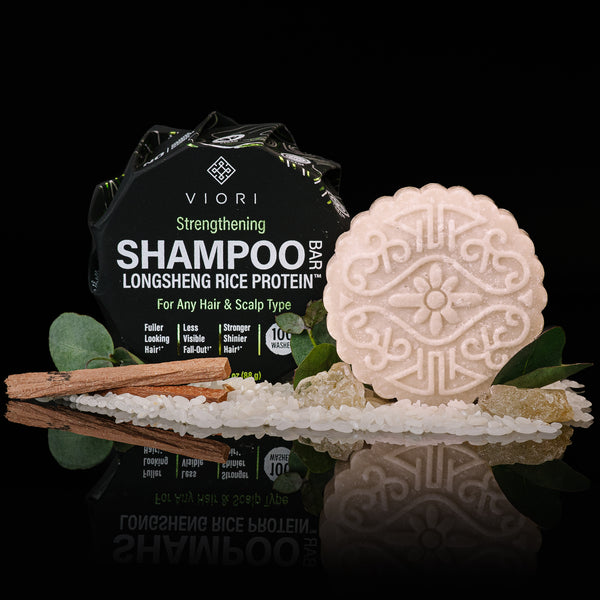
This is precisely where Viori has done something brilliant-they've taken these traditional fermentation principles that the Yao people have used for centuries and applied them to modern formulation. The result? Products that work with your scalp biology instead of fighting against it.
Bar vs. Liquid: The Physics They Don't Tell You About
Let me share something most beauty blogs won't discuss: the physical format of your hair care product fundamentally changes how ingredients interact with your hair shaft. This isn't opinion-it's pure physics.
What Actually Happens When You Use a Bar
When you apply a bar format directly to your hair, you're creating three distinct physical effects:
NOT SURE WHICH PRODUCT IS RIGHT FOR YOU?
TAKE THE QUIZTakes 30 seconds · 134,000+ customers matched
- Mechanical cuticle lifting: The physical friction temporarily opens your hair cuticle more aggressively than liquid application does
- Concentrated ingredient deposit: You're applying undiluted product directly to the hair shaft
- Variable distribution: Depending on your technique, coverage can be uneven
This is exactly why bar products often have a learning curve that liquid products don't require. It has nothing to do with quality-it's simply physics at work.
Professional tip from my chair: For color-treated or damaged hair, always lather bar products in your palms first, then apply the foam to your hair. This single technique reduces friction-induced cuticle damage while still delivering all the beneficial ingredients. I've seen this one adjustment completely transform results for countless clients who were ready to give up on bar products entirely.
Your Scalp Microbiome: The Game-Changer Nobody Talks About
Here's where things get genuinely fascinating. Recent dermatological research has revealed that your scalp hosts approximately 1 million microorganisms per square centimeter. And here's what matters: these aren't just along for the ride-they're active participants in your hair health.
The Sebum Production Feedback Loop
Your scalp's oil production isn't random or just "genetic." It's actually a sophisticated response system influenced by several factors:
- pH disruption from harsh products
- Mechanical removal of protective lipids
- Microbiome balance shifts
Here's what happens when you strip natural oils too aggressively with harsh sulfates like SLS and SLES: Your scalp interprets this as an emergency situation. Your sebaceous glands go into overdrive, creating that frustrating paradox where you have "clean" hair that somehow becomes greasy again within 24 hours.
This is precisely why truly natural, pH-balanced formulations work differently. They cleanse without triggering that panic response in your scalp, allowing it to find its natural equilibrium over time.
The Ingredient Confusion That's Affecting Thousands of Purchase Decisions
Let's get technical for a moment about one of the most misunderstood ingredients in modern hair care: Behentrimonium Methosulfate, or BTMS for short.
This ingredient is routinely confused with sulfate-based cleansers purely because of its name. This single misunderstanding affects thousands of purchasing decisions every day.
The Chemistry Breakdown You Actually Need to Know
Traditional sulfates (SLS, SLES):
- Anionic surfactants (negatively charged molecules)
- Strip everything-beneficial oils right along with dirt and buildup
- High pH levels (typically 8-10)
- Disrupt your scalp's protective acid mantle
BTMS:
- Cationic surfactant (positively charged)
- Selectively binds to damaged areas of your hair
- Actually has conditioning properties
- The "methosulfate" portion is a chemical modification that completely changes the molecular behavior
Think of it this way: saying BTMS is a harmful sulfate because it contains "sulfate" in the name is like saying a butterfly is a dairy product because it contains "butter." The chemistry is entirely different at the molecular level.
Why Your Friend's Holy Grail Product Left Your Hair Like Straw
Here's a professional secret that explains one of the most frustrating experiences in hair care: why your best friend absolutely raves about a product that left your hair feeling terrible.
Hair porosity is the single most important factor in product selection-even more important than hair type, texture, or scalp condition.
The Float Test (It's Actually Based on Real Science)
That simple glass-of-water test you've probably seen? It's actually based on specific gravity and water absorption rates:
- Low porosity hair (floats): Cuticle layers are tightly closed, resistant to moisture penetration
- Medium porosity (suspends mid-water): Balanced cuticle structure with optimal absorption
- High porosity (sinks): Damaged cuticle that absorbs water rapidly but can't retain it
What This Actually Means for Product Selection
Low porosity hair needs:
- Lighter molecular weight ingredients
- Mild acidic rinses to temporarily open cuticles
- Sometimes heat assistance for product penetration
High porosity hair requires:
- Heavier, film-forming ingredients like cocoa butter and shea butter
- Protein treatments to fill in damaged areas
- pH-balanced products to help seal cuticles
This is why rice-based ingredients work so brilliantly across different hair types-hydrolyzed rice protein has a small molecular weight (around 150-300 Daltons) that can penetrate even low-porosity hair while providing structural support for high-porosity hair.
When Viori uses fermented rice water in their formulations, they're leveraging this exact molecular advantage that traditional methods discovered through centuries of practical use.
The Sustainability Conversation Nobody Wants to Have Honestly
Let's have a real discussion about sustainable packaging and ingredient sourcing-something marketing departments rarely address with complete transparency.
The Palm Oil Reality
Many "natural" hair care products contain ingredients derived from palm oil, including:
- Cetyl alcohol
- Stearic acid
- Various emulsifiers
Even "RSPO certified" (Roundtable on Sustainable Palm Oil) palm oil remains controversial among environmental scientists.
The uncomfortable truth: There are currently no truly equivalent alternatives for some of these ingredients that simultaneously provide the same texture and performance, remain stable in bar format, work across all hair types, and stay affordable for everyday consumers.
This is why transparency about sourcing matters infinitely more than vague marketing claims. When a company acknowledges ingredient origins and explains their sustainability certification process, that's far more trustworthy than generic "all-natural" promises.
Viori's partnership with the Yao people represents a fundamentally different approach-supporting indigenous communities who have sustainably harvested Longsheng rice for centuries, creating a regenerative rather than extractive supply chain.
The Transition Period: Real Biology, Not Marketing Fiction
When clients tell me they tried a new product and their hair "freaked out" for two weeks before suddenly improving, they're describing a real biological process that I witness constantly in my salon.
The Sebum Reset Timeline
Days 1-3: Your scalp is still producing oil based on your previous product's stripping action
Days 4-10: Sebaceous glands begin adjusting their output
Days 11-21: A new equilibrium starts to establish
Week 4 and beyond: True product performance becomes apparent
This transition is especially pronounced when switching from:
- Silicone-heavy products to silicone-free formulations
- Synthetic to natural surfactants
- Liquid to bar formats
My professional protocol: I advise clients to commit to any new hair care system for 60 washes minimum-that's about 2-3 months for most people-before making a final judgment. Anything less than that and you're evaluating your scalp's transition response, not the product's true performance capability.
The Scent Science Nobody Discusses
Here's a technical aspect that rarely gets coverage: how fragrance components actually interact with your hair's chemical structure.
Natural vs. Nature-Identical Fragrances
Many natural products use nature-identical compounds-synthetic molecules that are chemically identical to those found in nature.
Why this matters for your actual hair:
WHAT CUSTOMERS ARE SAYING
Real reviews for Hidden Waterfall Barra de Champú
- Citrus scents often contain limonene and citral, which are natural alpha-hydroxy acids
- These compounds can have mild exfoliating effects on your scalp
- This is useful for oily scalp types (hence why citrus products often target this condition)
- Vanilla and musk notes typically contain heavier molecules that don't affect pH levels
The professional take: Don't choose products based on scent preference alone. Aromatic compounds can have functional effects on your scalp ecosystem beyond just smelling nice.
What Actually Causes Hair Growth (And What Definitely Doesn't)
Let's address the elephant in every salon: topical products have limited ability to influence actual hair growth. I know that's not what you want to hear, but it's the biological reality.
The Biology You Need to Understand
Hair growth occurs in the dermal papilla-beneath your scalp surface. For any ingredient to genuinely influence growth, it must:
- Penetrate the epidermis
- Reach the dermis layer
- Interact with papilla cells
- Influence the growth phase cycle
What CAN actually work:
- Improving overall scalp health by reducing inflammation
- Removing follicle-clogging buildup
- Providing amino acids necessary for keratin synthesis
- Supporting the existing hair shaft to prevent breakage (which creates the appearance of "no growth")
What likely WON'T work:
- Topical application expecting systemic effects
- Products used only 2-3 times weekly
- Anything promising visible results in "just weeks"
The Rice Protein Exception
Rice protein is genuinely fascinating because it contains 18 amino acids, including:
- Cysteine (a key component of keratin structure)
- Methionine (supports sulfur bond formation)
- Arginine (may improve scalp circulation)
These compounds don't magically create new hair follicles, but they can:
- Strengthen existing hair strands (reducing breakage that mimics slow growth)
- Improve shaft diameter (creating the appearance of thickness)
- Smooth the cuticle layer (allowing better light reflection for shinier appearance)
The Yao women's famously long hair isn't purely genetics-it's centuries of preventing breakage through proper hair care practices, allowing hair to reach its maximum genetic potential length.
The Color-Treated Hair Conundrum
As someone who's been doing color for 20 years, this is where I see the most confusion and frustration from clients.
The Chemistry of Color Retention
Permanent hair color works through this process:
- Alkaline mixture opens the cuticle layer
- Small color molecules enter the cortex
- Oxidation creates larger color molecules
- Cuticle closes, trapping color inside
Semi-permanent or toner color:
- Only deposits on the cuticle surface
- Doesn't penetrate to the cortex
- Easily removed by friction and pH shifts
Why Bar Products Sometimes Get Unfairly Blamed
It's not actually the bar format itself-it's the application method. Rubbing a bar directly on color-treated hair creates:
- Excessive friction (which physically removes surface color)
- High concentration in one area (increased pH exposure in that spot)
- Uneven distribution (some sections get over-cleansed while others are barely touched)
The professional solution: Always emulsify bar products in your hands first. This creates a liquid-like application that's much gentler on color while still delivering all the cleansing benefits. I've personally saved countless color jobs with this single technique adjustment.
Also crucial: Look for pH-balanced formulations


