
After two decades of cutting, coloring, and chemically treating hair in my salon, I've watched countless trends come and go. I've seen miracle ingredients rise to fame and quietly disappear. But few topics generate as much confusion-and as much marketing spin-as keratin shampoo.
Here's something most brands won't tell you: keratin shampoo, from a pure biochemical standpoint, is essentially beautiful theater.
But before you navigate away thinking this is just cynicism from someone who's seen too much, hear me out. Understanding why this paradox exists-and what's actually happening when these products work-will completely change how you think about hair care.
The Science They Don't Put in the Marketing Copy
Let's start with an uncomfortable molecular truth that I learned early in my career when I started diving deep into cosmetic chemistry: keratin is a massive, complex protein with a molecular weight ranging from 10,000 to 68,000 Daltons. (That's the unit scientists use to measure how big molecules are.)
Your hair cuticle, however, can only absorb molecules smaller than approximately 1,000 Daltons.
Do the math. Whole keratin molecules are physically too large to penetrate your hair shaft. It's like trying to push a basketball through a keyhole.
When companies add "keratin" to shampoo, they're typically using one of three forms:
NOT SURE WHICH PRODUCT IS RIGHT FOR YOU?
TAKE THE QUIZTakes 30 seconds · 134,000+ customers matched
- Hydrolyzed keratin - broken down into smaller peptides, usually ranging from 500-3,000 Daltons
- Keratin amino acids - the smallest building blocks at around 75-200 Daltons
- Pseudo-keratin - proteins sourced from wool, feathers, or hooves that chemically resemble human keratin
Only the smallest amino acids can actually penetrate past the cuticle into the cortex where your hair's structure lives. Everything else sits on the surface-which isn't necessarily useless, but it's definitely not rebuilding your hair from within like the advertising suggests.
The Rinse-Off Product Contradiction
Here's the second issue that keeps me up at night, especially when clients ask me why their expensive keratin shampoo isn't delivering salon-treatment results: shampoo is a rinse-off product with a contact time of typically 60-90 seconds on your hair.
Even with perfectly sized keratin peptides, that brief contact time combined with cleansing surfactants-which are literally designed to remove things from your hair-creates an inherently contradictory environment.
You're essentially trying to deposit beneficial proteins while simultaneously using detergents engineered to wash things away.
It's like trying to paint a wall while someone sprays it with a hose. Sure, some paint might stick, but the process is working against itself.
This is why, from a professional standpoint, keratin conditioners and leave-in treatments have always made more biochemical sense to me. The longer contact time and absence of harsh surfactants create better conditions for whatever absorption can actually occur.
So Why Do People Swear By Keratin Shampoos?
If the science is working against us, why do I have clients who absolutely swear their keratin shampoo transformed their hair? Why do some of these products have thousands of glowing reviews?
Because several mechanisms are actually at play, and the keratin often deserves the least credit.
1. Surface Coating and Temporary Repair
Those larger keratin molecules that can't penetrate? They still provide value. They form a thin protein film over damaged areas of the cuticle, temporarily filling in cracks and gaps like spackle over damaged drywall.
This surface coating creates:
- Improved light reflection (hello, shine!)
- Reduced friction between hair strands
- Temporary strengthening of compromised areas
- Better moisture retention by sealing the cuticle
You're not rebuilding the wall, but you're definitely improving its appearance and short-term function.
2. The Supporting Cast Does the Heavy Lifting
Here's a professional secret I share with every client who asks about ingredient labels: the keratin is often the least important ingredient in these formulations. What's actually doing the work:
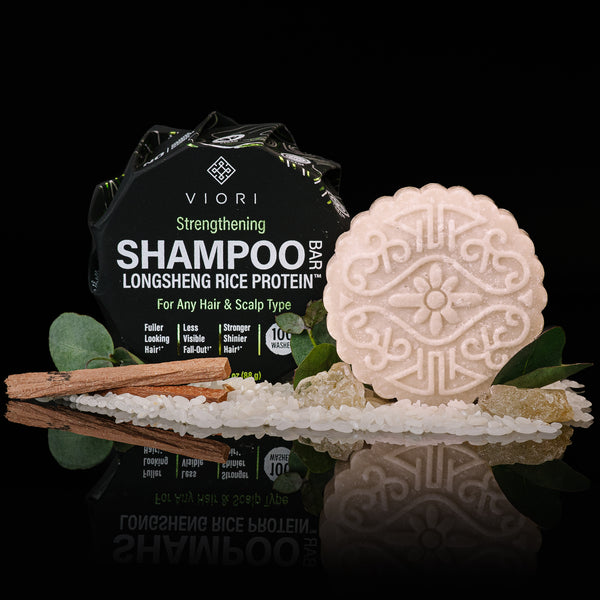
- Behentrimonium methosulfate (BTMS) - a conditioning agent that helps smooth and close the cuticle
- Cetyl and stearyl alcohols - fatty alcohols that provide slip and moisture (despite the scary name, these are the good alcohols that your hair loves)
- Panthenol (Pro-Vitamin B5) - small enough to actually penetrate and scientifically proven to strengthen hair
- Hydrolyzed wheat or rice protein - often more effective than keratin due to smaller molecular size and better compatibility
- Natural oils and conditioning agents - create smooth coating and environmental protection
The keratin gets top billing on the label because it sounds impressive and scientific. But these supporting ingredients deserve the standing ovation.
3. pH Optimization Changes Everything
Quality formulations-whether they contain keratin or not-maintain a pH between 4.5 and 6.5. This pH range:
- Closes the cuticle layer after cleansing
- Prevents protein loss during washing
- Maintains hair's natural disulfide bonds (the bridges that give hair its strength)
- Reduces hygral fatigue, which is the swelling and shrinking that happens during wet-dry cycles
Often, what you're experiencing as "keratin magic" is simply proper pH formulation doing its job. I've seen dramatic improvements in hair quality just from switching someone to a pH-balanced shampoo, regardless of what proteins it contains.
What Traditional Wisdom Teaches Us About Hair Health
There's something fascinating that I've noticed over my career: some of the healthiest hair I've ever seen belongs to people who've never heard of keratin treatments.
The Red Yao women of Longsheng, China, are famous for maintaining thick, healthy hair well into their 80s using fermented rice water. No keratin marketing required. No scientific claims about molecular weights. Just generations of empirical knowledge passed down.
What they understood intuitively, science is now confirming: it's not about one "miracle ingredient," but creating an ecosystem of complementary nutrients and maintaining scalp health.
Viori's approach with Longsheng rice water is biochemically fascinating to me because:
- Inositol (vitamin B8) produced during fermentation has a molecular weight of only 180 Daltons-small enough for actual penetration into the hair shaft
- Rice proteins are naturally smaller than animal keratins and more structurally compatible with human hair
- The fermentation process dramatically increases the bioavailability of nutrients, essentially "pre-digesting" them for better absorption
- The focus on scalp health addresses hair quality at its source-the follicle-rather than trying to resurrect dead protein strands
This isn't to say rice water is inherently "better" than keratin. Rather, they represent different philosophical approaches: one tries to patch damage after it occurs; the other focuses on preventing damage by nourishing the living root system and not creating additional damage during the cleansing process.
What Actually Matters: Your Technical Checklist
When clients ask me what to look for when they're shopping for protein-containing shampoos, I pull out my phone and show them this list. Whether you're considering a keratin shampoo or any other strengthening formula, here's what actually determines effectiveness:
Molecular Weight and Penetration Potential
Look for "hydrolyzed" proteins with molecular weights under 1,000 Daltons when possible. Most companies won't tell you this on the label because they don't test for it, but it's the fundamental difference between surface cosmetics and actual strengthening.
If you see "hydrolyzed" before the protein name, that's a good start. It means the protein has been broken down into smaller pieces.
Concentration and Positioning on the Label
Ingredients are listed in descending order by concentration. If "hydrolyzed keratin" appears after the fragrance or preservatives on the label, there's likely less than 0.5% in the formula-barely enough for surface coating, let alone any meaningful strengthening.
Meaningful concentrations of protein in shampoo start around 2-5%. These ingredients should appear in the first half of the ingredient list, ideally within the first 7-8 ingredients.
Cleansing Agent Chemistry
This is huge. Harsh sulfates like sodium lauryl sulfate or ammonium lauryl sulfate create such an aggressive cleansing environment that depositing proteins becomes nearly impossible. They strip everything away-including the beneficial proteins you're trying to deposit.
Look for gentler surfactants like:
- Sodium cocoyl isethionate (this is what Viori uses-derived from coconut oil)
- Cocamidopropyl betaine
- Sodium lauroyl methyl isethionate
- Decyl glucoside
These clean effectively while creating an environment where some protein deposition can actually occur.
pH Formulation
Anything above 7.0 pH will force the cuticle open, causing protein loss rather than protein gain. It doesn't matter how much keratin is in the formula if the pH is working against you.
WHAT CUSTOMERS ARE SAYING
Real reviews for Hidden Waterfall Barra de Champú
Quality formulations maintain 4.5-6.5 pH, though frustratingly, most companies don't disclose this information on the label. This is one reason I appreciate when brands are transparent about their formulation choices.
Complementary Ingredients That Work Together
The best formulations I've seen combine multiple types of beneficial ingredients:
- Small proteins or amino acids (for actual penetration into the cortex)
- Medium-weight conditioning agents (for cuticle smoothing and surface repair)
- Fatty alcohols and natural oils (for moisture and flexibility)
- Vitamins B5 and B8 (to strengthen and improve moisture retention)
- Bamboo extract or silica (to improve elasticity and resilience)
This is where sophisticated formulations like Viori's shine. Rather than loading up on one "hero" ingredient and expecting it to do all the work, they've created a matrix of complementary elements at various molecular weights, each with a specific job.
The Hair Porosity Factor Nobody Explains Properly
Here's something that consistently frustrates me: people spend hundreds of dollars trying different protein treatments without understanding their hair's porosity level. And porosity is absolutely critical because it determines what can actually absorb into your hair-regardless of what's in the bottle.
Let me break this down in a way that actually makes sense:
Low Porosity Hair (Cuticles Tightly Closed)
- Struggles to absorb anything, including beneficial proteins
- Often experiences buildup from heavy proteins that just sit on the surface
- Needs smaller molecules and sometimes heat to help open the cuticle
- Better candidates for amino acid treatments than larger protein molecules
- Water beads up on hair strands rather than absorbing
High Porosity Hair (Cuticles Damaged/Open)
- Absorbs everything quickly but retains nothing-it's all falling out through the gaps
- Desperately needs protein to fill structural gaps in the cuticle
- Can actually benefit from larger protein molecules that "stick" in damaged areas
- Requires heavier, more occlusive conditioning to seal in treatments
- Dries very quickly after washing
Medium Porosity Hair
- The Goldilocks zone where most products work as intended
- Can benefit from various molecular weights
- Less finicky about formulation specifics
- Generally the healthiest hair type
Most people have absolutely no idea what their porosity level is, yet it determines whether a protein treatment strengthens their hair or causes brittleness and breakage.
Simple porosity test you can do at home: Take a clean shed hair (clean is important-no product buildup) and place it in a glass of room-temperature water. Floating on top = low porosity; sinking immediately = high porosity; hovering in the middle of the glass = medium porosity.
If you're applying keratin shampoo to low-porosity hair, you're likely just coating it with protein it can't absorb-leading to buildup, dullness, and stiffness. This is exactly why you see "keratin made my hair worse" reviews right alongside "keratin changed my life" testimonials. It's not the keratin-it's the mismatch between porosity and formulation.
The Damage State Spectrum: More Isn't Always Better
Another factor that rarely gets discussed, but that I see play out in my salon constantly: protein treatments work along a spectrum of damage, with a counterintuitive relationship at the extremes.
Mildly Damaged Hair
- Cuticle slightly raised but internal structure still intact
- Benefits most from protein treatments
- Can show dramatic improvement with appropriate products
- This is the "sweet spot" for keratin shampoos
Moderately Damaged Hair
- Cuticle significantly compromised with visible gaps
- Still benefits from protein but needs careful moisture balance
- Sweet spot for more intensive protein treatments
- Requires alternating protein and moisture
Severely Damaged Hair
- Cuticle largely destroyed, cortex exposed
- Too damaged to hold protein effectively
- Protein slides off the smooth exposed cortex or enters but can't anchor
- Actually needs moisture and bond repair more than additional protein
- May need to be cut off and regrown
Here's the paradox that surprises people: the hair that looks like it needs protein most-extremely damaged, breaking, straw-like hair-often can't utilize it effectively anymore. It's like trying to repaint a house where the walls are crumbling. You need to address the structural foundation first.
I've had clients with severely bleach-damaged hair become frustrated that protein treatments are making their hair worse. The protein isn't the problem-their hair is beyond the point where protein alone can help.
The Strategic Approach That Actually Works
Based on hair's biochemical needs and what I've seen work over two decades, here's the technical sequence that creates genuine, lasting improvement:
Phase 1: Gentle Cleansing Without Stripping (Weeks 1-2)
- Switch to sulfate-free cleansing to stop creating additional damage


