The best vegan shampoo bar is one that is certified vegan, certified cruelty-free, packaged without plastic and still gentle on your hair. Those are four separate promises. A label can make one without the others, so it helps to know what each one means and how to check it.
What the labels mean
Vegan
Vegan means the product contains no animal-derived ingredients. That is about what is in the bar, not how it was tested. Third-party vegan certification means an outside group has reviewed the ingredients, which is stronger than a brand simply printing the word. Common animal-derived ingredients in hair care include beeswax, honey, lanolin, keratin, silk, collagen and milk. Some ingredients, such as glycerin and stearic acid, can come from plants or animals, so the label alone may not tell you.
Cruelty-free and Leaping Bunny
Cruelty-free is about animal testing, not ingredients. A product can be cruelty-free and still contain beeswax, and a vegan product could in principle be tested on animals. The word "cruelty-free" on its own is not regulated. Leaping Bunny is a well-known certification for cruelty-free products. It asks a brand to commit to no animal testing at every stage, including its ingredient suppliers, and to accept independent audits. When you see the Leaping Bunny logo, someone outside the brand has checked.
Vegan and cruelty-free together
If both matter to you, look for both certifications. One does not imply the other. A brand that holds both has had its ingredients and its testing policy reviewed.
Plastic-free packaging
A shampoo bar already skips the plastic bottle. Check the box, wrapper and any shipping fill too. Paper or cardboard packaging is easy to recycle in many places. Watch for plastic film inside a paper box, or a plastic travel tin sold with the bar.
What vegan does not cover
Vegan does not mean free of palm, sulfates or fragrance. Many vegan bars use plant-derived ingredients that come from palm. If palm matters to you, look for a statement about how palm derivatives are sourced. Ask the same question about fragrance if your scalp is sensitive.
What else to look for in a vegan shampoo bar
- A mild cleanser. Syndet bars use mild detergents such as sodium cocoyl isethionate and can be made pH balanced. Soap bars are alkaline and can leave hair rough, especially in hard water.
- A pH close to your hair's. Hair and scalp are mildly acidic, about 4.5 to 5.5. A bar near that range is kinder to the hair cuticle.
- Plant-based conditioning. Vegan bars lean on plant butters, aloe vera, glycerin and plant proteins instead of keratin or silk.
- A matching conditioner. Vegan conditioner bars use plant-derived conditioning agents instead of lanolin or beeswax.
How to use a vegan shampoo bar
- Wet your hair fully. Bars lather best on soaked hair.
- Lather in your hands or glide the bar a few times. Work the lather into your scalp with your fingertips.
- Rinse well. A clean rinse prevents a dull or coated feel.
- Follow with a conditioner bar. Focus on the mid-lengths and ends.
- Keep the bar dry between washes. A draining dish out of the shower stream helps a bar last.
- Give it time. Hair can feel different for the first few washes after a switch.
New to bars in general? Our guide to shampoo bars vs. liquid shampoo covers how they compare.
Which Viori bar fits
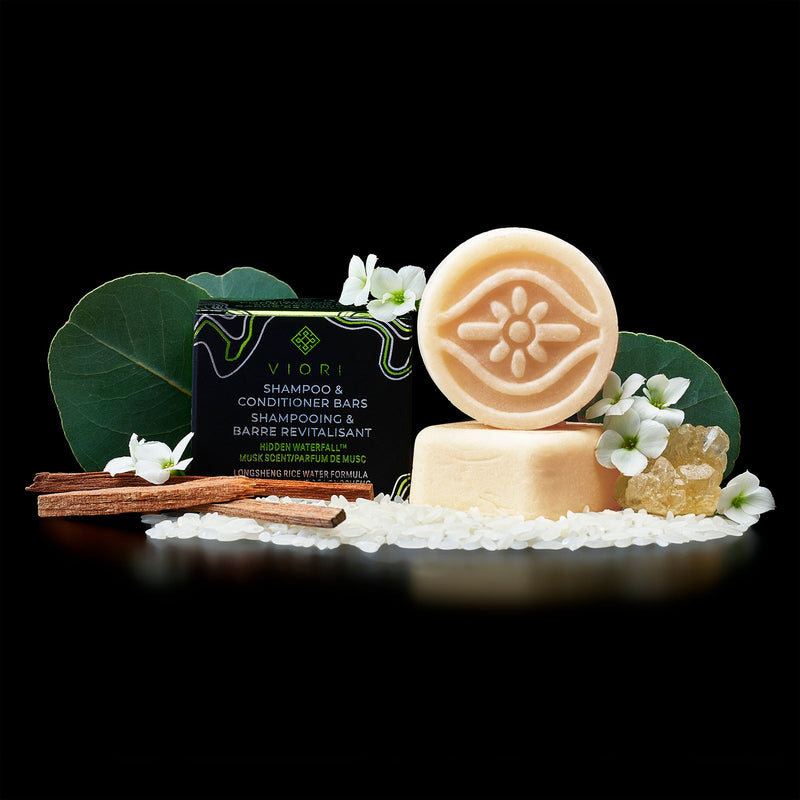
Every Viori shampoo and conditioner bar is certified vegan by Vegan International and Leaping Bunny certified cruelty-free. The bars are also Fair Trade and CarbonNeutral® certified. Packaging is plastic-free, using recycled paper, and bars ship in a bamboo steamer. The shampoo bars are syndet bars built on sodium cocoyl isethionate, a mild coconut-derived cleanser, formulated to stay between 3.5 and 6.5 pH. They are sulfate-free, silicone-free and paraben-free.
One honest note: Viori bars are not free of palm. Viori uses RSPO-sourced palm derivatives. If you avoid palm entirely, that matters.
Rice Water Shampoo Bar – All Hair Types
Viori's suggested starting point for most hair types, from fine to coily and oily to dry scalps. It is made with fermented Longsheng rice water, aloe vera and shea butter. The scent is jasmine and soft florals.
Moisturizing Rice Water Shampoo Bar – Dry Scalp
Made for dry, tight scalps and dry, coarse, curly or color-treated hair. Shea butter and cocoa butter sit alongside glycerin and aloe vera. The scent is lavender and soft garden florals.
What customers are saying
Volumizing Rice Water Shampoo Bar – Oily Scalp
Viori recommends it for oily and normal scalps and for hair that goes flat at the roots. It is a good pick if you deal with product or hard-water buildup. The scent is bright citrus, from bergamot, grapefruit and orange peel.
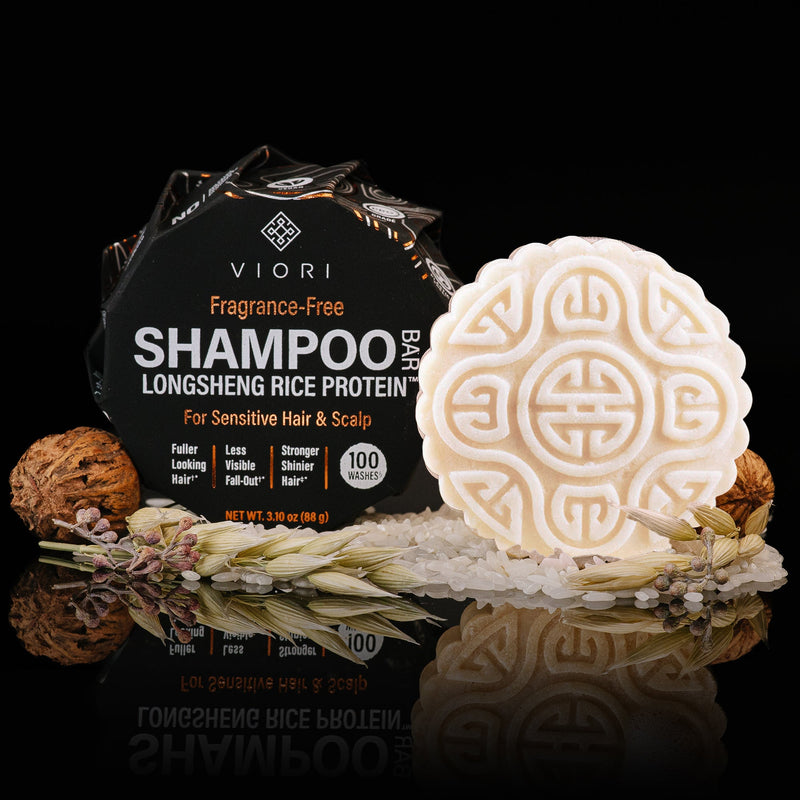
Fragrance-Free Rice Water Shampoo Bar
Nothing is added for fragrance, which makes it Viori's most gentle option. It suits sensitive scalps and anyone who would rather skip scent. It pairs well with a fragrance-free conditioner bar.
Viori conditioner bars are built on BTMS, a conditioning ingredient from the colza (rapeseed) plant, with cocoa butter and cetyl alcohol. For more on choosing one, see our conditioner bar guide . Questions about certifications or ingredients are answered on the Viori FAQ page .
Common mistakes
- Treating "natural" as "vegan." Beeswax, honey and lanolin are natural, and none are vegan.
- Assuming vegan means cruelty-free. Check for a cruelty-free certification as well.
- Trusting an uncertified claim. A logo from an outside certifier is easier to verify than a brand's own wording.
- Ignoring the packaging. A bar wrapped in plastic film is not plastic-free.
- Choosing on values alone. The best vegan bar still has to suit your scalp and hair type.