The best shampoo bar for damaged hair is a gentle syndet bar, not a true soap bar. Look for a mild cleanser, a pH close to your hair's own mildly acidic range, and no harsh sulfates. Use it mostly on your scalp, then follow with conditioner every time. No shampoo can undo damage, but the right bar can help you avoid adding more.
Why Damaged Hair Needs a Gentler Bar
Bleach, color, heat tools and rough brushing lift and chip the cuticle, the thin outer layer of each strand. Once the cuticle is roughed up, hair loses moisture faster, tangles more easily and snaps under less force.
Washing adds friction and strips some oil every time. Healthy hair shrugs that off. Damaged hair has less margin. A harsh cleanser, a high pH or a waxy residue can make tangling and breakage worse.
Your hair and scalp are mildly acidic, about 4.5 to 5.5. Cleansers that sit far above that range can leave the cuticle feeling rougher. That's why pH matters more for damaged hair than for healthy hair.
What to Look For in a Shampoo Bar for Damaged Hair
A syndet bar, not soap
Many bars sold for hair are true soap, made by reacting oils with lye. Soap is alkaline, and in hard water it can leave a dull, waxy film. On fragile hair, that often means more snagging. Syndet bars use mild detergents instead of soap, so they can be formulated closer to hair's natural pH. If you're unsure which kind you have, this guide on shampoo bars vs soap bars explains how to tell.
A mild cleanser
Look for gentle surfactants such as sodium cocoyl isethionate (SCI), a coconut-derived cleanser. Many people with damaged hair prefer sulfate-free formulas because they tend to feel less stripping. Lots of foam is not a sign of a better clean.
A pH-balanced formula
Check whether the brand states a pH or says the bar is pH balanced. A pH-balanced syndet bar such as Viori's Coconut Oil Repair Shampoo Bar – Damaged Hair is formulated to stay between 3.5 and 6.5 and uses SCI as its cleanser.
A matching conditioner
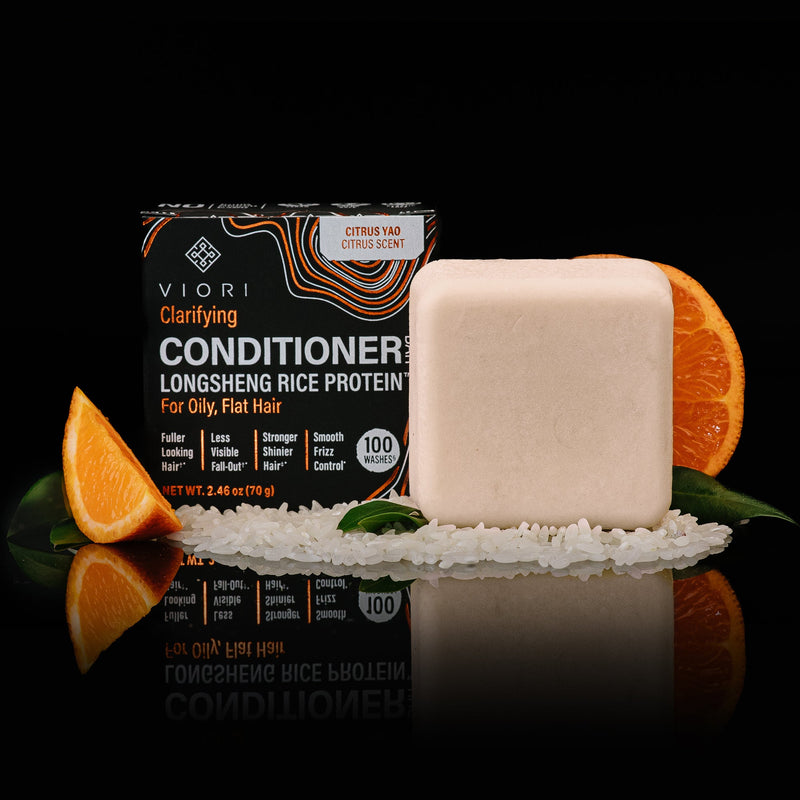
Shampoo cleans. Conditioner smooths and adds slip so you can detangle without tearing. For damaged hair, a conditioner is not optional. A solid conditioner bar works well, and some can double as a deep conditioner or a light leave-in on the ends.
Some protein, not too much
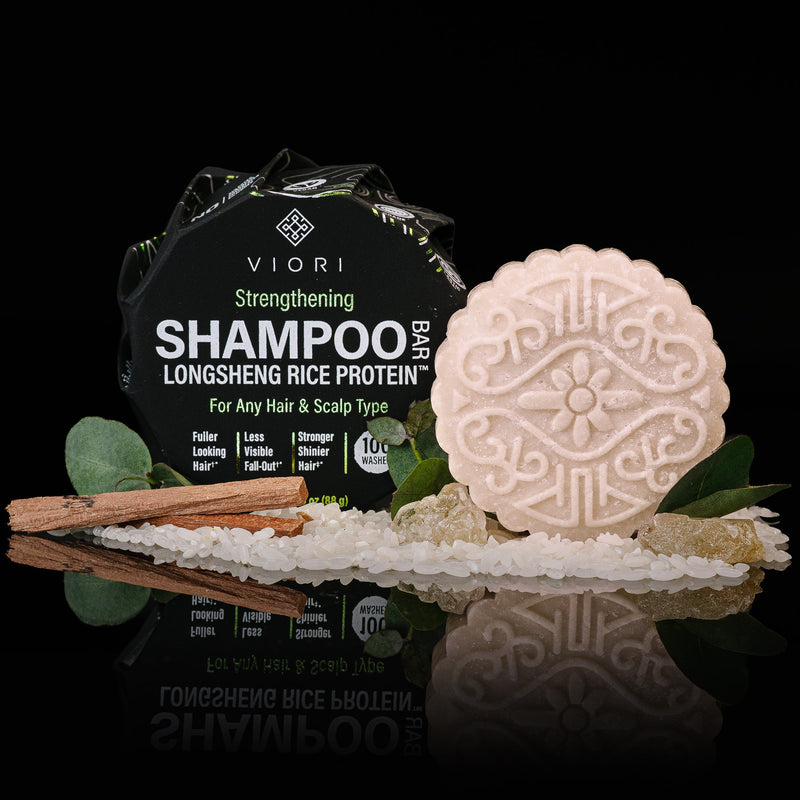
Many repair products include proteins, such as rice protein, that are often used to help hair feel stronger. Some damaged hair likes this. But heavy, frequent protein treatments can leave hair stiff or straw-like. If that happens, scale back and lean on moisture.
How to Use a Shampoo Bar on Damaged Hair
- Wet your hair fully with lukewarm water, not hot.
- Rub the bar between your hands or on a wet washcloth to make lather. Avoid dragging the bar down your lengths, which adds friction and can leave buildup.
- Apply the lather to your scalp and massage with your fingertips, not your nails.
- Let the suds run down your lengths as you rinse. That's enough to clean the ends.
- Rinse well. Leftover product can feel heavy or waxy.
- Apply conditioner from mid-lengths to ends. Leave it on for a few minutes.
- Detangle with a wide-tooth comb while the conditioner is in, starting at the ends and working up.
- Rinse, then press water out with a soft towel instead of rubbing.
Store the bar where it can drain and dry between uses. A soggy bar wears down fast and is harder to control.
What customers are saying
Habits That Matter as Much as the Bar
- Turn down the heat. Use the lowest setting that works and a heat protectant.
- Space out chemical services. Give hair time between bleach, color, perms or relaxers.
- Trim split ends. No product can permanently fuse a split. Regular small trims stop splits from traveling up the strand.
- Wash as often as your scalp needs. Fewer washes mean less friction, but don't let an oily or itchy scalp go too long.
- Be gentle when wet. Wet hair stretches and breaks more easily, so avoid tight styles and rough towel drying.
How to Tell If It's Working
Signs the bar suits you: hair feels clean but not squeaky, detangles more easily after conditioning, and breaks less over time. Signs it doesn't: a waxy coating, a rough or tangled feel, or a tight, itchy scalp.
Any new routine takes time to judge. Give it two to three months before deciding. If you notice sudden breakage, hair shedding from the roots, or scalp irritation that doesn't settle, see a dermatologist.
The Bottom Line
For damaged hair, choose a gentle, pH-balanced syndet bar with a mild cleanser and pair it with a conditioner every wash. Lather in your hands, focus on your scalp, and handle wet hair gently. The bar won't reverse damage, but it can stop your wash routine from adding to it while healthier hair grows in.