
Plastic-free packaging shampoo sounds like an easy win: ditch the bottle, keep the clean hair, feel good about the switch. But in practice, it’s rarely that simple. When clients tell me they “tried a shampoo bar and it wasn’t for them,” what they’re usually describing isn’t a dislike of plastic-free-it’s a product (or routine) that wasn’t designed for how hair and scalps actually behave.
Here’s the part that almost nobody says out loud: plastic-free shampoo is not just a packaging change. Once you remove the plastic bottle, you also remove a lot of behind-the-scenes engineering that keeps water-based products stable, hygienic, and consistent in a steamy bathroom. If the formula and the way you use it don’t evolve along with the packaging, performance is where things can fall apart.
The hidden problem: most shampoo is mostly water
Traditional liquid shampoo is commonly 60-90% water. That water isn’t “bad,” but it creates a domino effect of requirements-preservation, packaging barriers, and contamination control-that the plastic bottle quietly handles.
NOT SURE WHICH PRODUCT IS RIGHT FOR YOU?
TAKE THE QUIZTakes 30 seconds · 134,000+ customers matched
Once you try to go plastic-free with a water-heavy formula, you run into a few hard truths:
- Preservation becomes more demanding because microbes thrive in water-based products, especially when they’re opened and used repeatedly.
- Packaging becomes more complicated because paper-based materials don’t love moisture, steam, and constant handling with wet hands.
- Shipping becomes less efficient because you’re transporting a heavy, bulky product where a big chunk of the weight is water.
This is why the most practical plastic-free approach isn’t just changing the container-it’s changing the format.
Why bars make plastic-free packaging actually work
A well-formulated shampoo bar is designed to live without a bottle. The big advantage is simple but powerful: bars can dry out between uses. That dryness lowers the “available water” microbes need to multiply, which reduces the preservation pressure you face with liquids.
In other words, plastic-free packaging works best when the product itself doesn’t depend on a sealed plastic environment to stay stable and pleasant to use.
Not all bars are “hair bars”: cleanser chemistry matters
One of the biggest points of confusion I see is people lumping all bars together. A bar can be true soap, or it can be a modern surfactant-based shampoo bar. Those are not the same experience on hair.
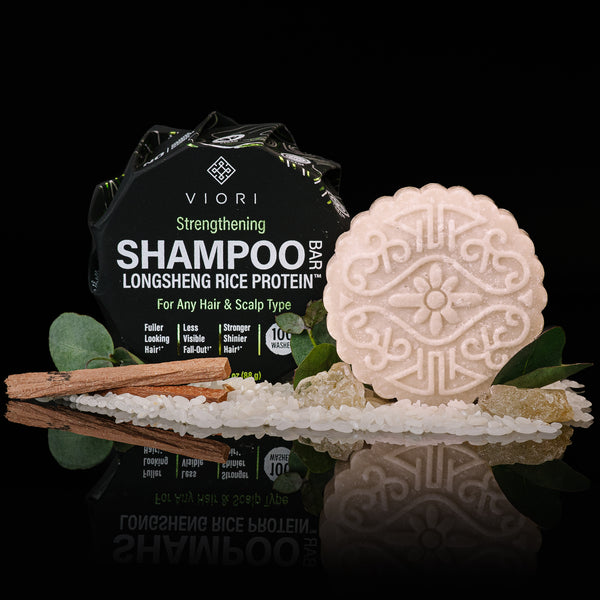
Viori uses Sodium Cocoyl Isethionate (SCI), a cleanser derived from coconut that’s known in the industry for being mild while still giving satisfying lather. That matters because when plastic-free haircare fails, it often fails at the sink: the hair doesn’t feel clean, the scalp doesn’t feel refreshed, or the wash doesn’t feel consistent from one shower to the next.
The make-or-break detail: pH (the quiet reason people quit)
If there’s one technical detail I wish more people understood before they wrote off bars, it’s pH. Hair products that skew too alkaline can leave the cuticle more raised, which increases friction-meaning more tangling, dullness, frizz, and breakage over time (especially on porous or chemically processed hair).
That’s why pH balanced bars are so important. Viori emphasizes that their bars are pH balanced, and professionally speaking, that’s not a marketing flourish-it’s part of what helps hair stay smoother and more manageable after cleansing.
Conditioner is the real performance test in plastic-free routines
People tend to judge a shampoo bar by the shampoo step-but in day-to-day styling, conditioner is what decides how your hair behaves. Slip, detangling, softness, frizz control… that’s conditioner territory.
Viori’s conditioner bars rely on Behentrimonium Methosulfate (BTMS), a conditioning ingredient used to boost slip and help hair feel smoother. The name can throw people off, but BTMS is not the same thing as harsh cleansing sulfates. It’s a conditioning agent designed to cling to the hair fiber (especially where hair is more negatively charged due to damage), improving comb-through and reducing friction.
The overlooked “mechanics” of bars: friction and how you apply them
Here’s a nuance that rarely gets discussed online: bar shampoo changes the physical mechanics of washing. With a liquid, you’re mostly spreading product. With a bar, if you rub it directly on the hair, you can accidentally add extra friction-especially through mid-lengths and ends where hair is older and more fragile.
Viori gives a smart recommendation for color-treated hair that I also stand behind as a stylist: lather in your hands first, then apply with your fingers. This reduces unnecessary roughing-up of the cuticle and can be gentler on color.
If you want a simple, salon-style approach, use this order:
- Wet thoroughly (hair should be fully saturated before you cleanse).
- Build lather in your palms instead of scrubbing the bar down the length.
- Focus the shampoo on the scalp and let the runoff clean the ends.
- Condition mid-lengths to ends, then rinse well.
Scent, sensitivity, and why “unscented” is a real feature
Many people who go plastic-free are also trying to simplify-fewer irritants, fewer triggers, fewer “extras.” Viori has a straightforward option for that: Native Essence, their unscented collection. It’s a practical choice for fragrance sensitivity, and it also makes a lot of sense for anyone who just wants their hair to smell like… clean hair.
If you do love a scented wash experience, Viori offers distinct scent profiles across their collections, so you can choose what fits your preferences without changing the core approach.
WHAT CUSTOMERS ARE SAYING
Real reviews for Hidden Waterfall Barra de Champú
Plastic-free only works if your bar can dry
This is the unglamorous truth: storage is part of the formula. A bar left sitting in water will dissolve faster, get soft, and become harder to use consistently. Viori recommends keeping bars out of direct water contact and letting them air-dry between washes-simple, but it makes a noticeable difference in longevity and performance.
How to choose a Viori bar without overthinking it
Instead of choosing based on “my friend likes this scent,” choose based on scalp behavior. Viori’s guidance is refreshingly practical:
- Oily scalp: Citrus Yao is commonly recommended.
- Normal scalp: most options can work-choose based on feel and preference.
- Dry scalp: Terrace Garden, Hidden Waterfall, or Native Essence tend to be more moisturizing choices.
- Sensitive scalp or fragrance sensitivity: Native Essence is the simplest place to start.
And if your scalp gets oily but your ends feel dry (extremely common), you can take a “targeted” approach-cleanse where the oil is, condition where the dryness is.
The bottom line
Plastic-free packaging shampoo is easy to romanticize, but the real success comes down to engineering and technique. When you remove the bottle, you have to replace everything the bottle used to do-protection from moisture, controlled dispensing, stability, and hygiene-either through formula design or through how the product is used and stored.
That’s why a well-built bar system like Viori isn’t just about skipping plastic. It’s about making plastic-free haircare feel normal in your day-to-day life: cleanse effectively, keep the cuticle in a happy place, condition with real slip, and avoid the friction mistakes that make hair feel “off.”


