
Let's talk about a little piece of folklore that's been passed down for generations: the idea that a simple bar of soap is a perfectly good way to wash your hair. It's cheap, it's convenient, and it's right there in the shower. For decades, many of us have lathered up with whatever bar was handy, trusting that "clean" is "clean." But what if I told you, after twenty years as a stylist, that this single habit could be the silent culprit behind your frizz, your flatness, and your never-ending battle with dull strands?
NOT SURE WHICH PRODUCT IS RIGHT FOR YOU?
TAKE THE QUIZTakes 30 seconds · 134,000+ customers matched
The truth is, washing your hair with traditional soap isn't just old-fashioned-it's a chemical mismatch. Your hair and scalp have very specific needs, and a standard alkaline soap bar tramples all over them. It's time to bust this myth wide open and explore what you should really be reaching for.
The pH Problem: Your Hair's Worst Enemy
This all boils down to a tiny, powerful concept: pH balance. Think of your scalp's ideal environment as a pristine, slightly acidic mountain spring. This natural acidity, sitting at a pH of about 4.5 to 5.5, forms a protective shield called the acid mantle. It keeps your scalp's microbiome happy and, most importantly, it keeps the cuticles of your hair-those tiny, overlapping scales-lying flat and sealed.
Now, introduce a classic bar of soap. Most are highly alkaline, with a pH soaring up to 10 or 11. When this alkaline substance meets your acidic scalp, it's like a chemical war. The result? Those tightly sealed cuticles are forcibly swelled open.
Imagine prying open the shingles on a roof during a rainstorm. That's what's happening to your hair. The consequences are brutal:
- Moisture Escape: All the internal hydration and proteins that give your hair strength and bounce rush straight out the open floodgates.
- Instant Dullness & Tangles: Those rough, raised cuticles scatter light instead of reflecting it, killing your shine. They also catch on each other, leading to frustrating knots and breakage.
- Scalp Stripping: Your protective acid mantle is wiped out, which can lead to dryness, itching, and a loss of that healthy equilibrium.
The Hidden Residue: Soap Scum Isn't Just for Your Shower
If the pH assault wasn't enough, soap has another dirty secret. If you have even moderately hard water (and most of us do), the minerals in the water react with soap to form a nasty, insoluble film-soap scum. You see it on your shower door.
That same filmy residue coats every single strand of your hair. It's why your hair can feel waxy, limp, or still somehow dirty even after a "good" wash. This buildup weighs hair down, blocks out light for shine, and creates a barrier that prevents any conditioner you use afterward from actually doing its job. You're not cleaning your hair; you're slowly shellacking it.
So, Are All Bars Bad? The Rise of the True Shampoo Bar
Absolutely not! This isn't an indictment of the bar format, which is fantastic for reducing plastic waste and travel. The problem is the *type* of bar. The haircare world has evolved, creating brilliant solid shampoos that are chemically designed for your strands.
The key difference is in the cleanser. A real shampoo bar uses gentle, hair-specific surfactants-like Sodium Cocoyl Isethionate (SCI), often derived from coconut-that clean effectively without the damaging high pH or scum-forming reaction. It's a solid concentrate of good haircare, not a repurposed skin soap.
WHAT CUSTOMERS ARE SAYING
Real reviews for Hidden Waterfall Barra de Champú
Choosing Your Champion: What Makes a Bar Hair-Safe?
Ready to make the switch? Don't just grab any "beauty bar." Be a savvy shopper and look for these non-negotiable features that define a hair-healthy bar, like those developed with the principles behind Viori:
- pH-Balanced Formula: This should be proudly stated. A pH that matches your scalp's natural environment is the foundation of non-damaging cleansing.
- The Right Cleansing Engine: Check the ingredients. The primary cleanser should be something like SCI, not a saponified oil (look for words ending in "-ate" like tallowate).
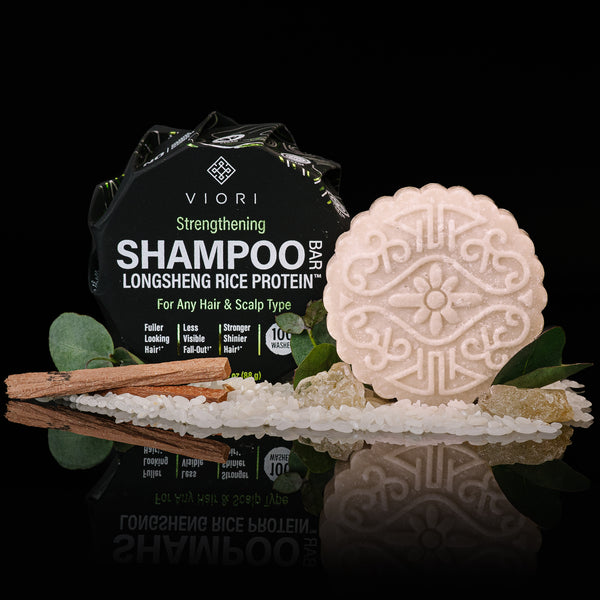
- Benefit-Driven Ingredients: A great bar does more than clean. Look for nourishing additions. For example, some bars feature fermented rice water, a traditional ingredient where fermentation boosts strengthening compounds like inositol, which can help improve hair's resilience and shine.
- Thoughtful Design: Even scents can serve a purpose. A bar with citrus notes may offer gentle oil control, while an unscented or floral option might focus on deep hydration or sensitivity. This shows the brand understands hair is not one-size-fits-all.
The Bottom Line: It's Time to Break the Habit
Using hand soap or bath soap on your hair is a relic of the past, like using laundry detergent to wash your favorite silk blouse. The long-term damage from moisture loss, cuticle damage, and relentless buildup is a high price to pay for convenience.
The good news is you don't have to give up the bar. You just have to choose the *right* one. Ditch the alkaline, scum-forming soap and invest in a properly formulated, pH-balanced shampoo bar. It’s the simplest, most effective upgrade you can make for hair that looks clean, feels incredible, and is truly, deeply healthy.


