
After two decades behind the salon chair, I've seen the same scene play out hundreds of times: a client rushes in, clutching the latest trending hair product, eyes brimming with hope. "Will this finally stop my hair from falling out?"
I get it. We all want that simple solution-the miracle shampoo that will restore our hair to its former glory. But here's what twenty years of professional experience has taught me: understanding why your hair is falling out matters infinitely more than which shampoo you're using.
Today, I'm pulling back the curtain on what we professionals actually know about hair loss, shampoo chemistry, and what products can (and honestly can't) do for thinning hair. This isn't going to be your typical "miracle cure" blog post. Instead, I'm sharing the scientific reality that will actually help you make informed decisions about your hair health.
The Uncomfortable Truth About Shampoos and Hair Growth
Let me start with the reality that most beauty marketing won't tell you: the average shampoo cannot fix true hair loss.
Here's why.
When you shampoo your hair, the product sits on your scalp for maybe 2-3 minutes before you rinse it away. Meanwhile, the hair follicle bulb-where your hair actually grows-sits 3-4 millimeters beneath your skin surface, protected by multiple layers of skin, oil glands, and tissue.
For any ingredient to reach that deep and trigger real biological change, it needs:
- Small enough molecular size to penetrate through skin layers
- The right chemical properties to cross oil barriers
- Extended contact time-we're talking 20-30 minutes minimum, not 2 minutes
- High enough concentration to remain effective after dilution and rinsing
This is precisely why dermatologists prescribe leave-on treatments like minoxidil that sit on your scalp for hours, rather than recommending shampoos for medical hair loss conditions.
Does this mean all shampoos are useless for hair fall? Absolutely not. But we need to understand the crucial distinction between addressing breakage and treating true follicular hair loss.
NOT SURE WHICH PRODUCT IS RIGHT FOR YOU?
TAKE THE QUIZTakes 30 seconds · 134,000+ customers matched
Understanding What Rice Water Can (and Can't) Do
You've probably heard the compelling story about women with floor-length hair who wash with fermented rice water. It's a beautiful narrative, and rice water does have legitimate benefits-but we need to separate marketing romance from scientific reality.
The Science Behind Rice Water
Fermented rice water contains several compounds that genuinely benefit hair:
Inositol (Vitamin B8) is the star player here. Research shows this component can actually penetrate the hair shaft and remain even after rinsing, helping to repair the internal structure of your hair. This is legitimate, documented science.
However-and this is crucial-inositol strengthens existing hair and reduces breakage. It doesn't stop hair from falling out at the follicle level.
Amino acids and proteins in rice water provide conditioning benefits, but most protein molecules are too large to penetrate the hair cuticle. They coat the surface, creating temporary smoothness and shine that washes away over time.
Starches create that silky slip you feel during washing, but they don't provide lasting benefits.
The Missing Evidence
Here's what rarely gets mentioned: there are no peer-reviewed, placebo-controlled studies on fermented rice water specifically for hair growth in diverse populations. The research that exists focuses on:
- Hair strengthening (preventing breakage)
- Cosmetic improvement (appearance and texture)
- Conditioning properties
These are valuable benefits! But they're not the same as stimulating dormant follicles or reversing hair loss.
What Quality Shampoos Like Viori Actually Do Well
After examining the formulation science behind premium shampoo bars, let me give you the honest professional assessment.
The Real Benefits You Can Expect
1. Prevention of Damage-Related Shedding
Sulfate-free formulations with gentle cleansing agents cause significantly less stress to your hair during washing. This matters because:
- Less cuticle disruption means less protein loss over time
- Reduced mechanical damage during the washing process
- Better moisture retention in the hair shaft
For hair fall context: If your shedding is caused by breakage from damaged, fragile hair, gentler cleansing can make a noticeable difference. If it's true follicular loss, it won't address the underlying cause.
2. Scalp Environment Support
pH-balanced formulations (typically 4.5-5.5) help maintain your scalp's natural protective barrier. A healthy scalp environment doesn't directly cause hair growth, but a disrupted, inflamed scalp can definitely contribute to excessive shedding.
Think of it this way: quality shampoos create the optimal conditions for hair health, like providing good soil for a garden. But they're not the seeds themselves.
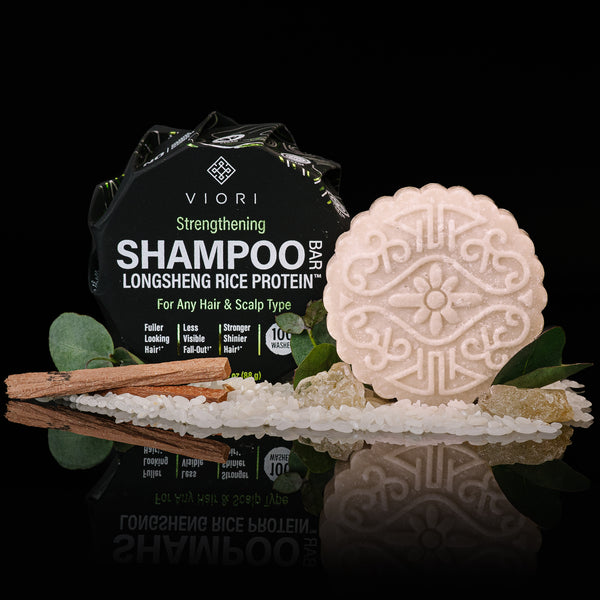
3. Strengthening Existing Hair
Hydrolyzed rice protein-broken down into smaller peptides-can temporarily strengthen your hair shaft by filling microscopic gaps in the cuticle layer. This reduces breakage at the mid-shaft and ends, which means less hair in your brush and shower drain.
When people say their hair "looks thicker" after switching shampoos, this is usually why. They're not growing more hair; they're keeping more of the hair they already have.
The Honest Limitations
1. Cannot Reverse Pattern Hair Loss
Androgenetic alopecia (male and female pattern baldness) is driven by hormones and genetics. Addressing this requires medical intervention that targets DHT (dihydrotestosterone) or stimulates follicles directly. No shampoo can do this in a 2-minute wash.
2. Cannot Treat Systemic Shedding
Telogen effluvium-the excessive shedding triggered by stress, hormonal changes, nutritional deficiencies, or medication-requires addressing the underlying trigger, not changing your shampoo.
3. Cannot Wake Up Dormant Follicles
The contact time and rinse-off format simply don't allow for the sustained exposure needed to stimulate follicle activity at a cellular level.
What Actually Works for Hair Fall: The Professional Protocol
Here's the science-backed hierarchy I've developed after years of seeing what produces real results for clients:
Tier 1: Medical Intervention (For True Hair Loss)
If you're experiencing significant hair loss, start here:
- Consult a dermatologist or trichologist for proper diagnosis
- Blood work to rule out iron deficiency, thyroid dysfunction, vitamin D deficiency, and hormonal imbalances
- FDA-approved treatments like minoxidil, which extends the growth phase of hair follicles
- Prescription options if hormonal factors are involved
This is non-negotiable for true follicular hair loss. You cannot shampoo your way out of a medical condition.
Tier 2: Supportive Topical Treatments
Once medical causes are addressed or ruled out:
- Caffeine-based serums applied and left on the scalp show some evidence for follicle stimulation
- Rosemary oil used daily has demonstrated results comparable to 2% minoxidil in at least one study
- Peptide treatments containing copper peptides or biomimetic peptides show promise in research
The key word here is "applied"-these need to stay on your scalp, not rinse away.
Tier 3: Mechanical Stimulation
- Daily scalp massage (5 minutes) increases blood flow; one study showed hair thickness improvement after 24 weeks of consistent practice
- Microneedling performed by professionals enhances absorption of topical treatments and triggers collagen production
Tier 4: Gentle Maintenance Products
This is where quality shampoos like Viori fit into the picture. They won't fix hair loss on their own, but they support overall hair health by:
- Preventing additional damage from harsh cleansing
- Maintaining optimal scalp pH
- Strengthening existing hair to reduce breakage
- Providing a clean foundation for other treatments to work
The ideal hair fall routine combines all four tiers:
- Medical treatment for the root cause
- Supportive topicals that stay on the scalp
- Regular stimulation through massage
- Gentle maintenance products that don't create additional problems
The Critical Question: What Type of Hair Fall Do You Actually Have?
Before investing in any product, do this simple diagnostic test I perform with every client:
The Breakage vs. Shedding Test
- Collect some of the hair that's falling out
- Examine the ends closely
- White bulb at the root? This is natural shedding from the follicle (100-150 hairs daily is completely normal)
- No bulb, broken mid-shaft? This is breakage from damage, not true hair loss
This distinction is everything.
If it's breakage: Strengthening shampoos with rice protein, gentle cleansing, and better hair care practices can make a dramatic difference. You might see significantly less hair in your brush within weeks.
If it's true follicular shedding: The problem is systemic or genetic. You need medical intervention. The shampoo is just maintenance.
The Scalp Assessment
Look at and feel your scalp:
- Itchy, flaky, red, or inflamed? You might have seborrheic dermatitis, psoriasis, or another condition that inhibits healthy growth
- Oily within 24 hours of washing? There's likely a hormonal component
- Dry, tight, or sensitive? Your skin barrier function may be compromised
Different scalp conditions require different approaches. A one-size-fits-all shampoo doesn't exist, regardless of marketing claims.
WHAT CUSTOMERS ARE SAYING
Real reviews for Hidden Waterfall Barra de Champú
The Shampoo Bar Advantage Nobody Talks About
Here's a professional observation that doesn't get nearly enough attention: the bar format itself may influence your washing behavior in ways that benefit your hair.
With liquid shampoos, I've noticed that most people over-apply. It's too easy to squeeze out excessive product, which leads to:
- Over-cleansing that strips natural protective oils
- Difficulty rinsing completely (product buildup)
- More frequent washing needed (creating a cycle of dryness and oil rebound)
With shampoo bars:
- The friction required naturally limits how much product you use
- Less product means easier, more complete rinsing
- People tend to focus more on massage technique rather than product quantity
- The physical interaction often extends washing time, improving cleansing efficacy
This behavioral modification might contribute as much to positive results as the ingredient profile itself.
The Bottom Line: My Professional Recommendation
If a client asked me directly: "Will switching to a premium rice water shampoo stop my hair from falling out?"
My honest answer: "It depends entirely on why your hair is falling out."
Choose Quality Rice Water Shampoos Like Viori If:
- You've identified that your issue is breakage, not follicular loss
- You want to maintain a healthy scalp environment while pursuing other treatments
- You value gentle, sulfate-free cleansing
- You have normal to dry scalp types
- You're already addressing hair loss medically and need excellent maintenance products
- You care about sustainability and ethical sourcing
Don't Rely on Shampoo Alone If:
- You're experiencing rapidly progressing or significant hair loss (see a medical professional first)
- You haven't identified the underlying cause of your shedding
- You're expecting new growth from shampooing alone
- You have a scalp condition that needs medicated treatment
- You're losing hair in patches or unusual patterns
Managing Expectations: The Hair Growth Timeline
Two decades in this industry has taught me that honest conversations about timelines prevent disappointment and product-hopping.
True hair regrowth requires:
- 3-4 months minimum before you see new growth (you cannot rush the hair growth cycle)
- 6-12 months for noticeable density improvement
- Sustained, consistent intervention-no shortcuts exist
- Often, a multi-pronged approach addressing internal and external factors
No shampoo-regardless of price, ingredients, or cultural heritage-can circumvent these biological realities.
Hair grows approximately half an inch per month. Follicles that have shifted into a resting phase need time to reactivate. Damaged hair needs to grow out and be replaced. These processes are governed by your biology, not your product choice.
The Cost-Benefit Perspective
Let's talk about economics, because this matters in real-world decision-making.
Premium shampoo bars: Approximately $12-15 per bar, lasting 60+ washes = roughly $0.20-0.25 per wash
Quality sulfate-free liquid shampoos: $0.15-0.40 per wash depending on brand
From a pure hair health chemistry perspective, you can find less expensive sulfate-free shampoos with similar ingredient profiles. What you're paying a premium for with Viori includes:
- Sustainability and zero-waste packaging
- Ethical sourcing practices
- The concentrated bar format
- Support for traditional communities
- The cultural narrative and brand experience
If these factors align with your values beyond just hair results, the premium makes complete sense. If you're solely focused on addressing


